How Much Moisturizer Should You Use?
There is no official dose, which is why the advice is all over the place. The practical amount, the three signs you got it wrong, and why timing matters more than quantity.
How this is funded: we earn a commission if you buy through our links, at no extra cost to you. It never changes which product we recommend, and we’ll tell you when we’d skip one. Full disclosure.
Why nobody gives you a straight number
Sunscreen has a defined application rate because its label claim is tested at one: the SPF on the bottle is established by applying a specific amount per unit of skin, and the FDA’s own consumer guidance talks about application amount for exactly that reason. Moisturizer has no equivalent. There is no claim to test, no dose at which the product was validated, and no regulator with an interest in the question. So every figure in circulation — a pea, a pump, a nickel, an almond — is somebody’s practical shorthand.
That is worth knowing because it reframes the question. You are not aiming at a target dose. You are aiming at a result: a continuous, thin film over the whole area, absorbed within a minute or two, leaving skin that feels like skin rather than like it has something on it. The amount needed to achieve that varies with the texture of the product, the dryness of your skin, the season and whether you have just applied three other layers underneath it.
The working amounts
- Face, normal to combination skin: a nickel-sized amount of a lotion or light cream.
- Face, dry skin:roughly double, or a nickel twice — a second thin layer once the first has absorbed, which works better than one thick one.
- Face, oily skin: less of a lighter texture rather than a thin smear of a rich cream. A gel-cream at a nickel is more comfortable than a heavy cream at half that.
- Neck and chest: add about the same again. These are the areas people systematically under-treat and then notice.
- Around the eyes: whatever a fingertip picks up, patted rather than rubbed. If richer textures give you milia there, use less or switch to a lighter one.
One adjustment that matters more than any of these: if you are using a retinoid or an acid, you will need more moisturizer than you did before, and more consistently. That is not a failure of the active — it is the trade, and it is why the retinol sandwich exists.
Three signs you got the amount wrong
Too little: tightness that returns within the hour
Properly moisturized skin feels neutral. If yours feels tight, papery or itchy an hour after applying, the amount was too small or the texture too light for the conditions. The reflex to resist is immediately buying a richer cream; try more of the same product first, applied to damper skin.
Too much: pilling
Little rolled balls of product under your sunscreen or foundation almost always mean either too much moisturizer or not enough waiting time before the next layer. Both are free to fix. Pilling goes through the other causes, including silicone-heavy formulas that pill with any amount.
Wrong texture: a greasy film that never settles
If the product is still sitting on top of your skin five minutes later, the problem is not quantity. A heavy occlusive cream on skin that does not need it will do this at any dose. That is a texture decision — how to choose a moisturizer is the place to start, and gel versus cream covers the lighter end.
What to look for in a moisturizer you will use properly
The practical criteria are unglamorous. A texture matched to your skin and the season, because the right texture gets used generously and the wrong one gets rationed. Enough product for the price— a 340 ml tub encourages you to treat your neck and hands, a 30 ml jar encourages you to dab. A sensible dispenser, since a pump delivers a repeatable amount and a jar does not. Barrier ingredients rather than a long list of extracts: ceramides, glycerin, hyaluronic acid and plain emollients are what the reference literature describes doing the work, divided between humectants, occlusives and emollients. And no fragrance, which adds reaction risk and nothing else.
Three moisturizers worth being generous with
One for each end of the texture range, chosen on disclosed formulation rather than on testing we have not done. Prices are checked daily against the live listing.
Dry skin, use freely
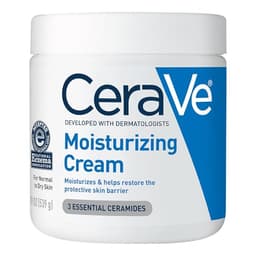
CeraVe Moisturizing Cream
For anyone who should be using twice as much as they are: three ceramides and hyaluronic acid in a 340 ml tub, so face, neck and hands are all affordable.
$18.96 · View on AmazonPrice as of October 5, 2026. #ad How we’re funded
Normal or sensitive, daytime
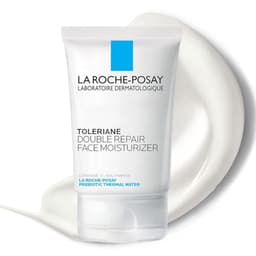
La Roche-Posay Toleriane Double Repair Face Moisturizer
For the morning layer under sunscreen: ceramide-3 and niacinamide in a texture light enough not to pill, fragrance-free.
$24.99 · View on AmazonPrice as of October 5, 2026. #ad How we’re funded
Oily skin
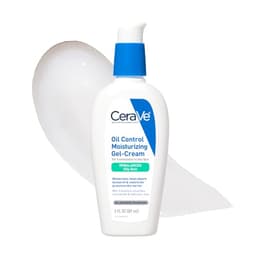
CeraVe Oil Control Moisturizing Gel-Cream
For skin that shines by lunchtime and has been skipping moisturizer because of it: an oil-free gel-cream with ceramides and niacinamide.
The timing rule, one more time
Apply within a few minutes of washing, onto skin that is still slightly damp, patted rather than rubbed dry. This is the part of the advice with actual clinical backing behind it, and it is free. Everything else on this page — the nickel, the second thin layer, the neck — is refinement on top of getting that one habit right.
If you want the whole sequence rather than just this step, the routine order page lays out where moisturizer sits morning and night, and how to layer skincare covers how long to wait between layers so nothing pills.
General guidance, not medical advice. Barrier & Balm is written by a skincare enthusiast, not a dermatologist. For a diagnosis, a reaction, or a prescription active like tretinoin, see a qualified professional. Introduce any new active slowly and patch-test first.
Frequently asked questions
How much moisturizer should I use on my face?
A nickel-sized amount is the practical answer for most faces, and about double for dry skin or if you are including your neck. There is no official dose — unlike sunscreen, moisturizer is not tested at a defined application rate, so every number you see is someone's rule of thumb rather than a standard. The better test is the result: skin should feel comfortable within a couple of minutes, with no tacky film left behind.
Can you use too much moisturizer?
You can use more than is useful, yes, though the consequences are cosmetic rather than harmful. The three things that happen are pilling, where product rolls into little balls under the next layer; a greasy film that stops sunscreen or makeup from sitting properly; and, on acne-prone skin, a richer-than-necessary layer that contributes to congestion. None of them is dangerous, and none of them is a reason to under-moisturize dry skin.
Should you apply moisturizer to wet or dry skin?
Slightly damp, within a few minutes of washing. The AAD's dry-skin guidance is built on this: applying a moisturizer onto damp skin traps the water that is already sitting on the surface, which is more effective than applying the same amount to skin that has fully dried. Pat the excess off with a towel rather than rubbing dry, then moisturize.
How much moisturizer for the body?
Far more than people use, and the practical guide is coverage rather than a figure: enough that it spreads easily without dragging, applied right after a shower while skin is damp. Large, cheap tubs exist for exactly this reason — rationing a small expensive jar across arms, legs and torso is how dry skin stays dry. The same formula that works on your face is usually fine on your body.
Do I need moisturizer if my skin is oily?
Yes, but the texture should change, not the fact of it. Oil is not the same thing as water, and oily skin can be dehydrated — the tightness and the shine coexist. A light gel-cream or lotion in a smaller amount does the job without the heaviness, and skipping moisturizer entirely tends to make oily skin feel worse, especially when an acne treatment is drying it out.
How many times a day should I moisturize?
Twice is standard: after cleansing in the morning and after cleansing at night. Add a third application if your skin is actively flaking or recovering from over-exfoliation, which is a temporary repair measure rather than a routine. Moisturizing more often than that has diminishing returns, and on acne-prone skin it starts to work against you.
Sources
- American Academy of Dermatology — Dermatologists' top tips for relieving dry skin — AAD on moisturizing damp skin and choosing a cream for dry skin (accessed July 17, 2026)
- Moisturizers — StatPearls (NCBI Bookshelf) — Reference on humectants (hyaluronic acid), occlusives and emollients (accessed July 17, 2026)
- American Academy of Dermatology — Skin care basics — AAD consumer guidance on cleansing, moisturizing and sun protection (accessed July 17, 2026)
- U.S. FDA — Sunscreen: How to Help Protect Your Skin from the Sun — FDA on SPF numbers, broad-spectrum and application amount (accessed July 17, 2026)
Keep reading
How to choose a moisturizer
Texture, ingredients and skin type — the decision that comes before the dose.
Read the guideHow much sunscreen to apply
The one step that does have a defined application rate, and why people miss it.
Read the guideWhy is my skincare pilling?
Usually too much product, too fast. The causes and the fix, layer by layer.
Read the guideHow to layer skincare
Thinnest to thickest, and how long to wait between steps.
Read the guideLotion vs cream
Why the same amount of two textures behaves completely differently.
Compare themGel vs cream moisturizer
The lighter end of the shelf, and who actually needs it.
Compare themBest moisturizers for dry skin
If a generous amount still is not enough, the texture is probably wrong.
See the picksHow to repair your barrier
When tightness after moisturizing is a barrier problem rather than a dosing one.
Read the guide