The Retinol Sandwich Method
Moisturizer, then retinol, then moisturizer again. The simplest way to stay on a retinoid that is irritating you — and an honest account of what it costs you.
How this is funded: we earn a commission if you buy through our links, at no extra cost to you. It never changes which product we recommend, and we’ll tell you when we’d skip one. Full disclosure.
Why irritation is the problem worth solving
The evidence behind topical retinol is about duration. The trial work on retinol and photoaging measures changes over months of consistent use, and the AAD’s own consumer guidance on retinoids is explicit that results take time. Which means the failure mode that matters is not using too weak a product — it is stopping.
And people stop for a predictable reason. Retinoid dermatitis — the dryness, flaking, tightness and stinging of the first few weeks — arrives before any visible benefit does. Three weeks in, the cost is obvious and the reward is invisible, so the bottle goes in the drawer. Everything about the sandwich is aimed at that specific window.
What the two layers are doing
The layer underneath: slowing delivery
A thin film of moisturizer between your skin and the retinol means the retinol is not meeting bare stratum corneum. It has to work through an emollient layer first, which slows and evens out how it arrives. That is a reduction in effective dose, and it is the intended effect: you are choosing a gentler exposure on purpose, the same way you would choose 0.1% over 0.5%.
The layer on top: reducing water loss
The second layer is a different job. Retinoid-irritated skin loses water faster, which is what the tightness actually is. An occlusive-ish layer over the top slows that evaporation while the barrier recovers overnight — the standard function of a moisturizer as the reference literature describes it, split between humectants that hold water and occlusives that stop it leaving. This is also the half of the method that overlaps with slugging, minus the petrolatum.
How to do it, in practice
The steps are in the summary above, and the whole thing takes about five minutes. Three details decide whether it works:
- Dry skin, not damp. Damp skin increases penetration. On a normal retinol night that is a neutral detail; when you are buffering, it undoes the point.
- Thin layers. Two thin layers of moisturizer buffer better than one thick one and are far less likely to pill under the next step.
- A pea for the whole face. The sandwich does not change the amount of retinol you use. More product is not how you compensate for buffering.
When to stop sandwiching
Treat it as a ramp, not a permanent arrangement. Once you have been comfortable for two to four weeks, change exactly one thing: either drop the first moisturizer layer and keep the frequency, or keep the sandwich and go up a night a week. If the change irritates, go back for another fortnight. This is the same logic as the frequency ladder in how often to use retinol and the one-change-at-a-time rule in introducing new actives.
One honest caveat on diagnosis. If your skin is stinging every night, visibly red, or peeling in sheets, that is not a buffering problem — it is a damaged barrier, and the fix is to stop the retinol for a week or two, simplify to cleanser and moisturizer, and restart lower. Repairing your barrier is the sequence for that, and calming irritated skin covers what to use in the meantime.
What to look for in the two products
The retinol should state its strength if at all possible, because a buffered unknown strength is two variables at once — and a stated figure is what lets you step down rather than guess. Fragrance-free, in opaque packaging, at a strength you can actually tolerate: our beginner retinol picks and retinol strengths both start from that.
The moisturizer should be deliberately boring. Plain barrier ingredients — ceramides, glycerin, emollients — no acids, no vitamin C, no strong botanicals, no fragrance. A big tub is ideal, because you are using roughly twice as much as usual every retinol night. And if you want a dedicated balm for a patch that is already flaking, panthenol-based repair balms are the category for it.
A sandwich that works, in three products
One retinol with a stated strength and two plain, fragrance-free layers to put around it. We have not tested these; picks come from published formulation facts, and prices are checked daily.
The filling
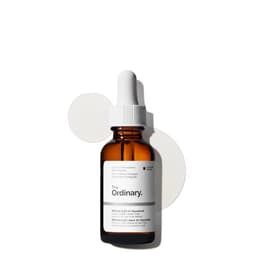
The Ordinary Retinol 0.5% in Squalane
For anyone who wants to know exactly what they are buffering: an exact 0.5% retinol in squalane, so you can step down deliberately if the sandwich is not enough.
$9.30 · View on AmazonPrice as of October 5, 2026. #ad How we’re funded
The bread
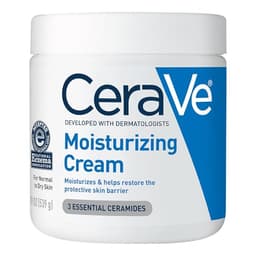
CeraVe Moisturizing Cream
For both layers: three ceramides and hyaluronic acid, fragrance-free and nothing else going on, in a tub big enough to use twice a night without counting.
$18.96 · View on AmazonPrice as of October 5, 2026. #ad How we’re funded
For a patch that is already flaking
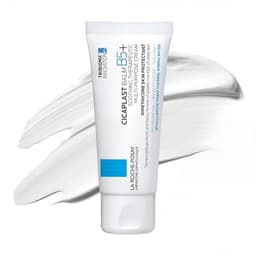
La Roche-Posay Cicaplast Balm B5
For the nights when one area has gone too far: panthenol and madecassoside in an occlusive balm, used on that patch instead of more retinol.
Variations worth knowing, and one to avoid
The short sandwich. Moisturizer first, retinol second, nothing on top. Useful for oily skin that pills with three layers, and still delivers most of the tolerance benefit.
Targeted sandwiching.Buffer only the areas that react — usually around the nose, mouth and under the eyes — and apply retinol directly elsewhere. This is the version most people end up at after a few months.
Mixing retinol into the moisturizer in your palm. This is the variation to avoid, not because it is harmful but because it destroys your ability to judge anything: the dose changes every night depending on how much cream you squeezed out. Layer instead.
The short version
If retinol is irritating you, sandwich it. If it is not, do not bother. Either way, the thing that determines whether retinol does anything for you is whether you are still using it in six months — how long skincare takes to work makes that timeline concrete, and it is the reason a slightly diluted retinol you tolerate beats a strong one you abandon.
General guidance, not medical advice. Barrier & Balm is written by a skincare enthusiast, not a dermatologist. For a diagnosis, a reaction, or a prescription active like tretinoin, see a qualified professional. Introduce any new active slowly and patch-test first.
Frequently asked questions
Does the retinol sandwich method actually work?
For tolerance, it is the most widely used fix there is, and the reasoning is sound: a layer of moisturizer underneath slows how quickly retinol reaches the skin, and a layer on top reduces the water loss that makes irritated skin feel tight. What does not exist is a clinical trial of the sandwich specifically, so we present it as mechanism and practice rather than as a measured result. What is well established is that retinoid benefits come from months of consistent use, so anything that keeps you using it is worth considering.
Does sandwiching make retinol less effective?
Almost certainly a little, and that is the deliberate trade. Putting moisturizer underneath reduces how much retinol gets through, which is the entire mechanism by which it reduces irritation — you cannot have one without the other. The practical calculation is simple: a slightly weaker dose applied three nights a week for six months beats a full dose applied for ten days before you quit.
How long should you wait between the layers?
A few minutes each time, long enough that the previous layer is no longer wet to the touch. There is no magic number, and the commonly quoted twenty or thirty minutes is not necessary. What matters is not applying retinol into a wet film, which dilutes it unevenly, and not applying the top layer so soon that you drag the retinol around.
Can you mix retinol into your moisturizer instead?
You can, and it reduces irritation in the same general way, but it is a worse version of the same idea. Mixing in your palm makes the dose different every night, which removes your ability to tell what your skin is reacting to, and it spreads a small amount of active over whatever quantity of cream you happened to squeeze out. Layering keeps the retinol dose consistent and still buffers it.
Who should not use the retinol sandwich?
Anyone whose retinol is not irritating them, because there is no benefit to give up potency for. Oily skin that finds three layers pill or feel heavy is better served by dropping to a lighter moisturizer or a lower frequency. And if your skin is already raw, weeping or stinging constantly, the answer is to stop the retinol entirely for a week or two and repair the barrier first — sandwiching through genuine damage prolongs it.
What moisturizer should you use for a retinol sandwich?
A plain, fragrance-free barrier cream with no actives in it: ceramides, glycerin and emollients. The reason to keep it boring is diagnostic as much as anything — if the moisturizer contains its own acid, vitamin C or strong botanicals, and your skin reacts, you will not know which product did it. Save the interesting formulas for nights you are not using retinol.
Sources
- American Academy of Dermatology — Retinoid or retinol? — AAD on the difference between prescription retinoids and OTC retinol (accessed July 17, 2026)
- Human Skin Aging and the Anti-Aging Properties of Retinol (PubMed) — Review of topical retinol's effect on collagen and photoaging (accessed July 17, 2026)
- Moisturizers — StatPearls (NCBI Bookshelf) — Reference on humectants (hyaluronic acid), occlusives and emollients (accessed July 17, 2026)
- American Academy of Dermatology — Skin care basics — AAD consumer guidance on cleansing, moisturizing and sun protection (accessed July 17, 2026)
Keep reading
Best retinol for beginners
Starter strengths that state a number, and the twelve-week ramp to go with them.
See the picksHow often to use retinol
Frequency is the lever that builds tolerance. Where to start and when to step up.
Read the guideWhen to apply retinol
Where it goes in the evening order, and how long to wait before the next layer.
Read the guideThe retinol purge
Whether what you are seeing is adjustment or a reaction you should buffer against.
Read the explainerHow to repair your barrier
If you are already raw, repair first and restart the retinol afterwards.
Read the guideWhat not to mix with retinol
Before you buffer, check you are not stacking it with an acid on the same night.
Read the guideWhat is slugging?
The occlusive-on-top habit the second layer here borrows from, and when not to.
Read the guideBest ceramide moisturizers
The bread in the sandwich: plain barrier creams that will not fight the retinol.
See the picks