Glycolic Acid Percentages Explained
Glycolic acid ranges from mild 5% toners to strong professional peels. Here is how to match the concentration to your skin - and stay on the useful side of irritation.
How this is funded: we earn a commission if you buy through our links, at no extra cost to you. It never changes which product we recommend, and we’ll tell you when we’d skip one. Full disclosure.
The two rungs worth buying
Both publish a glycolic percentage, which most brands do not. We have not tested either — the picks come from the published formulation facts, and prices are checked daily.
Starting rung — 3.5%
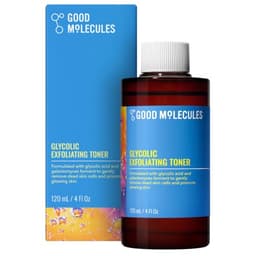
Good Molecules Glycolic Exfoliating Toner
Deliberately low, and it prints the percentage in the ingredient list. The rung to start on if acids have gone badly before.
$14.00 · View on AmazonPrice as of September 15, 2026. #ad How we’re funded
Step up — 7%
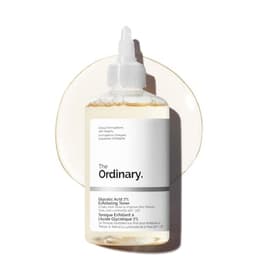
The Ordinary Glycolic Acid 7% Exfoliating Toner
A stated 7% at a published pH of 3.5-3.9 — the second number that decides how strong an acid really is. Skin that handles the low rung comfortably goes here.
$13.50 · View on AmazonPrice as of September 15, 2026. #ad How we’re funded
Glycolic acid is the exfoliating acid people reach for when they want smoother texture, a brighter tone and less of that dull, rough surface build-up. It is also the one with the widest strength range on the market: the same ingredient shows up in a mild 5% toner you use a couple of nights a week and in a strong professional peel that a dermatologist applies for a few minutes and neutralizes. Those are wildly different experiences, and treating them as interchangeable is how people end up red and peeling. This guide explains how the concentrations map to real products, how to match one to your skin, and how to get glycolic’s benefits without tipping into irritation.
What glycolic acid does, briefly
Glycolic acid is an alpha hydroxy acid, or AHA — the smallest one, in fact, which is part of why it penetrates so readily and acts so briskly. It works on the surface of the skin, loosening the bonds that hold dull, dead cells in place so they shed more evenly, which is what leaves skin looking smoother and more even. A reference overview of chemical exfoliation describes this loosening of intercellular bonds as the core mechanism of AHA peels. Because it works at the surface and is water-soluble, glycolic suits texture, tone and general dullness more than it suits deep pore congestion. For the full rundown of what it does and who it suits, see our glycolic acid guide. Here, the focus is strength.
The concentration landscape
Glycolic strength is not just about the number — the product format and how long it stays on your skin matter enormously. A leave-on serum at 8% has far more impact than a cleanser at the same percentage you rinse off in seconds. Here is the general map.
| Rough strength | Typical format | Best thought of as |
|---|---|---|
| Around 5–7% | Toners, gentle leave-on serums, pads | Beginner-friendly, sensitive-skin-friendly maintenance |
| Around 8–10% | Leave-on serums, treatment pads | A step up for skin that tolerates the lower range well |
| Higher / peel-grade | Professional peels, in-clinic treatments | Not everyday home use; belongs with a trained professional |
The lower two bands cover the vast majority of what most people should use at home. The moment a product climbs into strong peel territory, the margin for error narrows and the case for professional supervision grows. Read the number, but always read it next to the format and the contact time.
Matching a strength to your skin
The right concentration depends less on your goals and more on your skin’s tolerance. A few general pointers:
- New to acids, or sensitive skin. Start at the low end, around 5%, and use it infrequently at first. You can always increase; you cannot easily undo an over-exfoliated barrier.
- Normal to resilient skin, comfortable with the basics. The 8–10% band is a reasonable next step once a lower strength feels like nothing.
- Dry, sensitive, or rosacea-prone skin. Glycolic can be too much; a gentler AHA like lactic acid, or a lower strength used rarely, may suit you far better. Our comparison of lactic acid vs glycolic acid lays out the trade-off.
Skin type trumps ambition here. The strongest glycolic your face can technically survive is not the one that gives the best skin — the one it stays calm on is.
Higher is not the same as better
It is worth saying plainly: a bigger percentage is not a bigger favor to your skin. Glycolic acid exfoliates by disrupting the surface, and there is a limit to how much of that your barrier wants. Push past your skin’s tolerance — too strong, too often, or both — and you get the classic signs of over-exfoliation: stinging, tightness, shine that looks like hydration but is really a stripped barrier, flaking, and sometimes breakouts. At that point you are moving backwards. Basic dermatology guidance on skin care keeps returning to gentleness for a reason. The productive zone is the strength and frequency that leave your skin smoother and comfortable, not raw. If in doubt, use less. There is also a second number behind the one on the label: pH decides how much of the acid is in its active free form, so a 10% at a higher pH can be milder in use than a 7% at a lower one. Our roundup of glycolic acid toners compares the products from 3.5% to 10% on which brands publish both figures.
Strength and frequency are one system
Concentration is only half the equation; how often you use glycolic acid is the other half, and the two multiply. A 5% used four nights a week can be more exfoliating in practice than a 10% used once. This is why picking a strength in isolation is a mistake — you have to decide the number and the frequency together. Start conservative on both, then adjust one at a time so you know what changed. It also matters what else is in your routine: layering glycolic with a retinol, a scrub, or a second acid on the same night stacks the exfoliation and the irritation. Our guide on how often to exfoliate gets into pacing so you smooth your skin instead of sanding it.
The sun protection non-negotiable
Any glycolic acid routine comes with one firm requirement: daily broad-spectrum sunscreen. The FDA specifically warns that alpha hydroxy acids can make skin more sensitive to the sun, and that the heightened sensitivity can linger even after you stop using the product. Fresh, newly resurfaced skin is more vulnerable to UV damage and to the very pigmentation you may be trying to fade, so unprotected sun exposure can undo your progress. This is not optional fine print — it is part of using the ingredient responsibly. If you would not commit to daily SPF, glycolic acid is not the right active for you yet.
When to see a professional instead
High-percentage glycolic peels genuinely work, but the risks — burns, prolonged redness, and pigment changes, especially on deeper skin tones — climb steeply with strength and are real when the concentration, pH or timing is off. That is exactly why strong peels are performed in a clinic and neutralized on a schedule. If you want a deeper result than a gentle at-home serum delivers, book a peel with a dermatologist or licensed professional rather than buying a strong acid online and improvising. And if you are dealing with a specific concern like stubborn pigmentation, get tailored advice rather than escalating the percentage on your own.
The bottom line
Glycolic acid spans a huge range, from mild 5% toners you can build into a routine to strong peels that belong in professional hands. For home use, roughly 5% to 10% in a leave-on format covers almost everyone, with the lower end for beginners and sensitive skin. Higher is not better; it is just more aggressive, and past your tolerance it costs you a comfortable barrier. Choose strength and frequency together, start low on both, wear sunscreen every day, and leave the strong peels to a professional. Done that way, glycolic acid is one of the most rewarding actives for texture and tone — done by chasing the biggest number, it is one of the fastest ways to irritate your skin.
General guidance, not medical advice. Barrier & Balm is written by a skincare enthusiast, not a dermatologist. For a diagnosis, a reaction, or a prescription active like tretinoin, see a qualified professional. Introduce any new active slowly and patch-test first.
Frequently asked questions
What percentage of glycolic acid should I use?
For everyday leave-on products at home, roughly 5% to 10% is a sensible working range, with lower strengths for beginners and sensitive skin. Rinse-off cleansers and pads can go a little higher because contact time is short. Anything much stronger moves into peel territory that is better handled by a professional. The right number depends on your skin's tolerance and how often you use it, not on picking the highest available.
Is a higher percentage of glycolic acid better?
Not automatically. A higher concentration exfoliates more aggressively, which raises the risk of stinging, redness, peeling and a damaged barrier just as much as it raises the potential benefit. Once you are getting smoother, brighter skin at a given strength, going higher mostly adds irritation. The most effective strength is the one you can use consistently without your skin becoming raw.
Can I use a 30% or higher glycolic peel at home?
Strong peels in that range are best left to a trained professional. High-percentage glycolic acid can cause burns, prolonged redness and pigment changes if the strength, pH or timing is wrong, and those risks climb sharply as the concentration rises. At-home use is safest kept to the lower, leave-on-friendly strengths. If you want a deeper peel, book it with a dermatologist or licensed professional rather than doing it over the bathroom sink.
How often should I use glycolic acid?
Start with once or twice a week and build up only if your skin stays comfortable. Because glycolic acid exfoliates, using it too often - or stacking it with retinol, scrubs or other acids - is the quickest route to over-exfoliation. Frequency and strength work together, so a lower percentage used more often can equal a higher one used occasionally. Let your skin's comfort set the pace.
Does glycolic acid make skin more sensitive to the sun?
Yes. The FDA notes that alpha hydroxy acids like glycolic can increase your skin's sensitivity to the sun, and that sensitivity can persist for a while after you stop using them. That makes daily broad-spectrum sunscreen essential whenever glycolic acid is in your routine. Skipping sun protection undercuts the benefit and raises your risk of irritation and pigmentation.
Sources
- U.S. FDA — Alpha Hydroxy Acids — FDA on AHAs and increased sun sensitivity (accessed July 17, 2026)
- Applications of hydroxy acids: classification, mechanisms, and photoactivity (PMC) — Kornhauser, Coelho & Hearing, Clin Cosmet Investig Dermatol 2010 — reference review of AHA/BHA/PHA classes, their mechanisms and the safety evaluation of hydroxy acid formulations on sun-exposed skin (accessed August 24, 2026)
- Chemical Peels for Skin Resurfacing — StatPearls (NCBI Bookshelf) — Reference overview of AHA/BHA exfoliation mechanisms (accessed July 17, 2026)
- American Academy of Dermatology — Skin care basics — AAD consumer guidance on cleansing, moisturizing and sun protection (accessed July 17, 2026)
Keep reading
Glycolic acid, explained
What this alpha hydroxy acid does for texture, tone and dullness, and who it suits.
Read the guideAlpha hydroxy acids, explained
The wider AHA family glycolic belongs to, and how the members differ in strength.
Read the guideGlycolic acid vs salicylic acid
When a surface-smoothing AHA beats a pore-clearing BHA, and vice versa.
Compare themLactic acid vs glycolic acid
A gentler AHA option if glycolic runs too strong for your skin.
Compare themBest chemical exfoliants
Vetted glycolic and other exfoliant picks across the sensible strength range.
See the picksHow often to exfoliate
How frequency interacts with strength so you get smoother skin, not a raw barrier.
Read the guideGentlest exfoliants for sensitive skin
If even the lowest glycolic rung stings, this is the ladder to switch to instead.
See the gentle picksBest glycolic acid toners
Five leave-on options from 3.5% to 10%, ranked first on which brands publish a pH alongside the percentage.
See the picksHow to use glycolic acid
Once you've picked a strength: when to apply it, how often, and what not to layer with it.
Read the how-toSigns of over-exfoliation
The tell-tale signs you have climbed a rung too far, and how to walk it back.
Read the guide