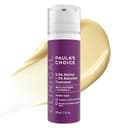
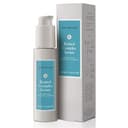
How we judged these
We own no units and ran no trial, and we are not going to tell you how our skin felt in week six. What we did instead was read every ingredient list against the one published comparison that this whole category rests on. Four criteria, in order:
1. Is a bakuchiol percentage published? This is the whole ballgame. The trial used 0.5%; a product that states 0.3% is telling you something checkable and slightly disappointing, and a product that states nothing is asking for trust it has not earned. 2. Where does bakuchiol sit in the ingredient list? When no figure exists, order is the only proxy. Fourth, behind water and two humectants, is a formula built around bakuchiol. Fourteenth, below the glycols and a silicone, is a formula that contains bakuchiol. 3. Is it actually retinol-free? Two picks here pair bakuchiol with retinol. For someone who simply wants the gentlest effective anti-aging step, that is an upgrade. For someone who reacts to retinoids, is pregnant or breastfeeding, or has been told to avoid them, it defeats the entire purpose — so we flag it loudly rather than burying it. 4. The base, the format and the price per ml. An all-oil formula is wrong for oily skin however good the active is, and a 12 ml bottle is a different proposition from a 50 ml one.
One thing we did not reward: the phrase “natural retinol alternative” on the front of a box. It appears on nearly every product in this category, including ones where bakuchiol sits below the preservative, and it carries no information at all.
What the evidence actually says
The study worth knowing is Dhaliwal and colleagues, published in the British Journal of Dermatology and cited at the bottom of this page. Forty-four people, twelve weeks, double-blind: bakuchiol 0.5% twice daily against retinol 0.5% once daily, measured on facial photoaging. Both arms significantly reduced wrinkle surface area and hyperpigmentation, the difference between them was not statistically significant, and the retinol users reported more facial scaling and stinging. The authors concluded bakuchiol was comparable to retinol for photoaging and better tolerated.
Now the limits, because they matter as much as the headline. Forty-four participants is a small sample. Tolerability came from participant-reported questionnaires. And one trial, however well designed, is not the decades of consistent, independently replicated research sitting behind retinol— which is why our honest position, laid out in full in retinol vs bakuchiol, is that if you can tolerate retinol, use retinol. That costs us a sale to say and it remains true. Bakuchiol is for the people retinol does not suit, for the pregnancy and breastfeeding window when retinoids are off the table, and for layering alongside a retinoid to take the edge off. Our bakuchiol explainer covers the mechanism in more depth.
The disclosure problem, and the two numbers to look for
Here is the uncomfortable arithmetic of this category. The trial concentration was 0.5%. Of the six products here:
One states 0.5% bakuchiol — exactly the trial dose — and it is an eye cream in a 20 ml jar, which is the right format for the place retinol most often stings and the wrong format for treating a whole face. One states 0.3%, below the trial dose, in a three-ingredient oil blend that publishes every percentage it contains; that transparency is why it is our top pick even though the number is lower than you might want. One states 2% bakuchiol, the highest figure available anywhere in this category — and pairs it with 0.3% retinol, so it is not an answer for anyone avoiding retinoids. The other three publish nothing whatsoever.
Which leaves an honest conclusion that no brand in this category will print: if a bakuchiol product does not state a percentage, you cannot know whether it contains a meaningful dose, and the ingredient-list position of the cheapest and the most expensive products here suggests the amount varies enormously. Buy on disclosure first and marketing last.
How to choose the right one for your skin
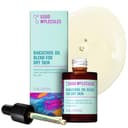
If your skin is dry or matureand you want the clearest possible picture of what you are applying, the top pick is a three-ingredient oil — 80% rosehip seed oil, 19.7% chia seed oil, 0.3% bakuchiol — with no retinol, no fragrance and no essential oil. You are buying a good rosehip oil with a measured bakuchiol addition, which is exactly what it says it is.
If your skin is oily or combination, skip the oils entirely and buy the water-based serum. Bakuchiol sits fourth in it, behind only water, aloe leaf water and glycerin, and there is no retinol anywhere in the formula. It is also several times the price of everything else here and publishes no figure, so you are paying for position in a list rather than a number.
If the lines that bother you are around your eyes, the stated-0.5% eye cream is the most interesting product on this page: the trial concentration, in the one area where retinol irritation most reliably drives people to quit, for a very modest price. Read the format caveat — 20 ml is eye-area economics, not face economics.
If you already use a peptide serum and want bakuchiol without adding a step, the copper-peptide formula does both, as long as you buy it understanding that it is a peptide serum with bakuchiol in it rather than the reverse. Our peptide serum picks cover that category properly.
And if you can tolerate a retinoid, the two retinol-plus-bakuchiol picks are the better anti-aging buy on the evidence, with the bakuchiol there to buffer the ramp-up rather than to replace the active. If you cannot — or you are pregnant or breastfeeding, where retinoids are off the table — those two are not options at all, and the first four picks are your field. Our beginner retinol guide lays out the gentler on-ramp if you would rather try that first.
How to use a bakuchiol serum
Bakuchiol is the easiest active on this site to fit into a routine. It has no documented UV sensitivity of its own, so it can go on morning or night; it needs no buffering period; and it layers comfortably with niacinamide, hyaluronic acid, peptides and vitamin C without the conflict warnings that follow retinol around. Apply it to clean skin before your moisturizer — or in the case of the oil blends, as the last step, since an anhydrous oil layered under a water-based cream will block it. Where each step sits is covered in our routine order guide.
Two expectations to set honestly. Give it three months. The trial ran twelve weeks and that is the right yardstick; anything you notice in the first fortnight is the base formula hydrating your skin, not photoaging reversing. And keep wearing sunscreen. Bakuchiol does not make you sun-sensitive the way an exfoliating acid does, but the pigmentation and wrinkle changes measured in that trial are the same ones daily UV exposure undoes faster than any serum rebuilds them. If your budget stretches to one purchase this month, make it the sunscreen.
One last thing worth saying plainly, since nobody selling bakuchiol will: it is not a treatment for acne, and the babchi-seed oil sometimes sold as a cheaper substitute is a different material from cosmetic-grade bakuchiol — less characterized, more variable, and not what the trial tested. Buy the named ingredient.