How to Get Rid of Textured Skin
Four different things get called texture, and they need different treatments. Identify yours first, then pick the one active that addresses it — and stop scrubbing.
How this is funded: we earn a commission if you buy through our links, at no extra cost to you. It never changes which product we recommend, and we’ll tell you when we’d skip one. Full disclosure.
First, identify what you are actually looking at
“Texture” is a description, not a diagnosis, and the four things it usually describes respond to completely different treatment. This is the step people skip, and it is why a cupboard of exfoliants produces no improvement.
| What you see or feel | What it probably is | What addresses it |
|---|---|---|
| Small flesh-colored bumps, felt more than seen, forehead and chin | Closed comedones (congestion) | Salicylic acid, leave-on; or a retinoid |
| Overall roughness, dullness, makeup catching | Dead-cell buildup, often with dehydration | Lactic or mandelic acid, plus a better moisturizer |
| Hard white bumps that will not budge, often near the eyes | Milia (keratin cysts) | Not exfoliation — see the milia guide |
| Dents, pits or raised marks where spots used to be | Scarring (structural) | In-clinic procedures; topicals will not remove it |
If you are in the third row, the milia guide is the right page. If you are in the fourth, read fading acne marks for the pigment half and be sceptical of anything promising to fill an indent from a bottle.
Why scrubs feel right and are wrong
A gritty scrub gives you the most immediately satisfying result in skincare: skin is visibly smoother within a minute. It is also the most temporary, because all it has done is shear off the outermost dead cells — which were going to shed anyway — without touching the two things actually causing texture. It cannot get inside a clogged pore, and it does nothing about the rate at which new dead cells accumulate.
Chemical exfoliants work differently: they loosen the bonds holding dead cells together, so shedding happens more evenly across the whole surface and inside pore openings. The reference literature on chemical resurfacing describes the mechanism in those terms. The full comparison is in physical versus chemical exfoliation, but the short version is that scrubs are a cosmetic effect and acids are a treatment.
Choosing one acid, and only one
Salicylic acid, if your texture is bumps
Salicylic acid is a beta hydroxy acid, which the FDA notes is oil-soluble — the property that matters here. It can travel into a pore filled with sebum and dead cells, which is exactly where a closed comedone lives. A stated 2% leave-on liquid used two or three nights a week is the standard approach, and salicylic acid percentages sets out what each strength is for.
Lactic acid, if your texture is roughness
Lactic acid is a larger AHA molecule than glycolic, so it exfoliates a little more gently and holds water while it does it — which suits the dehydrated, rough, dull-looking case better than a stronger glycolic would. See lactic versus glycolic if you are choosing between them.
Mandelic acid, if your skin is reactive or pigmentation-prone
Mandelic is the largest AHA molecule of the three, so it penetrates most slowly and irritates least. That makes it the sensible starting exfoliant for sensitive skin, and for deeper skin tones where irritation can leave pigment behind. Mandelic versus glycolic covers the trade.
Or a retinoid instead
A retinoid increases turnover rather than dissolving what is already there, which addresses both congestion and roughness over a longer timescale and with the deeper evidence base. It is an alternative to an acid, not a companion to one on the same night. If you have never used one, the beginner retinols and the sandwich method are the gentlest way in.
What to look for in an exfoliant
A stated percentage.“With AHAs” is not a dose. If the label will not tell you the strength, you cannot step down when it stings or step up when nothing happens. One acid, not a cocktail. Blends of four acids at undisclosed levels are impossible to titrate and are the usual route to over-exfoliation. Leave-on, not rinse-off,if you want it to do real work — a cleanser has seconds of contact time. Fragrance-free, on skin you are deliberately making more permeable. And a texture you will use at night, because acids and sun are a poor combination.
One exfoliant for each kind of texture
Three stated-strength, fragrance-free options — pick the one that matches your row in the table above, and use only that one. We have not tested them; picks come from published formulation facts, and prices are checked daily.
For bumps and congestion
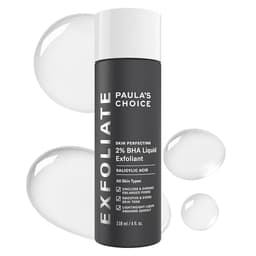
Paula's Choice Skin Perfecting 2% BHA Liquid Exfoliant
For small flesh-colored bumps and blackheads: a stated 2% salicylic acid at a functional pH, oil-soluble so it can reach inside the pore.
$37.00 · View on AmazonPrice as of October 5, 2026. #ad How we’re funded
For roughness and dullness
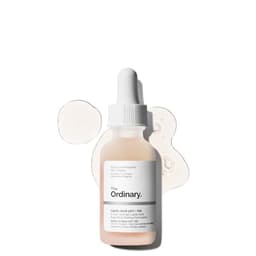
The Ordinary Lactic Acid 10% + HA
For generalized rough, dull texture on dry or normal skin: a stated 10% lactic acid buffered with hyaluronic acid, so it smooths without stripping.
$9.20 · View on AmazonPrice as of October 5, 2026. #ad How we’re funded
For sensitive or pigmentation-prone skin
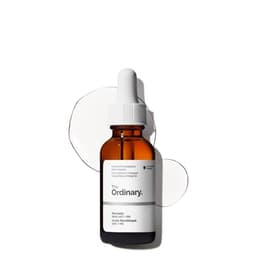
The Ordinary Mandelic Acid 10% + HA
For reactive skin and deeper tones: a stated 10% mandelic acid, the largest and slowest AHA molecule, which is why it irritates least.
$7.80 · View on AmazonPrice as of October 5, 2026. #ad How we’re funded
The routine that goes around it
- Two or three nights a week, not every night. Start at two. How often to exfoliateis the longer answer, and the honest one is that most people’s texture problem is partly an over-exfoliation problem.
- Nothing else active on those nights. No retinoid, no vitamin C, no second acid. One variable at a time.
- Moisturizer after, every time.Exfoliation without barrier support is how smooth skin becomes shiny, tight, stinging skin — the signs of over-exfoliation are worth knowing before you need them.
- Daily broad-spectrum SPF 30 or higher.The FDA’s own guidance on AHAs flags increased sun sensitivity, and new surface skin burns more easily.
- Give it eight weeks before judging. Turnover takes weeks, and how long skincare takes to work sets realistic expectations.
What to stop doing
Stop scrubbing, stop using pore strips, and stop picking at closed bumps — all three trade a day of smoothness for weeks of inflammation, and picking is how a bump becomes a mark. Stop stacking acids, including the ones hiding in your cleanser and your toner. And stop over-washing: stripped skin produces a rougher, tighter surface, which is exactly the thing you are trying to fix.
If your texture is on your upper arms and thighs rather than your face, that is likely keratosis pilaris, which is a different condition with its own management and worth raising with a clinician rather than treating with a facial exfoliant.
General guidance, not medical advice. Barrier & Balm is written by a skincare enthusiast, not a dermatologist. For a diagnosis, a reaction, or a prescription active like tretinoin, see a qualified professional. Introduce any new active slowly and patch-test first.
Frequently asked questions
What causes textured skin on the face?
Four things, with different fixes. Closed comedones — small flesh-colored bumps full of oil and dead cells — are congestion. Generalized roughness and dullness is a buildup of dead surface cells, often worse in winter or on dehydrated skin. Hard white bumps sitting just under the surface are usually milia, which are keratin cysts rather than clogged pores. And indented or raised marks left by old acne are scars, which are structural. Treating all four as the same problem is why people exfoliate for months without improvement.
How long does it take to improve skin texture?
Four to eight weeks for surface roughness and congestion, if you use one exfoliant consistently at a sensible frequency. Cell turnover takes a few weeks, so nothing you do shows up sooner than that, and a visible change in week one is usually the temporary smoothing of a hydrated surface rather than a real result. Scarring does not improve on this timescale at all.
Is a scrub good for textured skin?
No. A physical scrub takes off the very top layer of dead cells, which produces an immediate smoothness that disappears within a day or two, and it cannot reach inside a clogged pore where the actual problem is. Harsh scrubs also cause micro-irritation that makes skin look worse over weeks. A chemical exfoliant works on the bonds between dead cells instead, which is both gentler and more durable.
Should I use AHA or BHA for texture?
BHA — salicylic acid — if your texture is small bumps and congestion, because it is oil-soluble and can get into a pore. AHA — lactic or glycolic acid — if your texture is generalized roughness and dullness, because those work on the surface layer. Mandelic acid is the gentlest AHA and the sensible first choice for reactive or pigmentation-prone skin. Using both at once is how people end up over-exfoliated.
Can retinol help with textured skin?
Yes, and it is a reasonable alternative to an acid rather than an addition to one. Retinoids increase cell turnover, which addresses both congestion and surface roughness, and they have the deeper evidence base of the two approaches. The trade-off is a slower start and an irritation period. Using a retinoid and an exfoliating acid on the same night is the most common cause of a damaged barrier in this category.
Does drinking water help skin texture?
Being adequately hydrated is good for you, but drinking extra water does not smooth skin texture, and no credible evidence suggests it does. Surface roughness is usually about dead-cell buildup and a barrier that is not holding water in — which is addressed topically, by a humectant and an occlusive layer, rather than from the inside.
Sources
- Chemical Peels for Skin Resurfacing — StatPearls (NCBI Bookshelf) — Reference overview of AHA/BHA exfoliation mechanisms (accessed July 17, 2026)
- U.S. FDA — Alpha Hydroxy Acids — FDA on AHAs and increased sun sensitivity (accessed July 17, 2026)
- U.S. FDA — Beta Hydroxy Acids in Cosmetics — FDA on salicylic acid as a beta hydroxy acid (accessed July 17, 2026)
- Applications of hydroxy acids: classification, mechanisms, and photoactivity (PMC) — Kornhauser, Coelho & Hearing, Clin Cosmet Investig Dermatol 2010 — reference review of AHA/BHA/PHA classes, their mechanisms and the safety evaluation of hydroxy acid formulations on sun-exposed skin (accessed August 24, 2026)
- American Academy of Dermatology — Retinoid or retinol? — AAD on the difference between prescription retinoids and OTC retinol (accessed July 17, 2026)
Keep reading
Best chemical exfoliants
The full field compared on acid type and stated strength, for every texture case.
See the picksHow to get rid of clogged pores
If your texture is congestion, this is the longer version of the fix.
Read the guideHow often to exfoliate
The frequency question that decides whether an acid helps or makes it worse.
Read the guideSigns of over-exfoliation
Shiny, tight, stinging skin that looks smoother and feels worse. How to spot it.
Read the guidePhysical vs chemical exfoliation
Why the scrub in your cupboard is the wrong tool for every case on this page.
Read the comparisonBest skincare for large pores
Where texture is really pore size, and what can and cannot be changed.
Build the routineHow to get rid of milia
The hard white bumps that no acid will shift, and what actually works.
Read the guideHow to add exfoliation
Where an acid goes in your routine, and what to drop on the nights you use it.
Read the guide