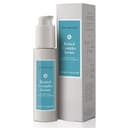
The five compared on what the label states
Only two of these five publish a retinol percentage. That is not a research gap at our end — it is the state of the category, and it is the single most useful thing to know before you buy, because an unstated strength cannot be stepped up from deliberately.
| Product | Stated strength | Form | Buffered with | Size |
|---|
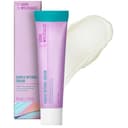
| Good Molecules Gentle Retinol Cream | 0.1% retinol + 0.3% bakuchiol | Light cream | Grapeseed oil, allantoin | 30 ml |
|---|
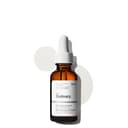
| The Ordinary Retinol 0.5% | 0.5% retinol | Oil serum | Squalane base | 30 ml |
|---|
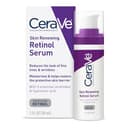
| CeraVe Skin Renewing | Not published | Encapsulated, cream-serum | Ceramides NP/AP/EOP, niacinamide, HA | 30 ml |
|---|
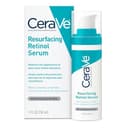
| CeraVe Resurfacing | Not published | Encapsulated, fluid serum | 3 ceramides, niacinamide, licorice root | 30 ml |
|---|
| Naturium Retinol Complex | Not published | Encapsulated, light serum | Bakuchiol | 30 ml |
|---|
All five are fragrance-free, which is a hard filter on a product that will already make skin more reactive.
How to start, week by week
This is the part that decides whether retinol works for you, and it is more important than which of the five you buy. The principle: you are training your skin’s tolerance, and tolerance builds on frequency before strength.
- Weeks 1–2: twice a week, at night, a pea-sized amount for the whole face. Moisturizer after.
- Weeks 3–4: every third night, if week 2 was comfortable.
- Weeks 5–8: every other night. Most people are fine stopping here permanently.
- Weeks 9–12: nightly, if you want it and your skin is calm. Then stay there for months before thinking about a higher strength.
If any step stings, flakes or reddens, drop back one level for two weeks rather than pushing through. Our guide on how often to use retinol covers the maintenance frequency, and introducing new actives applies the same logic to everything else you add.
Three habits that prevent most beginner irritation
Apply to dry skin, and moisturize after
Damp skin increases penetration, which sounds good and is exactly what a beginner does not want. Cleanse, wait until your face is genuinely dry, apply the retinol, then moisturizer on top. If that is still too much, use the retinol sandwich— moisturizer, retinol, moisturizer — which is the single most effective beginner adjustment there is.
A pea for the whole face, not per zone
More product does not speed anything up; it just raises the irritation without raising the benefit. Skip the eyelids, the corners of the nose and any actively broken skin.
Sunscreen is not optional on a retinol routine
Retinol works on the same photoaging that UV causes, so skipping SPF cancels the point of the exercise, and newly turned-over skin is more sun-sensitive. Non-negotiable daily broad-spectrum SPF 30 or higher — see the sunscreen picks.
What to expect, and what is not normal
Expect some dryness and light flaking in the first few weeks, usually around the nose and chin, usually settling by week four. Expect no visible improvement for eight to twelve weeks — this is a slow active, and how long skincare takes to work puts that in context with everything else.
A crop of small spots in the first month can be the retinol speeding up congestion that was already there, which is what the retinol purge is about, and purging versus breaking out explains how to tell them apart. What is notnormal: burning that lasts after the first few minutes, raw or weeping skin, swelling, or flaking that is getting worse in week six rather than better. That is a damaged barrier, and the fix is to stop, repair, and restart lower — see repairing your barrier.
What not to pair it with at the start
Keep it simple for the first three months: cleanser, retinol, moisturizer, sunscreen. Specifically, do not use an AHA or BHA on the same night, do not layer benzoyl peroxide in the same step, and move vitamin C to the morning rather than stacking it on top. None of these combinations is dangerous; they are just three ways to trigger irritation you will then blame on the retinol. The full list is in what not to mix with retinol.
Bakuchiol, stated honestly
Two of the picks here include bakuchiol, a plant extract with a small supportive evidence base of its own, including a comparison trial against retinol. In these formulas it is present alongside the retinol as a buffer, not instead of it, which is the right way round — retinol has the far deeper evidence. If you want the version without any retinol at all, read retinol versus bakuchiol first and go in with realistic expectations.
What we left out, and why
No 1% retinols — Paula’s Choice CLINICAL 1% is an excellent product and completely wrong as a first bottle; it is in the main retinol serums roundup for when you get there. No prescription tretinoin, which is a different and stronger molecule entirely (the comparison). And no retinol marketed only as “encapsulated retinol complex” with neither a strength nor a buffering story we could read off the listing.