How to choose a chemical exfoliant
Start with one decision and the rest falls into place: are you exfoliating to clear congestion and oil, or to smooth surface texture and tone? That single question sorts you into a BHA or an AHA, and from there it’s about matching the specific acid to how reactive your skin is.
AHA vs BHA: the first fork in the road
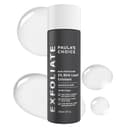
BHAmeans salicylic acid, and its defining trait is that it’s oil-soluble. That lets it cut through sebum and work inside the pore lining, which is exactly where blackheads and clogged pores form. If your main complaints are shine, bumpy congestion and blackheads, a BHA is the right tool — the U.S. FDA classifies salicylic acid as the beta hydroxy acid used in exfoliating cosmetics for precisely this job.
AHAs — glycolic, lactic and mandelic acid — are water-soluble. They stay on the surface, loosening the glue between dead cells so the top layer sheds evenly. That’s what fades dullness, softens fine lines and smooths rough patches. The FDA also notes AHAs can make skin more sensitive to the sun, which is the real reason daily sunscreen is non-negotiable while you use one.
Match the acid to your skin
Among the AHAs, the practical difference is molecule size, and bigger means gentler. Glycolicis the smallest, so it penetrates fastest and works hardest — best for resilient skin chasing glow and texture, but the most likely to sting. Lactic is a larger molecule that exfoliates more gently and is mildly hydrating, which makes it the friendlier AHA for dry or normal skin. Mandelicis the largest of the three; it diffuses in slowly and irritates the least, so it’s the sensible starting acid for sensitive, reactive or breakout-prone skin, and it’s often preferred on deeper skin tones where irritation can leave dark marks.
Azelaic acid sits slightly apart. It isn’t a classic exfoliating acid — it doesn’t slough the surface the way AHAs and BHAs do — but it’s the one “acid” that redness- and rosacea-prone skin usually tolerates, and it earns a place here for people who react to everything else. If your goal is calmer, more even skin rather than a deep resurface, it’s the gentle pick.
If what sent you here is bumpy or rough skin generally, textured skin is worth reading first: four different problems get called texture, and picking the wrong acid for yours is the usual reason months of exfoliating change nothing.
Concentration and pH: the number isn’t the whole story
A higher percentage is not automatically a stronger product. An acid only exfoliates efficiently within a certain pH range, so a well-formulated 7% glycolic at the right pH can out-work a sloppily made 10%. That’s why we weight the whole formula — the acid, its pH where a brand publishes it, and the soothing and hydrating support around it — over the headline number. The bigger mistake is reaching for a high-strength peel before your skin has met a mild leave-on acid; strength you can’t tolerate does nothing but damage the barrier you’re trying to improve. If glycolic is the acid you’ve settled on, our glycolic acid toner roundupgoes deeper on that one shelf — five leave-on options from 3.5% to 10%, ranked first on which brands publish a pH alongside the percentage.
How often, and what not to stack it with
Start two to three nights a week, not nightly, and only build up if your skin stays comfortable. Over-exfoliation — tightness, a waxy shine, stinging and flaking — comes from doing too much too often, not from any one product being “bad.” Keep acids to the evening, and don’t layer them on the same night as retinol, which is already accelerating cell turnover from another direction. Alternate the two on separate nights instead. Niacinamide and hyaluronic acid, by contrast, are friendly company — both help cushion an acid’s dryness.
Who should skip chemical exfoliants
If your barrier is currently compromised — raw, flaking or over-treated — pause acids and repair first. And if you have rosacea, note that the American Academy of Dermatology lists glycolic and lactic acid among the ingredients to keep off a rosacea-prone face; for that skin, azelaic acid is the exception, and our rosacea routine covers the gentler approach. When in doubt, patch test a new acid for a few days before it goes on your whole face.