What Does Non-Comedogenic Mean?
It means the manufacturer does not expect the product to block your pores. It does not mean a regulator checked, and the test behind the claim has been criticized for fifty years.
How this is funded: we earn a commission if you buy through our links, at no extra cost to you. It never changes which product we recommend, and we’ll tell you when we’d skip one. Full disclosure.
Start with what a comedo is
A comedo is a plugged follicle: dead cells and sebum packed into a pore. If the plug stays below the surface it is a closed comedo — a whitehead, one of those small uniform bumps that catch the light. If it reaches the surface and oxidizes it darkens into an open comedo, a blackhead. Neither is infected and neither is red; that is what separates comedonal acne from the inflammatory kind.
“Comedogenic” therefore means pore-plugging, and “non-comedogenic” is a claim that a product should not do it. The claim is most common on moisturizers, sunscreens and makeup — the products you apply generously, daily, over your whole face — which is exactly where it would matter most if it were reliable.
Where the claim comes from, and why to discount it
For most of the last half-century, comedogenicity testing has meant the rabbit ear assay. The inside of a rabbit’s ear forms comedones readily, so an ingredient is applied there, usually at high or neat concentration, and the resulting follicular plugging is counted. Cosmetic companies adopted it precisely because it was a cheap way to support a non-comedogenic claim.
The trouble is that dermatology noticed the problems early. Frank’s review in the Journal of the American Academy of Dermatologyin 1982 asked directly whether the rabbit ear model “in its present state” predicted acnegenicity in people, and set out “the many problems in performance of the test method, the absence of correlation with experience in the human, and, consequently, the serious limitations of the conclusions that can reasonably be drawn, especially for the clinical dermatologist.” That was more than forty years ago, and the claim is still on the shelf.
Two further gaps matter. The assay tests ingredients, generally at concentrations no finished product contains — and a 1% inclusion in a water-based lotion is not the same exposure as a neat application. And the term itself is unregulated: no authority defines it, no agency verifies it, and nothing stops two brands applying it to formulas with very different ingredient lists. Labeling rules in the United States govern how ingredients must be declared, not which performance adjectives a brand may print on the carton.
So is the label useless?
No — it is weak evidence rather than no evidence. A brand that prints “non-comedogenic” has usually made formulation choices in that direction: oil-free or low-oil, lighter emollients, a thinner texture, no heavy butters or waxes. That intent is real and often visible in the ingredient list. What the label cannot tell you is whether your skin, with your sebum output and your other products, will congest.
The honest way to use it: treat the claim as a filter that narrows the shelf, then verify it by reading the formula. That is the same posture this site takes toward “dermatologist tested” and “hypoallergenic” — all three are statements of intent, none is a test result you can inspect.
What to read on the label instead
The first eight to ten ingredients are most of the formula, because cosmetic ingredient lists run in descending order of concentration down to 1%. That is where to look.
| Good signs for congestion-prone skin | Worth caution high in the list |
|---|---|
| Water or aloe first; a gel or fluid texture; the words “oil-free” | Heavy plant butters — shea, cocoa — near the top of a face product |
| Glycerin, sodium hyaluronate, panthenol — humectants that hydrate without oil | Coconut-derived oils and esters, and isopropyl myristate or palmitate |
| Named ceramides (NP, AP, EOP) and niacinamide | Thick waxes and lanolin in a leave-on facial product |
| Light silicones such as dimethicone and cyclopentasiloxane | Fragrance — an irritation risk rather than a clogging one, but still worth skipping |
| Silica or other oil absorbers, if shine is the issue | Very long lists of botanical oils, where the total oil load is high even if each is low |
One caution on the right-hand column: these are not villains, and plenty of excellent dry-skin products are built on them. The point is fit. A formula that is wonderful on a dry cheek in January can be too much on an oily T-zone in July. How to read an ingredient label covers the ordering rules in full.
Three moisturizers that pass the ingredient-list test
Oil-free formulas whose first ingredients support the claim on the box, rather than contradicting it. Chosen on disclosed formulation rather than on testing we have not done; prices are checked daily.
The cheap default
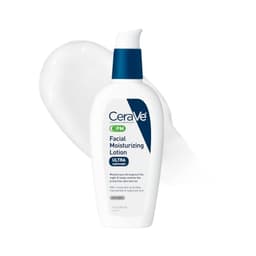
CeraVe PM Facial Moisturizing Lotion
A light, oil-free lotion with ceramides, niacinamide and hyaluronic acid and nothing heavy in the first ten ingredients. Fragrance-free, and cheap enough to use generously.
If shine is the complaint
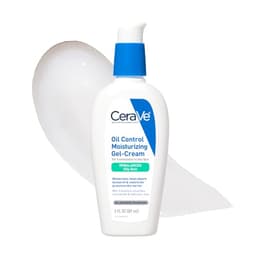
CeraVe Oil Control Moisturizing Gel-Cream
An oil-free gel-cream with ceramides, niacinamide and silica-based oil absorbers. The mattifying effect is a feature on a greasy T-zone and a drawback on dry cheeks.
If you also break out
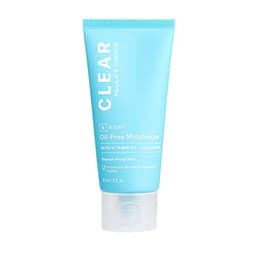
Paula's Choice CLEAR Oil-Free Moisturizer
A water-light oil-free lotion with niacinamide, named ceramides and antioxidants, formulated for acne-prone skin. The honest con is the price next to the drugstore options.
$42.00 · View on AmazonPrice as of October 17, 2026. #ad How we’re funded
Congestion, irritation or purging?
Most “this product broke me out” verdicts are delivered too early and on the wrong evidence. Three different things look similar in week one:
- Congestion appears over four to six weeks as small, uniform, non-inflamed bumps, concentrated where you apply most product. This is the thing the non-comedogenic claim is about.
- Irritationappears within days as redness, stinging, and sometimes inflamed spots. It is a reaction to something in the formula — frequently fragrance or an active — and has nothing to do with pore blocking.
- Purging appears one to three weeks after starting a retinoid or an acid, as a crop of spots in your usual trouble areas, and settles by about week eight. It is accelerated turnover, not a new problem. Purging vs breaking out has the full diagnostic.
The practical method is boring and works: change one product at a time, wait four weeks, and photograph your skin in the same light rather than relying on memory. If you do react, the useful question is not “was the label lying” but “which ingredient was it” — how to patch test is how you find out.
The bottom line
“Non-comedogenic” is a reasonable hint and a bad guarantee. It tells you the formulator was aiming at congestion-prone skin; it does not tell you a regulator agreed, that a standardized test was passed, or that your skin will go along with it. The assay most of the claim rests on has been criticized in the dermatology literature since 1982 for not predicting human experience, and the ingredient rating charts derived from it are weaker still.
So use it as the first filter and the ingredient list as the second. Oil-free, light texture, humectants and named ceramides at the top, no fragrance, and a quantity you will actually apply — those five things predict how a product behaves on congestion-prone skin far better than the adjective on the front. And if acne rather than congestion is the real problem, the label is a side issue: see best skincare for acne-prone skin and best face wash for acne for the steps that actually treat it.
General guidance, not medical advice. Barrier & Balm is written by a skincare enthusiast, not a dermatologist. For a diagnosis, a reaction, or a prescription active like tretinoin, see a qualified professional. Introduce any new active slowly and patch-test first.
Frequently asked questions
Is non-comedogenic a regulated claim?
No. There is no legal definition, no required test and no approval process for the term in the United States — it sits alongside 'hypoallergenic' and 'dermatologist tested' as marketing language a manufacturer may apply at its own discretion. The FDA's cosmetics labeling rules govern how ingredients must be declared, not which performance adjectives a brand may print on the front of the box.
How is comedogenicity actually tested?
Historically by the rabbit ear assay: applying an ingredient at high concentration to the inside of a rabbit's ear, which is unusually prone to forming comedones, and counting what develops. Frank's 1982 review in the Journal of the American Academy of Dermatology set out 'the many problems in performance of the test method, the absence of correlation with experience in the human, and, consequently, the serious limitations of the conclusions that can reasonably be drawn.' Some brands now run human patch panels instead, which is better but still not standardized.
Does non-comedogenic mean it won't cause acne?
No, for two reasons. First, comedones are only one kind of acne lesion — a product can avoid blocking pores and still provoke inflammatory papules and pustules through irritation. Second, the claim is about the formula in general rather than about your skin in particular. Plenty of people break out from products labeled non-comedogenic, and that is not necessarily a false claim; it is the limit of what a population-level label can tell one person.
Are comedogenic ratings for individual ingredients reliable?
Not very. Those 0-to-5 scales circulating online derive mostly from the rabbit ear work, applied at concentrations no finished product uses. A finished formula behaves differently from an isolated ingredient: concentration, the rest of the base, and how the product is applied all change the outcome. Treating coconut oil's rating as a verdict on a cream containing 1% of it is a misreading of where the number came from.
What should I look for instead of the non-comedogenic label?
Read the first eight to ten ingredients, which is where most of the formula sits. Oil-free, water- or gel-based, light silicones, glycerin and named ceramides are good signs for congestion-prone skin. Heavy plant butters, coconut-derived esters, isopropyl myristate and thick waxes high in the list are the ones worth being cautious about. Fragrance is worth avoiding for a separate reason: irritation.
Can a non-comedogenic product still be too rich for my skin?
Easily. 'Non-comedogenic' says nothing about weight or finish. A rich cream can be formulated without classically pore-clogging ingredients and still feel like too much on oily skin, which in practice leads to over-application, a greasy film and congestion that the label did not predict. Match the texture to your skin as well as the claim.
Does non-comedogenic matter for sunscreen?
It is worth looking for, and it is also where the claim is least informative, because sunscreen filters themselves vary in how they feel and behave on congestion-prone skin. The more reliable signals are an oil-free base, a fluid or gel texture, and whether the finish is matte. The sunscreen you will actually wear daily beats the one with the better adjective on the box.
How do I tell if a product is clogging my pores?
Give it four to six weeks, change nothing else, and look for a specific pattern: small, uniform, non-inflamed bumps appearing in the areas where you apply most product. That is congestion. Red, sore spots arriving within days are more likely irritation, and a sudden widespread flare-up a week or two after starting an active is more likely purging. The three have different fixes.
Sources
- Is the rabbit ear model, in its present state, prophetic of acnegenicity? (PubMed) — Frank SB, J Am Acad Dermatol 1982;6(3):373-7 — review of the rabbit-ear assay behind most "non-comedogenic" claims, highlighting "the many problems in performance of the test method, the absence of correlation with experience in the human, and, consequently, the serious limitations of the conclusions that can reasonably be drawn" (accessed October 17, 2026)
- U.S. FDA — Cosmetics Labeling Guide — FDA: fragrance and flavor compounds "may be declared in descending order of predominance as 'fragrance' and 'flavor'"; a masking agent "may be declared by their individual name(s) or as 'fragrance'", and one "present in a product at an insignificant level may be considered an incidental ingredient" — so it need not be declared at all (accessed October 11, 2026)
- American Academy of Dermatology — Acne: Diagnosis and treatment — AAD overview of benzoyl peroxide, retinoids, salicylic and azelaic acid for acne (accessed July 17, 2026)
- Guidelines of care for the management of acne vulgaris (PubMed) — 2024 AAD acne guideline of care (accessed July 17, 2026)
- Moisturizers — StatPearls (NCBI Bookshelf) — Reference on humectants (hyaluronic acid), occlusives and emollients (accessed July 17, 2026)
Keep reading
How to get rid of clogged pores
What to do once congestion has already happened, in the order worth trying.
Read the guidePurging vs breaking out
The distinction that decides whether to persevere with a new product or drop it.
Read the guideBest moisturizers for acne-prone skin
The category where this claim matters most, ranked on what is actually in the formula.
See the picksHow to read an ingredient label
Where the useful information lives, and which front-of-box claims mean nothing.
Read the guideFragrance-free vs unscented
The other label pair people assume is interchangeable, and the FDA rules behind it.
Read the comparisonBest sunscreen for acne-prone skin
The step congestion-prone skin most often skips, and the textures that make it bearable.
See the picks