Why Did My Vitamin C Serum Turn Brown?
Yellow, then orange, then brown: the color change is L-ascorbic acid oxidizing. Here is what each stage means, when to throw it out, and which formats do not do it at all.
How this is funded: we earn a commission if you buy through our links, at no extra cost to you. It never changes which product we recommend, and we’ll tell you when we’d skip one. Full disclosure.
What is actually happening in the bottle
L-ascorbic acid — pure vitamin C, the form with the best evidence behind it — is a powerful antioxidant, and that is precisely the problem. An antioxidant works by giving up electrons to things that want them. Oxygen wants them. So does anything the serum touches once the bottle has been opened.
In water, ascorbic acid oxidizes to dehydroascorbic acid, which then degrades further into a series of breakdown products. Some of those are colored, which is why the serum shifts from clear to straw, straw to yellow, yellow to orange, and eventually orange to brown. The dermatology review literature on topical vitamin C treats this instability as the defining formulation challenge of the ingredient — it is why the category is full of airless pumps, opaque bottles, anhydrous bases and derivative molecules.
Four things accelerate the reaction: air (every time you open the bottle), water (the reaction medium), light (UV in particular) and heat (a warm bathroom does real damage over a summer). A fifth is pH drift, which you cannot see or control. None of this means your serum was bad; it means you bought a reactive molecule, which is the same reason it does anything useful on your face.
The color chart, and what to do at each stage
| Color | What it means | Still worth using? | What to do |
|---|---|---|---|
| Clear or very pale straw | Fresh, little or no oxidation | Yes — full potency | Nothing. Store it cool and dark |
| Light yellow | Early oxidation has started | Yes | Normal at this stage. Use it daily rather than saving it |
| Deep yellow to orange | Meaningful loss of active | Marginally | Finish within a couple of weeks and expect little; start thinking about the replacement |
| Brown or amber | Advanced oxidation; the active is largely gone | No | Throw it out. It can also tint skin and mark a pillowcase |
| Pink or cloudy | Usually a different formulation issue or contamination, not classic oxidation | No | Throw it out, and if it is recent, raise it with the retailer |
The progression only runs one way. A serum that has gone orange does not recover, and nothing you add to it will reverse the reaction. One practical note: if your serum came in an opaque tube or an airless pump, you cannot see any of this happening — which is better for the serum and worse for your ability to judge it. With those, go by date rather than color: about three months after opening for a water-based L-ascorbic acid formula.
Three ways to stop it happening
1. Buy the right format for the way you use it
If you finish a 30 ml bottle in two months, a water-based L-ascorbic acid serum with vitamin E and ferulic acid is a perfectly good choice and the oxidation never becomes your problem. If a bottle lasts you six months, it will be brown before you are done and you should buy a stable format instead. That is a usage decision, not a quality one.
2. Prefer a sealed delivery system
An airless pump or an opaque bottle with a dropper beats a wide-mouthed jar by a wide margin, because the main oxygen exposure happens at the moment you open it. A clear glass dropper bottle on a bright shelf is the worst common case — light and air in the same package.
3. Store it cool, dark and away from the shower
Heat accelerates degradation, and a bathroom that gets steamy twice a day is a bad home for a reactive molecule. A bedroom drawer is fine; a fridge is better. The FDA makes the same general point about cosmetics: heat exposure breaks preservatives down and lets microbes grow faster, and it notes that no U.S. law requires a cosmetic to carry an expiration date at all — so storage and observation are doing the work a printed date would otherwise do.
Three serums that handle stability differently
One anhydrous, one derivative-based and one water-based formula engineered for stability — the three real answers to this problem. Chosen on disclosed formulation rather than on testing we have not done; prices are checked daily.
No water, no oxidation
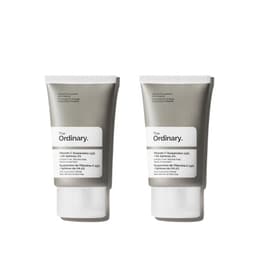
The Ordinary Vitamin C Suspension 23% + HA Spheres 2%
A stated 23% L-ascorbic acid suspended in silicones with no water phase, so the reaction has nothing to run in. The trade is a gritty, draggy texture that not everyone tolerates.
$16.20 · View on AmazonPrice as of October 17, 2026. #ad How we’re funded
The stable derivative
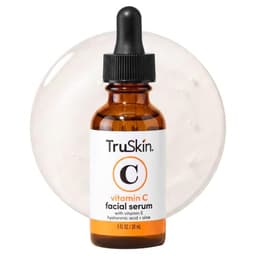
TruSkin Vitamin C Serum
Built on sodium ascorbyl phosphate rather than L-ascorbic acid — far more stable and less irritating, with a thinner evidence base because it needs converting in the skin.
$19.99 · View on AmazonPrice as of October 17, 2026. #ad How we’re funded
Water-based, engineered to last
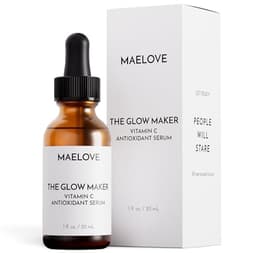
Maelove Glow Maker Vitamin C Serum
A stated 15% L-ascorbic acid with vitamin E and ferulic acid, the combination shown to stabilize vitamin C and roughly double its photoprotection. It still oxidizes eventually — buy fresh and replace it when it darkens.
Does the vitamin E and ferulic acid trick really work?
Yes, within limits, and it is the one stability claim on this shelf with a clean citation behind it. Lin and colleagues showed that ferulic acid stabilizes a solution of vitamins C and E and roughly doubles its photoprotective effect — which is why that trio appears in so many serums and why the formula it comes from has been copied for two decades.
What it does not do is make a water-based serum immortal. A well-built C+E+ferulic serum oxidizes more slowly than plain ascorbic acid in water; it still oxidizes. Treat it as a reason to prefer that formula, not a reason to keep a bottle for a year.
What this means for how you buy vitamin C
The practical conclusion is unglamorous: buy smaller bottles more often, and prefer the lowest concentration that works for you. A 10% serum used up fresh delivers more active to your face than a 20% serum that has been browning in a warm bathroom since spring. That is also the argument against stockpiling during a sale — in most categories buying three is sensible, and in this one it is how you end up throwing two away. Our 10% vs 20% comparison makes the same case from the irritation side.
It also means you should not read a color change as a brand failure. Every water-based L-ascorbic acid serum on the market does this, including the expensive ones; the ones that never change color have either removed the water, swapped to a derivative, or hidden the contents in an opaque tube. Knowing which of those three you bought is more useful than any marketing claim on the box — and vitamin C forms explained is the page that sorts them out.
One last thing worth saying plainly. If your serum is yellow, use it and stop worrying — you are within the normal life of the product. If it is brown, replace it and change one habit: keep the next bottle out of the bathroom, buy the 30 ml rather than the 60 ml, and put a reminder in your phone for three months. That costs nothing and solves the problem better than any stabilized formula on the shelf. For the wider question of what else in your cabinet is quietly degrading, see does skincare expire and how to store skincare.
General guidance, not medical advice. Barrier & Balm is written by a skincare enthusiast, not a dermatologist. For a diagnosis, a reaction, or a prescription active like tretinoin, see a qualified professional. Introduce any new active slowly and patch-test first.
Frequently asked questions
Is it safe to use a vitamin C serum that has turned brown?
It is not dangerous, but it is no longer doing the job. Oxidized L-ascorbic acid has converted to breakdown products that do not deliver the antioxidant and brightening effects you bought it for, so you are applying an expensive hydrating serum. Dark serums can also leave a temporary orange-brown tint on the skin and mark a light pillowcase. Pale yellow is fine; brown should go in the bin.
How long does a vitamin C serum last once opened?
For a water-based L-ascorbic acid serum, plan on about three months after opening, stored cool and away from light — sooner if it is in a clear bottle or a jar, or if you keep it on a sunny bathroom shelf. Anhydrous suspensions and derivative forms last much longer. Note that the FDA does not require cosmetics to carry an expiration date at all, so the color is usually a better guide than the packaging.
What does each color mean?
Clear or very pale straw: fresh and fully potent. Light yellow: early oxidation, still effective, use it up. Deep yellow to orange: meaningfully degraded, finish it soon and do not expect much. Brown or amber: oxidation is advanced and the active is largely gone. The progression is one-way — a serum never gets lighter again.
Can an oxidized vitamin C serum stain my skin?
It can leave a temporary tint, especially a dark one applied generously, and it can mark a light pillowcase or towel. The discoloration is surface-level and washes off; it is not a pigmentation change in the skin. It is still a reason to stop using a brown serum rather than something to work around.
Does keeping vitamin C serum in the fridge help?
Yes, modestly and genuinely. Heat accelerates the oxidation reaction, so a cool, dark place slows it — a fridge, a drawer, anywhere that is not a sunny windowsill or a steamy shower shelf. It will not stop oxidation, because air and water are doing most of the work, but it buys you weeks rather than days.
Which vitamin C serums do not oxidize?
Two formats sidestep it. Anhydrous suspensions suspend L-ascorbic acid particles in silicones with no water phase, so the reaction has nothing to run in — the trade-off is a gritty texture. Derivative forms like sodium ascorbyl phosphate or magnesium ascorbyl phosphate are far more stable, at the cost of a thinner evidence base, since they need converting in the skin. Neither turns brown in any normal timeframe.
Does vitamin E and ferulic acid stop oxidation?
It slows it, and that combination is the reason the trio is so common. Lin and colleagues showed that ferulic acid stabilizes a solution of vitamins C and E and roughly doubles its photoprotection. A serum with all three is a better-engineered water-based serum than one with ascorbic acid alone — it still oxidizes eventually, just more slowly.
My serum came slightly yellow from the shop. Is that a problem?
Usually not. A faint straw tint is within the normal range for a fresh L-ascorbic acid formula, and some formulas are tinted pale yellow to begin with. What matters is the direction of travel: if it is noticeably darker a month later, that is oxidation, and if it arrives deep orange, it has sat in a warm warehouse and you should return it.
Sources
- Vitamin C in dermatology (PMC) — Telang — review of topical vitamin C forms, stability and photoprotection (accessed July 17, 2026)
- Ferulic acid stabilizes a solution of vitamins C and E and doubles its photoprotection (PubMed) — Lin et al. — the L-ascorbic acid + vitamin E + ferulic acid evidence (accessed July 17, 2026)
- U.S. FDA — Shelf Life and Expiration Dating of Cosmetics — FDA: no U.S. law requires a cosmetic to carry an expiration date, but sunscreens are regulated as drugs and must; heat exposure breaks preservatives down and lets bacteria and fungi grow faster (accessed September 12, 2026)
- American Academy of Dermatology — Skin care basics — AAD consumer guidance on cleansing, moisturizing and sun protection (accessed July 17, 2026)
Keep reading
Best vitamin C serums
The whole category sorted by the form of vitamin C — which is what decides stability as much as the percentage does.
See the picksVitamin C forms explained
L-ascorbic acid versus the derivatives, and what each one trades away.
Read the guideHow to use a vitamin C serum
When to apply it, how much, and what to layer it with.
Read the guideHow to store skincare
Which products actually degrade, and the three places you should not keep them.
Read the guideDoes skincare expire?
What the FDA requires, what the symbols mean, and which products to replace on a schedule.
Read the guideVitamin C 10% vs 20%
Why the higher number is not the better buy, especially once stability is in the picture.
Read the comparison