Do You Need Sunscreen Indoors?
UVB is blocked by window glass and UVA is not — so the answer depends on your window and your day, not on a rule. Where indoor SPF earns its place, and where it is theater.
How this is funded: we earn a commission if you buy through our links, at no extra cost to you. It never changes which product we recommend, and we’ll tell you when we’d skip one. Full disclosure.
If you are wearing it indoors, wear one you do not mind
An indoor sunscreen has an easy job — no sweat, no swimming, no reapplication over a day at the beach — so pick on texture and finish. Three picks for the desk-and-window scenario. We own no units and have tested nothing; prices are checked daily.
Nicest to wear daily
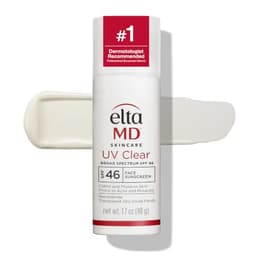
EltaMD UV Clear Broad-Spectrum SPF 46
Zinc-oxide-based SPF 46 with 5% niacinamide, oil-free and fragrance-free. Light enough that wearing it on a day you may not need it costs nothing.
$45.00 · View on AmazonPrice as of October 11, 2026. #ad How we’re funded
Best budget
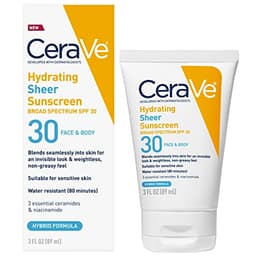
CeraVe Hydrating Mineral Sunscreen SPF 30
A 100% mineral SPF 30 in a hydrating ceramide base. If indoor use is most of your wear, there is no case for spending more.
If one step is all you will do
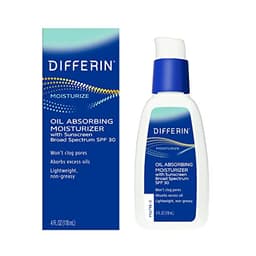
Differin Oil Absorbing Moisturizer SPF 30
A moisturizer with SPF 30 that absorbs oil — the honest compromise for a low-exposure day when a separate sunscreen will not get applied.
$10.69 · View on AmazonPrice as of October 11, 2026. #ad How we’re funded
The one fact the answer turns on
Sunlight that reaches your skin indoors is not the same sunlight that reaches it outdoors. The AAD puts the difference plainly: UVA rays, which it calls the aging rays and which “can prematurely age your skin, causing wrinkles and age spots”, pass through window glass. UVB rays, “the primary cause of sunburn”, are blocked by it.
That single asymmetry explains every confusing thing about this question. It is why you can sit in a sunbeam at a desk for a year and never burn, and why someone who has spent decades driving a particular route can show more photoaging on one side of their face. It is also why your own sensation is useless as a guide: burning is the feedback mechanism you have, and the wavelength that gets through glass does not trigger it.
Note what the asymmetry does notsay. It does not say indoor exposure equals outdoor exposure — glass blocks a band of the spectrum and reduces the rest, and the intensity reaching a desk two metres from a north-facing window is not the intensity reaching a face in a garden. The honest answer is proportional, which is why this page gives you a table rather than a rule.
Your situation, and what we would actually do
| Your day | Wear sunscreen? | Why |
|---|---|---|
| You go outside at any point in daylight | Yes, every day | This is the scenario the AAD’s daily recommendation is written for, and it covers almost everybody — the walk to a car counts |
| Desk beside a sunlit window, hours a day | Yes | UVA passes through glass and the exposure accumulates without any sensation to warn you |
| Regular driving, especially with sun on one side | Yes, and reapply on long trips | Side windows are the classic case; the exposure is sustained and one-directional |
| Office with windows you sit well away from | Optional — we would, out of habit | Low exposure, but a single morning application costs nothing and removes the decision |
| Windowless room, home before dark | No | There is no UV to protect against. Wearing sunscreen here is habit, not protection |
| Using retinol, acids or treating pigmentation | Yes, treat it as non-negotiable | These routines are the ones that need UV control to work at all — see our dark spots routine |
If you are in the last row, stop weighing this up and just wear it. Pigmentation responds to the removal of its provocation more than to anything you layer on top, and the actives that fade marks are also the ones that make skin more sun-reactive. That is the one scenario where the indoor question has a confident answer.
Three cheaper interventions than a bottle of sunscreen
Move the desk
If the honest reason you are considering indoor SPF is a specific sunlit spot, the free fix is to not sit in it, or to turn so the light falls on the back of your head rather than your face. People spend years applying a product to solve a furniture problem.
Use the blind during the bright hours
Mid-morning to mid-afternoon is when a window does most of its work. A blind closed for those hours removes the exposure entirely rather than attenuating it, and it does the same for everyone else in the room.
Treat glass as a variable, not a constant
Not all glazing is equal, and some glass is specifically manufactured or filmed to cut UV transmission. If you spend a very large amount of time behind one particular window — a home office, a long commute — window film is a one-off purchase that works while you are asleep at the wheel of your own skincare routine.
What we will not claim
That your screen is damaging your skin.Blue-light SPF is a marketing category, and the sources this site cites — the AAD on UVA and UVB, the FDA on filters — are specific about sunlight and say nothing about monitors. We are not going to extrapolate from the one to the other in either direction. If a product’s main pitch is screen protection, you are paying for a claim nobody here can stand behind.
That indoor light causes sunburn. It does not, because the burning wavelength is the one glass blocks. If you have burned sitting indoors, you were sitting in front of an open window.
That indoor exposure is equivalent to outdoor exposure. Some skincare writing implies this to sell a daily habit. It is not true, and overstating it is how people conclude the whole topic is nonsense and stop wearing sunscreen on the days that matter.
The practical conclusion
Daily sunscreen is a good habit for a boring reason: almost nobody actually spends a day entirely away from daylight, and a habit with no decision in it gets kept. If you will be outside at all, the AAD’s recommendation is broad spectrum, SPF 30 or higher, water resistant — and applied in the right amount, which is where most people lose far more protection than they would lose by skipping an indoor day.
So: wear it in the morning as part of the routine, choose something light enough that wearing it on a windowless day costs you nothing, and stop auditing your own exposure. If the texture is the reason you skip it, that is a product problem with a product solution — our sunscreen roundup ranks the field on finish as much as filters, and the tinted picks solve the mineral cast that makes people abandon the mineral ones. And if you genuinely work nights in a room with no windows, you have our permission to skip it.
General guidance, not medical advice. Barrier & Balm is written by a skincare enthusiast, not a dermatologist. For a diagnosis, a reaction, or a prescription active like tretinoin, see a qualified professional. Introduce any new active slowly and patch-test first.
Frequently asked questions
Does UV go through windows?
Partly. The AAD states that UVA rays can pass through window glass, while UVB rays — the primary cause of sunburn — are blocked by it. That is why you do not burn through a window but can still accumulate the exposure associated with premature aging and pigmentation. Car side windows and large modern glazing differ in what they transmit, so a sunny commute is a different exposure from a north-facing office.
Do I need sunscreen if I sit by a window all day?
If the window is genuinely sunlit and you are there for hours, that is the strongest indoor case for wearing it — UVA passes through glass, and the exposure accumulates whether or not you ever feel it. The cheaper alternatives are real too: move the desk, angle it so the light is not on your face, or close a blind during the brightest part of the day.
Do I need sunscreen on a cloudy day?
If you are going outside, yes. The AAD notes that even on cloudy days up to 80% of the sun's harmful UV rays can penetrate the clouds, which makes overcast weather a poor reason to skip it. Cloud cover reduces how much you feel but not nearly as much as it reduces how much you expect.
Does blue light from screens damage skin?
We are not going to tell you either way, because none of the sources this site is prepared to cite settles it. The sources we do cite are specific about UVA and UVB and about what glass transmits, and they say nothing about monitors. Treat 'screen-protecting' SPF claims as unproven marketing rather than as a reason to buy — and note that if you are near the window your monitor sits by, it is the window doing the work.
Is SPF 30 enough for indoor use?
Comfortably. The AAD's recommendation for daily use is broad spectrum, SPF 30 or higher and water resistant, and indoor exposure is at the easy end of what that covers. Broad spectrum matters more than the number here, because the wavelength that reaches you through glass is UVA — and only a broad-spectrum product is tested against it.
Do I need to reapply sunscreen if I am inside all day?
Generally no. Reapplication guidance exists because sunscreen is rubbed, sweated and swum off, and because outdoor exposure is intense and continuous — roughly every two hours of sun exposure, and after swimming or sweating. A single morning application that is not disturbed is a reasonable approach for a day spent indoors. If you go out at lunch, reapply before you do.
What about mineral versus chemical sunscreen for indoor wear?
Either is fine; pick on finish. Zinc oxide and titanium dioxide are the two filters the FDA has proposed as safe and effective at up to 25%, and zinc has a broad UVA-UVB absorption curve while titanium is the stronger UVB filter — which is more relevant outdoors. Indoors, the only thing that matters practically is whether you will keep wearing it, so choose the texture you prefer.
Sources
- American Academy of Dermatology — Sunscreen FAQs — AAD: "UVA rays (or aging rays) can prematurely age your skin, causing wrinkles and age spots, and can pass through window glass", while "UVB rays (or burning rays) are the primary cause of sunburn and are blocked by window glass"; recommends broad-spectrum, SPF 30 or higher, water-resistant sunscreen applied "every day on skin not covered by clothing if you will be outside"; even on cloudy days "up to 80% of the sun's harmful UV rays can penetrate the clouds" (accessed October 11, 2026)
- American Academy of Dermatology — How to decode a sunscreen label — AAD on SPF, broad spectrum and water resistance claims (accessed July 17, 2026)
- U.S. FDA — Sunscreen: How to Help Protect Your Skin from the Sun — FDA on SPF numbers, broad-spectrum and application amount (accessed July 17, 2026)
- U.S. FDA — Questions and Answers: FDA's regulatory actions on over-the-counter sunscreen — FDA: "sufficient safety data on both zinc oxide and titanium dioxide to support a proposal that sunscreen products containing these ingredients (at concentrations of up to 25%) are GRASE" — while twelve other filters, including avobenzone, oxybenzone, homosalate, octinoxate, octisalate and octocrylene, still lack the data for a positive GRASE determination (accessed October 7, 2026)
- A review of inorganic UV filters zinc oxide and titanium dioxide (PubMed) — Schneider & Lim, Photodermatol Photoimmunol Photomed 2018 — review of the two mineral filters: "ZnO has a broad UVA-UVB absorption curve, while TiO2 provides better UVB protection" (accessed October 7, 2026)
Keep reading
How to choose a sunscreen
SPF, broad spectrum and finish — the three things on the label that actually matter.
Read the guideHow much sunscreen to apply
The published amounts, and why under-applying costs more protection than people expect.
Read the guideSPF vs moisturizer with SPF
When a combined product is the sensible compromise and when it quietly under-protects you.
Read the comparisonMineral vs chemical sunscreen
How each type works, what the FDA has said about the filters, and who suits which.
Read the comparisonBest sunscreens for face
The whole field, mineral and chemical, judged on finish as much as filters.
See the picksBest skincare for dark spots
If pigment is your concern, indoor UVA exposure is part of the reason it is not fading.
See the routine