How we judged these
Four criteria, in the order they actually decide a purchase. None of them is “how it felt on us” — we own no units and claim no testing; what we can do is read the labels properly and say what they mean.
1. The stated filter percentages
This is the criterion you can only apply to sunscreens, and you should use it. A moisturizer can keep its niacinamide strength secret; a sunscreen cannot hide its actives. Across these four picks, the numbers range from a combined 8% of mineral to a single filter at 11%:
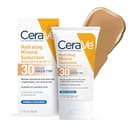
- CeraVe Sheer Tint SPF 30— zinc oxide 10% + titanium dioxide 5.5% (15.5% combined)
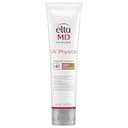
- EltaMD UV Physical Tinted SPF 41— zinc oxide 9% + titanium dioxide 7% (16% combined)
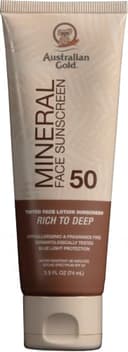
- Australian Gold Tinted Mineral SPF 50— zinc oxide 4% + titanium dioxide 4% (8% combined)
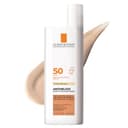
- La Roche-Posay Anthelios 50 Tinted Mineral— titanium dioxide 11%, no zinc
Two things to take from that list. First, a higher combined load is not simply better: SPF is tested on the finished formula, so dispersion and base chemistry matter as much as the raw percentage, and the lightest-wearing option here is also the lowest-load one. Second, the splittells you about the kind of coverage. Zinc oxide has the broader, more even UVA–UVB absorption curve while titanium dioxide is the stronger UVB filter, which is why most of these pair them — and why the titanium-only outlier has to carry 11% to reach SPF 50. We unpack that trade in full in zinc oxide vs titanium dioxide.
2. Whether the shade range is real
Most tinted mineral sunscreens ship a single “universal” tint. A universal tint is a compromise calibrated for fair-to-medium skin, and on deeper tones it reads as exactly the gray cast it was meant to solve. This is the criterion the category most often fails, so it carries real weight here: only one of these four offers a genuine multi-shade range, and it is the reason it earns its award. If your skin is deeper than medium, treat shade range as the first filter and everything else as a tiebreaker — our sunscreens for dark skin tones roundup goes further on this.
3. What else is in the base
A sunscreen is a leave-on product you apply to your whole face every single day, which makes its base the most-used moisturizer in your routine whether you planned it that way or not. One of these picks carries three ceramides, niacinamide, hyaluronic acid and cholesterol — a credible barrier formula under the filters. Others carry antioxidants, or silicones and powders chosen for finish rather than function. Neither approach is wrong; they suit different skin. What all four share is that none of them contains fragrance, which is non-negotiable on a product that goes on reactive, sun-exposed skin.
4. The finish you will actually wear
The last criterion is the one that decides whether any of this matters. A sunscreen only protects at the amount you apply, and the published guidance is generous: roughly a shot glass for the whole body, which works out to the two-finger line most people find surprising for the face alone. Nobody applies that much of something that feels bad. So a slightly lower SPF in a texture you like beats a higher one you apply sparingly — see how much sunscreen to apply for the amounts.
How to choose between these four
If your skin is dry, reactive or recovering
Go for the ceramide-and-niacinamide base. A tinted sunscreen whose formula could pass as a barrier moisturizer removes a step and reduces the number of products touching skin that is already unhappy — useful if you are coming off a retinol flare or an over-exfoliation episode. If that is where you are, read how to repair your skin barrier first; the sunscreen is the last step of that plan, not the whole of it.
If cast is your only complaint
Pay for finish. The prestige tinted minerals spend their formulation budget on silicones, blurring powders and iron oxides tuned to disappear, and it shows. This is the honest case for spending more on sunscreen: not better protection — the SPF number and the broad-spectrum claim are what measure that — but a texture you will put on seven mornings a week.
If you are medium-to-deep
Shade range first, everything else second. A tinted sunscreen that does not match you is worse than an untinted one, because at least an untinted cast is uniform. Buy from the range that publishes actual shades, and if you are between two, size up rather than down — a slightly deeper tint blends out, a slightly lighter one sits on top.
If zinc oxide is what has not worked for you
Try a titanium-only formula before you conclude mineral sunscreen is not for you. Most people who have written off minerals have only ever tried zinc-heavy ones, and a zinc-free, broad-spectrum titanium formula is a genuinely different product on the skin. The trade is real and we state it on the pick itself: titanium alone leans on its weaker suit for long-wave UVA, so apply generously and keep to the reapplication schedule.
What a tint does and does not buy you
Iron oxides do two jobs. The obvious one is color correction. The less obvious one is that iron oxides absorb some visible light, which is relevant to melasma and post-inflammatory pigmentation — conditions that visible light can provoke even when UV is fully blocked. That is a genuine reason to prefer a tinted sunscreen if pigmentation is your concern, and it is why our dark spots routine treats SPF as the foundational step rather than an afterthought.
What a tint is notis coverage. These are sheer products; they even out tone slightly and kill the mineral cast, and that is where their cosmetic ambition ends. If you want a tinted sunscreen to replace foundation, you will be disappointed, and if you layer makeup over it you need a plan for reapplying — see how to reapply sunscreen over makeup.
What we left out, and why
Tinted sunscreens with chemical filters.Plenty exist and some are excellent, but the reason to buy a tint in the first place is usually that a mineral cast is the problem you are solving. Mixing in avobenzone or octinoxate changes the product’s whole character — and the FDA has said the public record does not yet contain sufficient data for a positive safety determination on twelve such filters, while zinc oxide and titanium dioxide have been proposed as safe and effective at up to 25%. That is a data gap rather than a finding of harm, which is why we still recommend chemical sunscreens elsewhere; it is just not the right lane for a 100%-mineral roundup. For those, see best sunscreens for face.
Tinted SPF moisturizers and “glow” drops. A product whose headline is luminosity is usually selling you shimmer plus an SPF number you will under-apply, and many are fragranced. Fragrance is an avoidable irritant on a daily leave-on.
Travel sizes of otherwise good formulas. A 0.5 oz tube of an excellent tinted sunscreen is a sample, not a daily driver, and recommending one at a daily-driver price per ounce is not a buyer-first call.
Tinted mineral sticks and powders. Convenient for topping up, but almost nobody applies an adequate amount from a stick, and a loose mineral powder is the one format where the inhalation question is worth taking seriously. Use them to reapply, not as your only SPF.
How to actually use a tinted sunscreen
Sunscreen goes last in the morning, after moisturizer and before makeup — our routine order guidehas the full sequence. Dot it across the face and spread, rather than rubbing in from one blob, so you do not end up with a thin patch along the jaw and hairline. Give it a minute to set before anything goes on top; a mineral tint that is still wet will pill under a foundation. And reapply roughly every two hours of sun exposure, and after swimming or sweating, regardless of how high the SPF is — no sunscreen is “all day,” and the tinted ones are no exception.
One last thing worth saying plainly: the highest SPF on this page is not automatically the best buy, and the lowest is not a compromise. All four carry a broad-spectrum claim, which is a tested result against a defined threshold rather than a marketing phrase. Past SPF 30 applied properly, the curve flattens hard — which is why we would rather you bought the tint that matches your skin and wore it every day than bought the biggest number and wore it twice a week.