Barrier & Balm

Best Mineral Sunscreens

The zinc and titanium sunscreens worth wearing on your face, compared on filters, finish and the white-cast question — with picks for sensitive skin and deeper tones.

By Stephen V.Last updated How we pick

A mineral sunscreen protects your skin with two active ingredients that sit on the surface and block UV: zinc oxide and titanium dioxide. People reach for them for good reasons — they’re gentle, they start working the moment they’re on, and they suit reactive, rosacea-prone and blemish-prone skin that chemical filters can sting. The catch everyone has run into is the white cast: pure mineral filters are white, so a badly chosen one can leave you looking ashy. The good news is that the best modern formulas have largely solved that with sheerer textures and tints.

We don’t own a lab and we haven’t worn every tube, so this isn’t a “we tested 40 sunscreens” roundup. What it is: a shortlist chosen on the things you can actually verify — the filters and their stated percentages, the SPF, whether it’s fragrance-free, and how each one handles cast — with an honest note on the trade-off for every pick. The single most important rule with any sunscreen is that the best one is the one you’ll apply generously and reapply, so we’ve leaned toward formulas people are willing to wear daily. Match the pick to your skin and tone below, and read the “how to choose” section if the filters and numbers feel like alphabet soup.

How this is funded: we earn a commission if you buy through our links, at no extra cost to you. It never changes which product we recommend, and we’ll tell you when we’d skip one. Full disclosure.

Quick picks

Ranked on formulation, stated concentration and buyer fit. Select a row to jump to the full write-up. We have not tested these products — here is exactly what we do instead.

#ProductBest forPrice
1
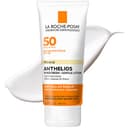
La Roche-Posay Anthelios Mineral SPF 50 Gentle Lotion

La Roche-Posay Anthelios Mineral SPF 50 Gentle Lotion

A 100% mineral SPF 50 with antioxidants for skin that can't tolerate chemical filters. A little cast is the honest trade for a pure-mineral, fragrance-free formula.

Best overall
$25.97 · View on Amazon

Price as of September 5, 2026. #ad How we’re funded

2
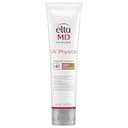
EltaMD UV Physical Tinted SPF 41

EltaMD UV Physical Tinted SPF 41

A 100% mineral, tinted SPF 41 built to solve the one thing that makes people quit mineral sunscreen: the white cast. A universal iron-oxide tint cancels the whitening while zinc and titanium do the protecting — the most cosmetically elegant mineral here, at a prestige price.

Best for no white cast
$48.00 · View on Amazon

Price as of September 5, 2026. #ad How we’re funded

3
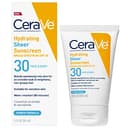
CeraVe Hydrating Mineral Sunscreen SPF 30

CeraVe Hydrating Mineral Sunscreen SPF 30

A budget mineral-based SPF 30 with ceramides for people who want a physical filter without the prestige price. A little cast, but a genuinely gentle, barrier-friendly option.

Best budget pick
$13.97 · View on Amazon

$17.9922% off

Price as of September 5, 2026. #ad How we’re funded

4
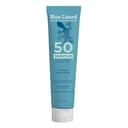
Blue Lizard Sensitive Mineral Sunscreen SPF 50

Blue Lizard Sensitive Mineral Sunscreen SPF 50

A no-frills 100% mineral SPF 50 for genuinely reactive skin, in a big face-and-body tube. Fragrance-free, paraben-free and free of the chemical filters that sting sensitive eyes — the honest trade is a heavier feel and some whitening.

Best for sensitive skin
$15.48 · View on Amazon

Price as of September 5, 2026. #ad How we’re funded

5
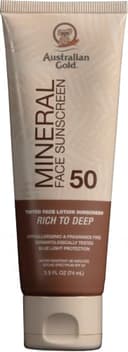
Australian Gold Mineral SPF 50 Tinted Face

Australian Gold Mineral SPF 50 Tinted Face

The rare tinted mineral that comes in an actual shade range — Fair to Light, Medium to Tan and Rich to Deep — so deeper skin tones get a real match instead of a one-size universal tint. A 100% mineral SPF 50 at a drugstore-adjacent price.

Best for deeper skin tones
$18.99 · View on Amazon

Price as of September 5, 2026. #ad How we’re funded

The picks in full

#1Best overall

La Roche-Posay Anthelios Mineral SPF 50 Gentle Lotion

A 100% mineral SPF 50 with antioxidants for skin that can't tolerate chemical filters. A little cast is the honest trade for a pure-mineral, fragrance-free formula.

Strengths

  • 100% mineral (titanium dioxide + zinc) at SPF 50
  • Antioxidant complex added
  • Fragrance-free

Trade-offs

  • Slight white cast, as all true mineral filters have
  • Thicker than a chemical sunscreen
Key activeTitanium dioxide + zinc oxide (SPF 50)
Stated concentrationSPF 50
FormatFluid lotion
Fragrance-freeYes
Best forSensitive, Reactive, Rosacea-prone

Formulation note. 100% mineral filters at SPF 50 + antioxidants. Pure-mineral means some cast — an honest trade for people whom chemical filters irritate.

Ingredients and claims read from the product listing, on July 17, 2026. “Not published” means the brand does not state that figure.

#2Best for no white cast

EltaMD UV Physical Tinted SPF 41

A 100% mineral, tinted SPF 41 built to solve the one thing that makes people quit mineral sunscreen: the white cast. A universal iron-oxide tint cancels the whitening while zinc and titanium do the protecting — the most cosmetically elegant mineral here, at a prestige price.

Strengths

  • Tint neutralizes the white cast pure mineral filters leave behind
  • Stated 9% zinc oxide + 7% titanium dioxide — 100% mineral, fragrance-free and oil-free
  • Adds antioxidants (quercetin, thioctic and linoleic acid) for extra daytime defense

Trade-offs

  • A single universal tint won't match the deepest skin tones
  • Premium price for a 3 oz tube
Key activeZinc oxide + titanium dioxide (SPF 41, tinted)
Stated concentrationSPF 41
FormatTinted lotion
Fragrance-freeYes
Best forSensitive, Normal, Combination

Formulation note. 9% zinc oxide + 7% titanium dioxide with a universal iron-oxide tint; 100% mineral, oil-free and fragrance-free, water resistant up to 40 minutes. The tint is the point — iron oxides offset the cast and add a little visible-light protection.

Ingredients and claims read from the product listing, on August 8, 2026. “Not published” means the brand does not state that figure.

#3Best budget pick

CeraVe Hydrating Mineral Sunscreen SPF 30

A budget mineral-based SPF 30 with ceramides for people who want a physical filter without the prestige price. A little cast, but a genuinely gentle, barrier-friendly option.

Strengths

  • Mineral filters + ceramides + hyaluronic acid
  • Fragrance-free and gentle
  • Low price

Trade-offs

  • SPF 30 rather than 50
  • Mineral cast on deeper tones
Key activeTitanium dioxide + zinc oxide (SPF 30)
Stated concentrationSPF 30
FormatSheer lotion
Fragrance-freeYes
Best forSensitive, Dry, Normal

Formulation note. Mineral filters + 3 ceramides + hyaluronic acid at SPF 30. The ceramides make it the gentle-budget mineral pick; the cast and SPF 30 are the trade-offs.

Ingredients and claims read from the product listing, on July 17, 2026. “Not published” means the brand does not state that figure.

#4Best for sensitive skin

Blue Lizard Sensitive Mineral Sunscreen SPF 50

A no-frills 100% mineral SPF 50 for genuinely reactive skin, in a big face-and-body tube. Fragrance-free, paraben-free and free of the chemical filters that sting sensitive eyes — the honest trade is a heavier feel and some whitening.

Strengths

  • Stated 10% zinc oxide + 8% titanium dioxide — 100% mineral and fragrance-free
  • Large 5 fl oz tube encourages the generous amount SPF actually needs
  • No oxybenzone or octinoxate, with aloe and vitamin E in the base

Trade-offs

  • Leaves a white cast and feels heavier than a chemical sunscreen
  • Thick texture needs working in, especially on deeper skin tones
Key activeZinc oxide + titanium dioxide (SPF 50)
Stated concentrationSPF 50
FormatMineral lotion
Fragrance-freeYes
Best forSensitive, Reactive, Face and body

Formulation note. 10% zinc oxide + 8% titanium dioxide, 100% mineral, fragrance-free and paraben-free, water resistant up to 40 minutes. Chosen for what it leaves out — no chemical filters, no fragrance — which is why it suits the most reactive skin; the cast is the honest cost.

Ingredients and claims read from the product listing, on August 8, 2026. “Not published” means the brand does not state that figure.

#5Best for deeper skin tones

Australian Gold Mineral SPF 50 Tinted Face

The rare tinted mineral that comes in an actual shade range — Fair to Light, Medium to Tan and Rich to Deep — so deeper skin tones get a real match instead of a one-size universal tint. A 100% mineral SPF 50 at a drugstore-adjacent price.

Strengths

  • Three shades (Fair to Light, Medium to Tan, Rich to Deep) for a genuine match on deeper tones
  • Stated 4% zinc oxide + 4% titanium dioxide — 100% mineral and fragrance-free
  • Non-greasy tinted lotion at a mid-range price

Trade-offs

  • You have to pick the right shade — the wrong one reads as a tint mismatch
  • Lower total mineral load than the SPF 50 heavyweights, so apply and reapply diligently
Key activeZinc oxide + titanium dioxide (SPF 50, tinted)
Stated concentrationSPF 50
FormatTinted lotion
Fragrance-freeYes
Best forMedium-to-deep tones, Normal, Sensitive

Formulation note. 4% zinc oxide + 4% titanium dioxide with a tint, 100% mineral and fragrance-free, broad spectrum and water resistant. The three-shade range is the differentiator — it's a tinted mineral built for the deeper tones a single universal tint can't cover.

Ingredients and claims read from the product listing, on August 8, 2026. “Not published” means the brand does not state that figure.

What makes a mineral sunscreen worth buying

Start with the non-negotiables, because they’re the same for every sunscreen. You want broad spectrum (it protects against both UVA, which ages skin, and UVB, which burns it) and at least SPF 30. Below SPF 30 the protection drops off faster than most people realize; above SPF 50 the extra is marginal, which is why our SPF 30 vs SPF 50breakdown says how much you apply matters far more than chasing a bigger number. For a “mineral” sunscreen specifically, the active ingredients should be onlyzinc oxide, titanium dioxide, or both — no chemical filters like avobenzone or octinoxate in the drug-facts box.

After that, the deciding factors are cosmetic, and they’re what separate a tube you’ll actually wear from one that lives at the back of a drawer. The big three: cast (does it leave you ashy, and does a tint or sheer formula fix that), texture and finish (light and wearable under makeup versus thick and occlusive), and fragrance— fragrance-free is the safer default for reactive skin, and every pick here is fragrance-free. Zinc-heavy formulas also tend to be a touch calming, which is why zinc oxide is the filter of choice for sensitive and rosacea-prone skin.

What “mineral” actually means (and what it doesn’t)

Mineral sunscreens are sometimes called “physical” sunscreens, and you’ll hear that they “sit on top and reflect UV like tiny mirrors.” That’s the popular shorthand; the reality is that zinc and titanium mostly absorb UV and convert it to heat, much like chemical filters do, with some reflection on top. What genuinely sets them apart is tolerability: because the particles are inert and largely stay on the surface, they rarely irritate, they don’t need the 15–20 minutes chemical filters take to “activate,” and they’re the filters dermatologists most often steer sensitive and rosacea patients toward. If you want the full comparison — including why “mineral is safer” is more marketing than science — our mineral vs chemical sunscreenguide lays it out. Both types work; the best one is the one your skin tolerates and you’ll wear.

The white-cast problem — and how to beat it

Zinc and titanium are white powders, so a mineral sunscreen has to work to not look white on skin. There are two ways formulas solve it, and both show up in our picks. The first is a tint: adding iron oxides gives the product a skin-toned color that cancels the cast — which is exactly what our tinted no-cast pick and our deeper-tone pick above do. The second is particle engineering: sheerer, more cosmetically refined lotions that rub in clearer than old-school mineral formulas, though even the best leave a faint softening on the deepest skin.

This is where skin tone matters most. A single universal tint (like the one on our elegant prestige pick) does a beautiful job on fair to medium skin but can look off on deeper tones. If your skin is medium to deep, the honest answer is a mineral sunscreen that comes in an actual shade range, which is why we singled one out specifically for that. And if a mineral cast simply isn’t worth the hassle for you, that’s a completely valid reason to wear a well-made chemical or hybrid sunscreen instead — you’ll find those in our broader best sunscreen for your face roundup. A sunscreen you skip because you dislike the cast protects nothing.

How to actually use it

The most common sunscreen mistake isn’t buying the wrong SPF — it’s using too little of the right one. For your face and neck you need about a quarter to a third of a teaspoon, or the two-finger rule: a line of product along your index and middle fingers. Most people apply half that, which quietly turns an SPF 50 into something far lower. Our guide on how much sunscreen to apply has the measurements, and how to apply sunscreen correctly covers where it goes in your routine.

Sunscreen is the last step of your morning routine, after your moisturizer — it needs to form an even film on the surface, so nothing goes on top of it except makeup. Mineral formulas have one small advantage here: they protect immediately, so you’re covered the moment you step outside. Reapply every two hours of real sun exposure, and after swimming or heavy sweating; the “water resistant 40 minutes” on these labels is a limit, not a promise. If you’re still deciding between mineral and chemical, or between finishes, the how to choose a sunscreen walk-through is the place to start.
Frequently asked questions

Is mineral sunscreen better than chemical sunscreen?

Not better, different. Mineral filters (zinc oxide and titanium dioxide) are gentler and protect the instant you apply them, which is why they suit sensitive, rosacea-prone and acne-prone skin. Chemical filters are usually more cosmetically elegant and cast-free. Both protect well if they're broad spectrum and SPF 30+. The best sunscreen is the one your skin tolerates and you'll reapply, whichever type that is.

Do all mineral sunscreens leave a white cast?

Pure mineral filters are white, so some cast is inherent — but modern formulas manage it two ways. A tint (iron oxides) cancels the whitening and can even even out skin tone, and sheerer, better-engineered lotions rub in far clearer than older mineral sunscreens did. Fair-to-medium skin does well with a single universal tint; medium-to-deep skin is best served by a mineral sunscreen that comes in an actual shade range.

What SPF should a mineral sunscreen be?

At least SPF 30, and broad spectrum. SPF 50 gives a little more margin, which is useful because most people under-apply, but the jump from 30 to 50 is small compared with the difference proper amount and reapplication make. Don't let a higher SPF number talk you into applying less.

Is a mineral sunscreen better for acne-prone or sensitive skin?

Often, yes. Zinc oxide is inert and mildly soothing, so mineral sunscreens tend to irritate reactive, rosacea-prone and blemish-prone skin less than chemical filters do. Look for a fragrance-free, oil-free or non-comedogenic formula. That said, plenty of sensitive skin does fine with a well-chosen chemical sunscreen — mineral is a reliable starting point, not the only option.

How much mineral sunscreen do I need to apply?

About a quarter to a third of a teaspoon for the face and neck, or a line of product along two fingers. Applying too little is the single most common reason a sunscreen underperforms — it effectively lowers the SPF you paid for. Reapply every two hours of sun exposure, and after swimming or sweating.

Sources

Keep reading