How to Choose a Serum
A serum is a delivery format, not a benefit. Choose one by naming a single goal, picking the active with evidence behind it, and checking whether the strength is printed on the bottle.
How this is funded: we earn a commission if you buy through our links, at no extra cost to you. It never changes which product we recommend, and we’ll tell you when we’d skip one. Full disclosure.
First: a serum is a format, not a promise
There is no regulatory definition of a serum and no required ingredient. In practice it means a thin, fast-absorbing, water- or silicone-based vehicle carrying a higher concentration of one or two actives and not much else — which is precisely why “serum” printed on a box is not information. A hyaluronic acid serum, a retinol serum and a salicylic acid serum have almost nothing in common except viscosity.
That has a useful consequence: you never shop for “a serum.” You shop for an active, and the serum is just the shape it arrives in. Once you accept that, the aisle stops being overwhelming, because most of what is written on the front of the bottle becomes irrelevant and the only part that matters is the ingredient list.
Step 1: name one goal, in one word
Not “better skin.” One of these: dehydration, oil, redness, breakouts, dullness, dark spots, fine lines, texture. The reason to insist on one is practical — a serum’s whole advantage is that it concentrates on a single problem, and a routine built around three goals at once is how people end up with an irritated barrier and no idea which product did it.
If the honest answer is “my skin is tight, flaky and sensitive,” your goal is not a serum at all — it is a gentler cleanser and a better moisturizer. Barrier problems are solved at the cleanse and moisturize steps, and adding a concentrated active to compromised skin reliably makes it worse. See how to repair your skin barrier first; the serum can wait a month.
Step 2: match the goal to the active
This is the entire decision, and it is a table rather than a philosophy. Each active below has a published evidence base for the goal next to it — the sources at the foot of this page are the reviews behind those claims.
| Your goal | The active to buy | Realistic timeline | When to apply |
|---|---|---|---|
| Dehydrated, tight skin | Hyaluronic acid or glycerin | Immediate, and it must be sealed with moisturizer | AM and PM, on damp skin |
| Oiliness, redness, visible pores | Niacinamide | 4–8 weeks | AM or PM; the most layer-friendly active there is |
| Dullness, uneven tone | Vitamin C (L-ascorbic acid or a derivative) | ~12 weeks, with daily SPF | AM, under sunscreen |
| Fine lines, texture, photoaging | Retinol or another retinoid | 12 weeks minimum | PM only, 2–3 nights a week to start |
| Blackheads, congestion | Salicylic acid (BHA) | 4–8 weeks | PM, not on the same night as a retinoid at first |
| Post-acne marks, rosacea redness | Azelaic acid | 8–12 weeks | AM or PM; one of the gentler pigment actives |
| General firmness, as a retinol alternative | Peptides | 12 weeks, modest effect | AM or PM; pairs with almost anything |
One warning about that last row. Peptides have a real evidence base — a 2024 systematic review covers signal, carrier and neurotransmitter-affecting topical peptides — but it is a more modest one than retinol’s, and peptide marketing is the most oversold corner of the serum aisle. Treat them as a pleasant supporting act, not a retinoid substitute.
Step 3: check whether the strength is printed on the bottle
This is the filter that eliminates most of the shelf, and it is the one this site cares about most. Some brands state exact concentrations — The Ordinary, Paula’s Choice, Naturium, Good Molecules. Most do not, including nearly every drugstore retinol and almost all peptide serums. A missing number is not automatically disqualifying: a formulator has legitimate reasons not to publish, and plenty of unquantified serums are good. But it does mean you are buying on trust rather than on evidence, and you should know which one you are doing.
Where a number exists, more is not better. Niacinamide is the clearest example: most of the published benefit for redness and barrier function appears around 4–5%, yet the popular serums state 10% and 12%. Higher means more irritation risk rather than more benefit. The same logic applies to retinol — a 0.1% used three nights a week for a year does more than a 1% abandoned in week three — and to acids, where pH matters as much as percentage and almost nobody publishes it. Our niacinamide percentages and retinol strengths guides go through the numbers.
Four serums, one per goal
A sensible first serum for each of the four most common goals, chosen on disclosed formulation rather than on testing we have not done — we own no units. Prices are checked daily against the live listing.
Oil, redness, pores
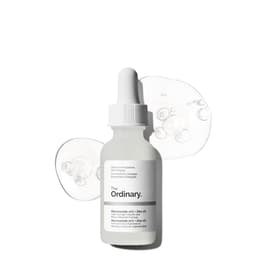
The Ordinary Niacinamide 10% + Zinc 1%
The most broadly useful first serum: a stated 10% niacinamide with 1% zinc, fragrance-free, for a couple of dollars. Note that 10% is above the researched 4-5%, so sensitive skin may want less.
$6.00 · View on AmazonPrice as of October 17, 2026. #ad How we’re funded
Dehydration
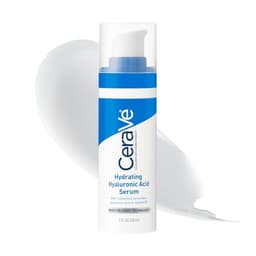
CeraVe Hyaluronic Acid Serum (B5 + Ceramides)
Hyaluronic acid with ceramides and vitamin B5, so the water it draws in has something holding it there. Fragrance-free, and it still needs a moisturizer on top.
Dullness and tone
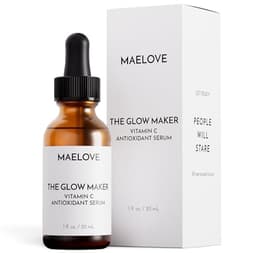
Maelove Glow Maker Vitamin C Serum
L-ascorbic acid with vitamin E and ferulic acid — the combination with the photoprotection evidence behind it — at a fraction of the prestige price. A morning serum, under sunscreen.
Fine lines and texture
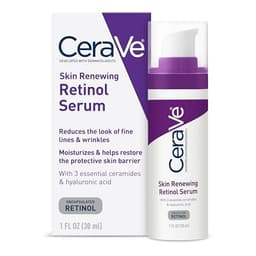
CeraVe Skin Renewing Retinol Serum
Encapsulated retinol with ceramides, niacinamide and hyaluronic acid in the same bottle, so the flaking that makes people quit retinol is buffered from the start. Strength is not published.
Step 4: read the three things that are not the active
Fragrance. A serum sits on your face for hours and carries a concentrated active. It is the worst possible place to add an ingredient that does nothing for your skin and is a leading cause of cosmetic contact allergy. Fragrance-free is the default, and the category offers plenty of it.
Packaging, for the unstable actives.This matters for exactly one family: L-ascorbic acid in water oxidizes on exposure to air and light, which is why an opaque bottle with a pump or a dropper beats a clear jar, and why some brands use anhydrous or derivative forms instead. It is not a general rule — niacinamide and peptides do not care. See why vitamin C serums turn brown for what oxidation looks like in the bottle.
Texture, honestly assessed.The best serum is the one you will still be using in three months, and texture is the main reason people stop. A tacky hyaluronic acid serum that pills under sunscreen, a gritty vitamin C suspension, an oil serum that will not sit under makeup — those are real reasons to choose differently, not vanity. If you have had products ball up on you, see why skincare pills.
Where the serum goes in your routine
Thinnest to thickest, which for most routines means: cleanse, serum on damp skin, moisturizer, then sunscreen in the morning. The AAD’s ordering guidance follows the same thin-to-thick logic, and the reason it works is mechanical rather than mystical — a water-light serum cannot get through an occlusive cream, and a cream has no trouble going on over a serum.
Two exceptions worth knowing. A hyaluronic acid serum wants damp skin and a moisturizer directly on top, or in very dry air it can pull water out of your skin rather than into it. And a retinoid on dry skin often does better sandwiched: thin moisturizer, retinoid, moisturizer again. Full detail in skincare routine order and how to layer skincare; for what can share a night, see the ingredient conflict chart.
The five ways people choose a serum badly
Buying three at once. You learn nothing and risk everything. One new active, four weeks, then decide.
Buying for a goal the format cannot serve. No serum firms sagging skin, closes a pore permanently, or substitutes for sunscreen.
Buying the highest percentage available. More active means more irritation, and irritated skin looks worse than untreated skin.
Buying a serum instead of a moisturizer. A serum under-moisturizes by design. Oily skin needs a light moisturizer, not none.
Buying on the front of the box.“Brightening,” “firming” and “glow” are outcomes, not ingredients. Turn the bottle around; the ingredient list is where the information is.
If you want the short version: pick your one goal, find its active in the table above, buy the cheapest version that states its concentration and leaves out the fragrance, and use it for three months before you buy anything else. That approach costs less than one prestige serum and will teach you more about your own skin than a cabinet full of them. Browse the whole shelf by active in serums & actives.
General guidance, not medical advice. Barrier & Balm is written by a skincare enthusiast, not a dermatologist. For a diagnosis, a reaction, or a prescription active like tretinoin, see a qualified professional. Introduce any new active slowly and patch-test first.
Frequently asked questions
Do you need a serum in your skincare routine?
No. Cleanser, moisturizer and sunscreen are the routine; a serum is an optional upgrade that adds one targeted active. If your barrier is unhappy, a serum is not the fix — a gentler cleanser and a better moisturizer are. Add a serum when the basics are consistent and you have one specific thing you want to change.
What is the difference between a serum and a moisturizer?
Concentration and job. A moisturizer is built to hold water in the skin using humectants, occlusives and emollients; a serum is a thin vehicle built to deliver a higher load of one active with as little else as possible. Most serums do not moisturize adequately on their own, which is why they go under a moisturizer rather than instead of one.
How many serums can you use at once?
One, until you know it suits you. Two is manageable once each is established — typically a water-light one in the morning and a treatment at night. Beyond that you are layering unknowns onto a barrier that has no way to tell you which product caused the stinging. Introduce one new active at a time and give it four weeks.
Do you apply serum before or after moisturizer?
Before. The convention is thinnest to thickest, which both lets a water-light serum reach skin unimpeded and lets the moisturizer act as the seal on top. The AAD's own ordering guidance follows the same logic. The one exception is a buffering sandwich for a retinoid on dry skin, where a thin moisturizer layer goes first on purpose.
Does a more expensive serum work better?
Not reliably, and in this category the correlation is unusually weak. The brands that publish exact concentrations are mostly inexpensive, and several of the highest-priced serums in skincare quantify nothing at all. Price buys texture, packaging and sometimes stability engineering — it does not buy a disclosed dose.
How long does a serum take to work?
Hydration, immediately and visibly. Oil control and redness from niacinamide, four to eight weeks. Tone from vitamin C, roughly twelve weeks with daily sunscreen. Lines and texture from retinol, twelve weeks minimum. Nothing in this category works in a week, and anything claiming otherwise is describing a hydration effect in the language of a structural one.
Should a serum have fragrance in it?
Preferably not. A serum sits on the skin for hours and delivers a concentrated active, so it is the worst place to add an ingredient that offers no benefit and is a leading cause of cosmetic contact allergy. Fragrance-free is the sensible default, and in this category plenty of good options are.
Can I use a serum instead of a moisturizer if my skin is oily?
Usually not well. A water-light serum evaporates and takes surface water with it, which is why skin can feel tight after one. Oily skin does better with a serum plus an oil-free gel moisturizer than with a serum alone — skipping the moisturizer is one of the reliable ways to end up with skin that is both oily and dehydrated.
Sources
- American Academy of Dermatology — Should I apply my skin care products in a certain order? — AAD on the order to apply cleanser, treatment, moisturizer and sunscreen (accessed July 17, 2026)
- American Academy of Dermatology — Skin care basics — AAD consumer guidance on cleansing, moisturizing and sun protection (accessed July 17, 2026)
- Moisturizers — StatPearls (NCBI Bookshelf) — Reference on humectants (hyaluronic acid), occlusives and emollients (accessed July 17, 2026)
- Mechanistic Basis and Clinical Evidence for Nicotinamide (Niacinamide) in Skin (PMC) — Review of niacinamide's barrier, ceramide and pigmentation effects (accessed July 17, 2026)
- Vitamin C in dermatology (PMC) — Telang — review of topical vitamin C forms, stability and photoprotection (accessed July 17, 2026)
- Human Skin Aging and the Anti-Aging Properties of Retinol (PubMed) — Review of topical retinol's effect on collagen and photoaging (accessed July 17, 2026)
- The Innovative and Evolving Landscape of Topical Exosome and Peptide Therapies: A Systematic Review (PMC) — 2024 PRISMA systematic review of topical peptide therapies for skin rejuvenation — signal, carrier and neurotransmitter-affecting peptides (accessed July 31, 2026)
Keep reading
How to choose a moisturizer
The step a serum goes under, and the one that matters more if your skin is uncomfortable.
Read the guideHow to choose a cleanser
The step before. Get this wrong and no serum will rescue the routine.
Read the guideSerum vs moisturizer
What each format is actually built to do, and why you generally need both.
Read the comparisonHow to layer skincare
Thinnest to thickest, with the conflict rules for the actives you might stack.
Read the guideBest niacinamide serums
The most broadly useful first serum, ranked on stated percentage.
See the picksBest hyaluronic acid serums
If dehydration is the goal, this is the shortlist — and the layering rule that makes it work.
See the picksBest vitamin C serums
Sorted by the form of vitamin C, which decides stability as much as the percentage does.
See the picksHow to introduce new actives
One at a time, four weeks apart — the discipline that makes a serum purchase informative.
Read the guide