Skincare Routine for Your 60s
Four steps, a slower retinoid schedule and a richer cream — plus an honest account of which changes after 60 skincare can influence and which it cannot.
How this is funded: we earn a commission if you buy through our links, at no extra cost to you. It never changes which product we recommend, and we’ll tell you when we’d skip one. Full disclosure.
What actually changes after 60
Three things change in ways that matter for a routine, and it is worth separating them from the marketing.
Sebum production drops. The skin makes less of its own oil, which is why people who spent decades managing shine suddenly find themselves with tight, papery skin by mid-afternoon. This is the single biggest practical change, and the fix is boring: a richer moisturizer, used more generously, applied while the skin is still damp.
The barrier holds less water and repairs more slowly.That has two consequences. Dryness and flaking appear faster and linger longer, and anything irritating — a retinoid, an acid, a foaming cleanser — costs more and takes longer to recover from. A routine that was sustainable at 45 can quietly become an irritation problem at 65 without a single product changing.
Cumulative photoaging is now visible rather than theoretical.Age spots, uneven tone, fine lines and texture are largely the record of decades of UV exposure. The AAD notes that UVA rays — the aging wavelength — pass through window glass, while UVB, the burning wavelength, is blocked by it. That is the argument for daily sunscreen rather than beach sunscreen, and it is still the highest-value habit available to you.
What does not change is which actives work. Retinol, sunscreen, moisturizer and niacinamide are the same short list they were twenty years ago. There is no special over-60 ingredient class, and anything sold to you on the basis of your age rather than its formulation deserves suspicion.
The four things that matter, in order
1. Daily broad-spectrum SPF 30 or higher. The only step that prevents further photoaging rather than treating existing damage. The AAD recommends broad-spectrum, SPF 30 or higher and water-resistant sunscreen on all skin not covered by clothing if you will be outside, and notes that up to 80% of UV rays penetrate cloud. Texture matters more than the number past SPF 30, because the sunscreen you wear every day beats the one you avoid.
2. A rich, fragrance-free moisturizer, twice a day.This is where the visible improvement over the next fortnight comes from. The reference literature frames a moisturizer as a humectant to draw water in, an occlusive to stop it leaving and emollients to make the result wearable — and after 60 you want more of all three than you are probably using. Named ceramides, glycerin and hyaluronic acid are the useful words on the label.
3. A retinoid, two or three nights a week. Topical retinol has the best evidence of any shelf active for collagen and photoaging. The adjustment for this decade is dose and format: a cream rather than an anhydrous serum, a lower stated strength, and a schedule you can hold through a dry winter. Two nights a week sustained beats seven nights abandoned in February.
4. A non-stripping cleanser, at night.With less sebum, a foaming gel cleanser is now working against you. A lotion or cream cleanser at night and a plain lukewarm rinse in the morning is a complete, legitimate cleansing routine — see how to choose a cleanser.
Everything after those four is optional. Vitamin C in the morning is a reasonable addition for tone; peptides have a modest evidence base and a pleasant texture; an eye cream is a convenience rather than a necessity. None of them substitutes for the four above.
Four products that fit this routine
One per step, chosen on disclosed formulation rather than on testing we have not done — we own no units. Prices are checked daily against the live listing.
The moisturizer
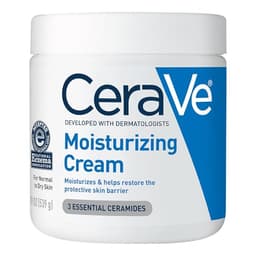
CeraVe Moisturizing Cream
Three ceramides and hyaluronic acid in a 340 ml tub, so the face, neck, hands and arms are all affordable. Fragrance-free, and rich enough for skin that no longer makes much oil of its own.
$18.96 · View on AmazonPrice as of October 17, 2026. #ad How we’re funded
The retinoid
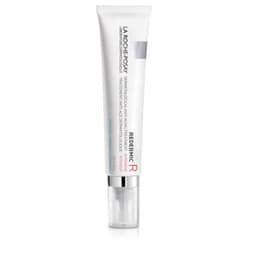
La Roche-Posay Redermic R Retinol Face Cream
Retinol with retinyl linoleate in a cream base rather than an anhydrous serum — the format that suits drier, slower-repairing skin. The strength is not published, which is the norm in this category.
$54.97 · View on AmazonPrice as of October 17, 2026. #ad How we’re funded
The sunscreen
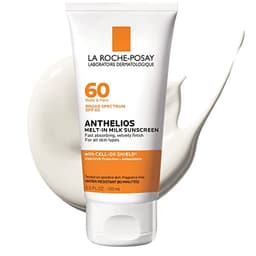
La Roche-Posay Anthelios Melt-in Milk SPF 60
An SPF 60 organic-filter lotion that behaves like a moisturizer rather than a sunscreen, which is the main reason people actually reapply it. No white cast on any skin tone.
The optional extra
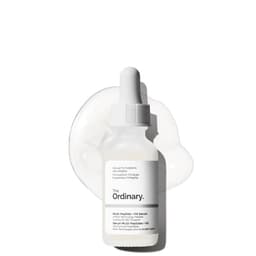
The Ordinary Multi-Peptide + HA Serum
Seven named peptides in a hyaluronic acid and glycerin base, fragrance-free. Worth adding once the four basics are consistent; worth skipping until then.
Your morning routine
Rinse with lukewarm water, or use your cleanser if your skin feels oily — most 60s skin does not need a morning cleanse at all. Pat the face damp rather than dry. Apply your moisturizer while there is still water on the surface to trap, then sunscreen over the top, and give the sunscreen a couple of minutes before you dress or apply makeup so it does not roll.
If you want a vitamin C serum, this is where it goes: on damp skin, before the moisturizer. It is a tone-and-antioxidant step, not a substitute for SPF — vitamin C with sunscreen covers how the two work together, and best vitamin C serums ranks the field by the form of vitamin C they actually use.
Your evening routine
Cleanse properly at night — this is the pass that removes sunscreen, and leaving filters on overnight is worth avoiding. Then one of two nights:
- Retinoid nights (two or three a week):cleanse, apply a thin layer of moisturizer, wait a few minutes, apply a pea-sized amount of retinoid to the whole face, then moisturizer again over the top. That buffering sandwich is the standard way to make a retinoid survivable on dry skin — see the retinol sandwich method. Avoid the immediate eyelid, but you can go closer than you think.
- Every other night:cleanse and moisturize generously. That is the entire routine. Rest nights are not wasted nights — they are when the barrier catches up, and in your 60s they matter more than they used to.
Do not stack an exfoliating acid on a retinoid night. If you want an acid at all, one gentle use a week on a non-retinoid night is plenty, and you can skip it entirely without missing anything important. How often to exfoliate has the reasoning, and signs of over-exfoliation describes what going too far looks like on thinner skin.
Introducing a retinoid in your 60s without flaking
Start on one night a week for two weeks, then two nights for a month, then three if your skin is comfortable. Apply to dry skin on top of a moisturizer layer, use a genuinely pea-sized amount for the whole face, and expect it to take twelve weeks before you can judge anything. The AAD’s framing of the category is useful here: prescription retinoids work faster and irritate more, over-the-counter retinol works more slowly and is better tolerated — and tolerance is the binding constraint in this decade, not potency.
If you flake anyway, the answer is a rest week and more moisturizer, not a different brand. How to calm irritated skin is the reset, and retinol strengthsexplains why a lower number used consistently beats a higher one used erratically. Those who cannot tolerate retinol at all have a reasonable alternative in bakuchiol, which matched retinol on wrinkles and pigmentation with fewer side effects in a randomized twelve-week comparison — see retinol vs bakuchiol.
The neck, the hands and the places people skip
Both show age earlier than the face and get a fraction of the attention. There is no chemistry reason to buy a separate neck cream — take your face moisturizer down the neck and across the chest, and put sunscreen there too, since the chest is one of the most reliably sun-damaged areas on anyone who has ever worn a V-neck. Hands get washed all day and lose their moisturizer every time; a tub by the sink is worth more than a serum. This is exactly why the large-format cream is the pick above: a 340 ml tub makes being generous affordable, and the main failure in this decade is using too little.
What skincare cannot do after 60
It cannot restore volume or tighten laxity. Those are structural changes in fat, muscle and bone as well as skin. No topical does it, and the products that claim to are selling a temporary film-forming effect. In-office procedures are the honest next tier if that is your priority.
It cannot undo deep lines. A retinoid and consistent sunscreen improve fine lines, texture and tone over months. Deep static creases are a different problem with different answers.
It cannot diagnose anything. This is the decade to get new, changing or non-healing spots looked at by a dermatologist rather than treated with a brightening serum. That is not a skincare decision.
And nothing on a shelf contains collagen your skin can use. Collagen molecules are far too large to cross the barrier; a cream containing collagen is a reasonable moisturizer and nothing more. Our collagen explainer goes through the evidence.
The bottom line
A good 60s routine is four products used properly, not twelve used hopefully. Daily sunscreen, a rich fragrance-free cream twice a day on damp skin, a retinoid two or three nights a week in a buffered cream format, and a cleanser that does not strip you. If you want to add one thing beyond that, make it vitamin C in the morning for tone or peptides at night for texture — both are optional, both are modest, and both are worth less than being consistent with the four.
The most expensive product in this routine is the sunscreen, and the one that will change how your skin feels this week is the cheapest. That ratio is not a mistake; it is what the evidence looks like when you stop letting marketing set the price. For the whole evidence hierarchy in one place, see best skincare for aging skin, and if you would rather build it as a step-by-step beginner routine, start from how to build a skincare routine.
General guidance, not medical advice. Barrier & Balm is written by a skincare enthusiast, not a dermatologist. For a diagnosis, a reaction, or a prescription active like tretinoin, see a qualified professional. Introduce any new active slowly and patch-test first.
Frequently asked questions
Is it too late to start a skincare routine in your 60s?
No. Photoaging is cumulative, which means the sun exposure you avoid from today onward still counts, and barrier repair is immediate — a richer moisturizer applied to damp skin improves how skin looks and feels within days, at any age. The honest framing is that the returns shift: prevention has less time to compound, but comfort, barrier function and texture respond just as well as they ever did.
Can you use retinol in your 60s?
Yes, and topical retinol has the strongest evidence of any over-the-counter anti-aging active for collagen and photoaging. What changes is the schedule and the format. Older skin is drier and repairs more slowly, so a cream-based retinoid two or three nights a week — buffered with moisturizer — is a more realistic plan than a nightly serum. The AAD's own framing is that prescription retinoids work faster and irritate more; over-the-counter retinol works more slowly and is better tolerated.
What is the most important step in a 60s skincare routine?
Sunscreen, then moisturizer. Daily broad-spectrum SPF 30 or higher is the only step with a preventive effect on further photoaging, and the AAD notes that UVA — the wavelength associated with premature aging, wrinkles and age spots — passes through window glass, so indoor daylight counts. The moisturizer is what changes how your skin looks and feels this week rather than this decade.
Should I switch to a richer moisturizer in my 60s?
Usually yes. Sebum production declines with age, and a lotion that was adequate at 40 often is not at 65 — especially in winter and especially on the face, neck and hands. The AAD's dry-skin guidance points toward creams and ointments over lotions, applied to damp skin. If the richer texture feels heavy in the morning, use the light one in the day and the cream at night.
Do I need an eye cream in my 60s?
Not strictly. An eye cream is a moisturizer in a small, expensive jar, and your face cream will do the same job on the under-eye area as long as it is fragrance-free and does not sting. Where an eye cream earns its place is as a separate thinner texture for people whose rich face cream makes their eyelids puff, or as a deliberately gentle way to get a low-dose retinoid near the eye.
What about peptides and collagen supplements?
Topical peptides have a real but modest evidence base — a 2024 systematic review covers signal, carrier and neurotransmitter-affecting peptides — and they are a reasonable optional step, not a retinol substitute. We make no claims for collagen drinks or powders: that is a nutrition question with separate evidence, and this is a topical skincare site.
Can skincare help with age spots and thinning skin?
Partly. Pigmentation responds to sun protection plus a pigment-targeting active — vitamin C, niacinamide, azelaic acid or a retinoid — over months rather than weeks. Skin thinning and laxity are structural, and topical products influence them only at the margins; in-office procedures and prescription treatments are the honest next tier. Anything on a shelf promising to reverse either is overselling.
How long before a new product shows results?
Hydration and comfort, days. Texture and tone from a retinoid, twelve weeks minimum and often longer in your 60s, because cell turnover is slower. Pigmentation, three months of consistent use plus consistent sunscreen. If a product claims to do any of it in a week, that is a marketing claim rather than a clinical one.
Sources
- American Academy of Dermatology — Skin care basics — AAD consumer guidance on cleansing, moisturizing and sun protection (accessed July 17, 2026)
- American Academy of Dermatology — Dermatologists' top tips for relieving dry skin — AAD on moisturizing damp skin and choosing a cream for dry skin (accessed July 17, 2026)
- American Academy of Dermatology — Retinoid or retinol? — AAD on the difference between prescription retinoids and OTC retinol (accessed July 17, 2026)
- Human Skin Aging and the Anti-Aging Properties of Retinol (PubMed) — Review of topical retinol's effect on collagen and photoaging (accessed July 17, 2026)
- Mechanistic Basis and Clinical Evidence for Nicotinamide (Niacinamide) in Skin (PMC) — Review of niacinamide's barrier, ceramide and pigmentation effects (accessed July 17, 2026)
- Moisturizers — StatPearls (NCBI Bookshelf) — Reference on humectants (hyaluronic acid), occlusives and emollients (accessed July 17, 2026)
- American Academy of Dermatology — Sunscreen FAQs — AAD: "UVA rays (or aging rays) can prematurely age your skin, causing wrinkles and age spots, and can pass through window glass", while "UVB rays (or burning rays) are the primary cause of sunburn and are blocked by window glass"; recommends broad-spectrum, SPF 30 or higher, water-resistant sunscreen applied "every day on skin not covered by clothing if you will be outside"; even on cloudy days "up to 80% of the sun's harmful UV rays can penetrate the clouds" (accessed October 11, 2026)
Keep reading
Skincare routine for your 50s
The decade before, where the retinoid schedule is usually still nightly and the textures lighter.
See the routineBest skincare for aging skin
The five products that carry the actual evidence, with live prices on each.
See the picksBest moisturizers for mature skin
The richer creams ranked, including the ones worth using on the neck and hands.
See the picksBest retinol creams
Cream-format retinoids, which is the format that suits drier, slower-repairing skin.
See the picksAnti-aging skincare routine
The whole evidence hierarchy, ranked — what matters most, and what barely matters at all.
Read the guideHow to repair your skin barrier
The step that does most of the visible work after 60, and how long it takes.
Read the guide