How to Avoid a White Cast From Sunscreen
The cast is the mineral filter doing its job — scattering light. Six ways to get rid of it without doing the one thing that actually matters: using less sunscreen.
How this is funded: we earn a commission if you buy through our links, at no extra cost to you. It never changes which product we recommend, and we’ll tell you when we’d skip one. Full disclosure.
Why the cast happens at all
There are two families of UV filter, and only one of them has this problem.
Inorganic (mineral) filters— zinc oxide and titanium dioxide — are solid particles dispersed through the product. They sit on the skin and deal with UV by absorbing and scattering it. The catch is that scattering is not wavelength-fussy: some visible light gets scattered too, and a layer of pale particles reflecting visible light reads to the eye as a white or grey film. The higher the mineral load and the deeper your skin tone, the more obvious it is.
Organic (chemical) filters— avobenzone, octisalate, homosalate, octocrylene and the rest — dissolve into the formula and absorb UV, converting it to heat. They are optically clear, so there is nothing to see. This is why a sunscreen with no cast at all is almost always an organic-filter one.
That difference also explains some apparent contradictions on the shelf. Several well-known “mineral” sunscreens are actually hybrids: the FDA drug label for EltaMD UV Clear SPF 46, for instance, lists zinc oxide 9.0% and octinoxate 7.5% in its actives panel — a mineral-plus-organic pair, not a 100% mineral formula, which is part of why it wears lighter than a high-zinc product. The percentage and the filter mix are on the label if you look.
The six fixes, strongest first
1. Buy a tinted mineral sunscreen
The single most effective fix. Iron oxides in a tinted formula absorb the visible light the minerals scatter, so the finish reads as skin rather than as chalk. You keep the mineral filters — useful if your skin is reactive or if you prefer the FDA’s GRASE position on zinc and titanium — and lose the cast. The limitation is shade range: most tinted sunscreens come in one or two shades, so a tint that disappears on one person reads grey or orange on another. Our tinted sunscreen roundup compares them on exactly that.
2. Switch to organic filters
If the cast is the thing stopping you wearing sunscreen daily, an organic-filter formula removes the problem completely and at any skin tone. The trade-offs are real but modest for most people: a slightly higher chance of stinging around the eyes, and the FDA’s outstanding data requests on twelve filters — which is a gap in submitted safety data, not a finding of harm. Mineral vs chemical sunscreen lays out that decision in full.
3. Apply in two thin layers, not one thick one
A single heavy layer sits on the surface as a visible film. The same total quantity applied as two thinner passes — the second once the first has absorbed — blends far better while giving you the same amount of product on your face. This is the one fix that costs nothing and compromises nothing.
4. Warm it between your fingers first
Mineral sunscreens are thick emulsions, and they spread far more evenly when they are not cold. Dispense, rub between your fingertips for a few seconds, then press and pat onto the skin rather than dragging it across. Patting leaves a more even film than sweeping, which is also why sweeping makes streaks.
5. Let your moisturizer absorb, then let the sunscreen set
Sunscreen over a wet moisturizer is how you get both pilling and patchy coverage. Give the moisturizer a couple of minutes, apply sunscreen, then wait five to ten minutes before makeup or clothing. The cast visibly settles during that window on most mineral formulas. If your products ball up on you, why skincare pills covers the causes.
6. Match the texture to your skin, not to the marketing
A thick mineral cream on oily skin ends up over-applied in some places and skipped in others, which is a cast problem and a coverage problem at once. A fluid, a milk or a lightly tinted lotion goes on more evenly. The sunscreen you will actually wear every day beats the one with the best filter list in the cupboard.
Four sunscreens that solve the cast differently
One organic-filter milk, two tinted minerals and one formulated for deeper tones. Chosen on their published filter panels rather than on testing we have not done; prices are checked daily.
No cast at all
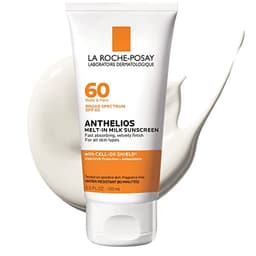
La Roche-Posay Anthelios Melt-in Milk SPF 60
SPF 60 with organic filters only, so there is nothing to scatter visible light. It wears like a moisturizer, which is the real reason people reapply it.
Tinted mineral, budget
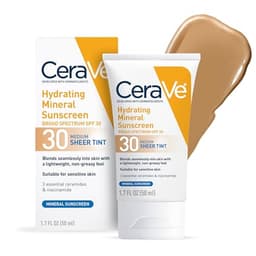
CeraVe Hydrating Mineral Sunscreen Sheer Tint SPF 30
Zinc oxide and titanium dioxide with a sheer tint to cancel the cast, plus ceramides in the base. The cheapest honest way out of this problem.
Tinted mineral, premium
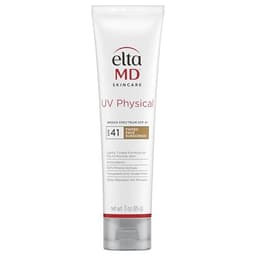
EltaMD UV Physical Tinted SPF 41
A 100% mineral tinted SPF 41 with a heavier, more makeup-like finish. The one to choose if you want mineral filters and real coverage; the tint range is narrow.
$50.00 · View on AmazonPrice as of October 17, 2026. #ad How we’re funded
Formulated for deeper tones
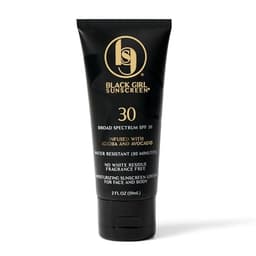
Black Girl Sunscreen Broad Spectrum SPF 30
Organic filters at SPF 30, built specifically to go on clear with no grey residue. The straightforward answer if untinted minerals have always read ashy on you.
$9.99 · View on AmazonPrice as of October 17, 2026. #ad How we’re funded
The one fix that is not a fix
Using less. The SPF number on a bottle is measured at a standard application density, and the gap between that density and what most people actually apply is the single biggest reason real-world protection falls short of the label. A thin smear of SPF 50 does not deliver SPF 50 — it delivers something considerably lower that nobody has measured. Every other fix on this page exists so you never have to make that trade.
The related temptation is skipping the areas where the cast shows most — the hairline, the ears, the sides of the neck. Those are also the places skin cancers and visible photoaging turn up disproportionately. How much sunscreen to apply covers the amount, and how to apply sunscreen covers the places people miss.
Which filter type casts, at a glance
| Formula type | Cast? | UVA coverage | Best for |
|---|---|---|---|
| Untinted mineral, high zinc load | Yes, often strongly | Good — zinc oxide has a broad UVA-UVB absorption curve | Very reactive skin, if you can live with the finish |
| Untinted mineral, titanium-dominant | Yes | Weaker — titanium dioxide skews toward UVB protection | Check for broad-spectrum labelling before buying |
| Tinted mineral (iron oxides) | No, if the shade matches | Same as the mineral base it is built on | Most people who want mineral filters without the film |
| Hybrid (mineral + organic) | Mild at most | Depends on the panel — read the label | A lighter mineral-ish feel at a lower zinc load |
| Organic filters only | No | Good with avobenzone in the panel | Daily wear, deeper skin tones, under makeup |
The bottom line
A white cast is a cosmetic problem with cosmetic solutions, and it is worth solving properly — because the most common response to it is quietly wearing less sunscreen, which is the one outcome that actually costs you something. Buy a tint or buy organic filters, apply it in two thin layers onto absorbed moisturizer, give it ten minutes, and check the label says broad spectrum and SPF 30 or higher.
If you would rather start from the product end, our best sunscreens for face ranks the whole field on finish and cast as well as filter type, best mineral sunscreens covers the mineral-only shelf, and how to choose a sunscreen is the decision framework behind all of them.
General guidance, not medical advice. Barrier & Balm is written by a skincare enthusiast, not a dermatologist. For a diagnosis, a reaction, or a prescription active like tretinoin, see a qualified professional. Introduce any new active slowly and patch-test first.
Frequently asked questions
Why does mineral sunscreen leave a white cast?
Because that is how it works. Zinc oxide and titanium dioxide are inorganic particles that sit on the skin surface and scatter and absorb UV — and they scatter some visible light too, which reads as a pale film. The effect is most visible on deeper skin tones and on formulas with a high mineral load. Organic filters dissolve into the product and are optically clear, which is why they leave nothing behind.
Do tinted sunscreens really stop the white cast?
Yes, and that is their entire purpose. Iron oxides added to a mineral formula absorb the visible light the minerals scatter, so the film reads as skin tone rather than as chalk. The trade-off is shade matching: a tint that suits one person reads grey or orange on another, and most tinted sunscreens come in one or two shades rather than a full range.
Are chemical sunscreens safe to use instead?
They are widely used and FDA-approved for sale, with one nuance worth knowing. The FDA has proposed that sunscreens containing zinc oxide and titanium dioxide at up to 25% are generally recognized as safe and effective, while twelve other filters — including avobenzone, oxybenzone, homosalate, octinoxate, octisalate and octocrylene — still lack the data for a positive GRASE determination. That is a gap in submitted safety data, not a finding of harm. Many dermatologists use and recommend both categories; mineral filters are the usual default for very reactive skin.
Can I just use less sunscreen to avoid the cast?
No — this is the one fix to avoid. The SPF on the bottle is measured at a standard application density, and applying a thin smear can drop your real-world protection well below the label figure. Everything else on this page exists so that you do not have to make that trade.
Does the white cast mean my sunscreen is working?
It means mineral filters are present and sitting on the surface, which is a prerequisite rather than a measure. A clear organic-filter sunscreen at SPF 50 protects you more than a chalky mineral one you applied too thinly. Visible residue is a texture fact, not a protection readout.
How long should I wait after applying sunscreen?
Give it five to ten minutes before makeup and before dressing. A mineral film needs time to settle, and anything you apply or rub onto a wet sunscreen layer will move it around, which both creates streaks and compromises coverage. The AAD also recommends applying sunscreen before you go outside rather than once you are already there.
Which sunscreens leave no cast on deeper skin tones?
Organic-filter formulas, because there are no particles scattering visible light, and tinted mineral formulas in a shade that genuinely matches. Several brands now formulate specifically for deeper tones with a clear or lightly tinted finish. A plain untinted mineral at a high zinc load is the combination most likely to read grey — not a reason to skip SPF, just a reason to choose a different one.
Will a cast-free sunscreen still protect against aging?
Yes, as long as it says broad spectrum. The AAD notes that UVA — the aging wavelength — passes through window glass, so look for broad-spectrum protection rather than a high SPF alone. Zinc oxide has a broad UVA-UVB absorption curve, while titanium dioxide skews toward UVB; a well-formulated organic-filter sunscreen with avobenzone covers UVA too. The word to check on the label is 'broad spectrum'.
Sources
- U.S. FDA — Questions and Answers: FDA's regulatory actions on over-the-counter sunscreen — FDA: "sufficient safety data on both zinc oxide and titanium dioxide to support a proposal that sunscreen products containing these ingredients (at concentrations of up to 25%) are GRASE" — while twelve other filters, including avobenzone, oxybenzone, homosalate, octinoxate, octisalate and octocrylene, still lack the data for a positive GRASE determination (accessed October 7, 2026)
- A review of inorganic UV filters zinc oxide and titanium dioxide (PubMed) — Schneider & Lim, Photodermatol Photoimmunol Photomed 2018 — review of the two mineral filters: "ZnO has a broad UVA-UVB absorption curve, while TiO2 provides better UVB protection" (accessed October 7, 2026)
- American Academy of Dermatology — How to decode a sunscreen label — AAD on SPF, broad spectrum and water resistance claims (accessed July 17, 2026)
- U.S. FDA — Sunscreen: How to Help Protect Your Skin from the Sun — FDA on SPF numbers, broad-spectrum and application amount (accessed July 17, 2026)
- American Academy of Dermatology — Sunscreen FAQs — AAD: "UVA rays (or aging rays) can prematurely age your skin, causing wrinkles and age spots, and can pass through window glass", while "UVB rays (or burning rays) are the primary cause of sunburn and are blocked by window glass"; recommends broad-spectrum, SPF 30 or higher, water-resistant sunscreen applied "every day on skin not covered by clothing if you will be outside"; even on cloudy days "up to 80% of the sun's harmful UV rays can penetrate the clouds" (accessed October 11, 2026)
- DailyMed — EltaMD UV Clear SPF 46 (zinc oxide and octinoxate sunscreen lotion) — FDA OTC label actives panel: zinc oxide 9.0% and octinoxate 7.5% — a hybrid mineral-plus-organic filter pair, not a 100% mineral sunscreen. Labeler CP Skin Health Group, Inc.; the tinted UV Clear carries the same two actives plus iron oxides (accessed October 14, 2026)
Keep reading
Best tinted sunscreens
The shortlist, compared on shade, filter load and finish rather than on SPF number alone.
See the picksBest sunscreens for dark skin tones
The formulas chosen specifically to avoid grey cast, with the reasoning on each.
See the picksMineral vs chemical sunscreen
The underlying choice this page works around — how each filter type behaves and what the FDA has said.
Read the comparisonZinc oxide vs titanium dioxide
Why the two minerals cast differently, and which covers UVA properly.
Read the comparisonHow much sunscreen to apply
The amount the SPF number assumes — the thing none of these fixes should compromise.
Read the guideHow to reapply sunscreen over makeup
The other half of the practical sunscreen problem, solved without starting your face again.
Read the guide