Barrier & Balm

Best Peptide Serums

Peptides are the gentlest anti-aging active on the shelf — and the one where almost nobody tells you how much you're getting. The serums that disclose the most, ranked honestly.

By Stephen V.Last updated How we pick

Peptidesare short chains of amino acids that can act as messengers, nudging skin to support its own collagen. They are the rare anti-aging active that almost nobody reacts to — no purge, no peeling, no waiting-out-the-first-six-weeks — which is exactly why they have become the default recommendation for anyone whose skin cannot tolerate retinol. They are also, by a distance, the most over-claimed category in skincare.

Two facts shape this whole page. First, the evidence: a 2024 systematic review of topical peptide therapies found the results promising but weaker and less consistent than the decades of research behind retinoids, in part because peptides are large, water-loving molecules and the skin barrier is built to keep those out. Second, the disclosure problem: of the five serums below, exactly one publishes a percentage for any of its peptides. So rather than rank these on a firming effect we cannot measure, we ranked them on what each brand actually tells you — which peptides are named, whether anything is quantified, and how good the rest of the formula is if the peptides turn out to do less than the box implies. Every pick is real, currently sold, and carries an honest drawback. Prices below are live.

How this is funded: we earn a commission if you buy through our links, at no extra cost to you. It never changes which product we recommend, and we’ll tell you when we’d skip one. Full disclosure.

Quick picks

Ranked on formulation, stated concentration and buyer fit. Select a row to jump to the full write-up. We have not tested these products — here is exactly what we do instead.

#ProductBest forPrice
1
The Ordinary Multi-Peptide + HA Serum

The Ordinary Multi-Peptide + HA Serum

The most peptide you can buy for the money, in a base that earns its keep on its own. Seven named peptides sit in a glycerin-and-hyaluronic-acid serum alongside a full amino acid and sugar complex — so even on the pessimistic view of what peptides achieve topically, you are still applying a well-built hydrating serum. Nothing here is quantified, which is the category norm rather than a mark against this one.

Best overall
$19.90 · View on Amazon

Price as of September 5, 2026. #ad How we’re funded

2
The Ordinary Multi-Peptide + Copper Peptides 1%

The Ordinary Multi-Peptide + Copper Peptides 1%

The only serum in this roundup that puts a number on the label: 1% copper peptides (GHK-Cu), on top of the same eight-deep peptide roster as the brand's cheaper serum. In a category where nobody quantifies anything, one stated figure is worth paying for — you can at least compare it against the levels used in published work rather than guessing.

Best stated concentration
$32.00 · View on Amazon

Price as of September 5, 2026. #ad How we’re funded

3
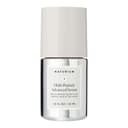
Naturium Multi-Peptide Advanced Serum

Naturium Multi-Peptide Advanced Serum

The one that feels like a finished skincare product rather than a peptide solution. Squalane, shea butter and caprylic/capric triglyceride give it a cushiony lotion-serum texture, and ferulic acid plus rosemary extract add antioxidant cover the pure-peptide serums don't have. If dry or mature skin found The Ordinary's watery texture unsatisfying, this is the fix.

Best for dry or mature skin
$24.88 · View on Amazon

Price as of September 5, 2026. #ad How we’re funded

4
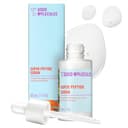
Good Molecules Super Peptide Serum

Good Molecules Super Peptide Serum

The cheapest genuine peptide serum we'd recommend, and it does not skimp on the interesting part: argireline, SNAP-8 and copper tripeptide-1 in a short, water-light formula. The catch is real and easy to miss — bergamot fruit oil sits near the end of the INCI, so this is not the pick for reactive skin or for anyone avoiding fragrant essential oils.

Best budget pick
$12.00 · View on Amazon

Price as of September 5, 2026. #ad How we’re funded

5
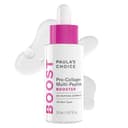
Paula's Choice Pro-Collagen Multi-Peptide Booster

Paula's Choice Pro-Collagen Multi-Peptide Booster

A concentrated booster designed to be mixed into whatever you already use, built on newer peptides — palmitoyl tetrapeptide-72 amide, sh-polypeptide-121 and tridecapeptide-1 — that the cheaper serums don't carry. It is the most expensive option here by a wide margin and comes in the smallest bottle, so buy it because you want the booster format and the formulation, not because the price implies it works harder.

Best booster format
$47.20 · View on Amazon

$59.0020% off

Price as of September 5, 2026. #ad How we’re funded

The picks in full

#1Best overall

The Ordinary Multi-Peptide + HA Serum

The most peptide you can buy for the money, in a base that earns its keep on its own. Seven named peptides sit in a glycerin-and-hyaluronic-acid serum alongside a full amino acid and sugar complex — so even on the pessimistic view of what peptides achieve topically, you are still applying a well-built hydrating serum. Nothing here is quantified, which is the category norm rather than a mark against this one.

Strengths

  • Seven peptides named individually in the INCI, not hidden behind a trademarked 'complex'
  • Hyaluronic acid, glycerin, amino acids and sugars make the base genuinely hydrating in its own right
  • Labeled fragrance-, essential-oil- and alcohol-free
  • By far the cheapest way into a multi-peptide formula

Trade-offs

  • No peptide percentage is published — you are trusting the formulator entirely
  • Watery, slightly tacky finish some people dislike under makeup
  • Peptide evidence overall is weaker than retinol's; this is a supporting act, not a replacement
Key activeSeven signal peptides + hyaluronic acid
Stated concentrationNot published
FormatWater-light serum
Fragrance-freeYes
Best forAll, Sensitive, Oily, Combination

Formulation note. Names seven peptides in the INCI — acetyl hexapeptide-8, pentapeptide-18, palmitoyl tripeptide-1, palmitoyl tetrapeptide-7, palmitoyl tripeptide-38, dipeptide diaminobutyroyl benzylamide diacetate and acetylarginyltryptophyl diphenylglycine — with sodium hyaluronate and its crosspolymer, glycerin, allantoin, a full amino acid roster and sugars. Levels are not stated, so concentration reads Not published; the hydrating base is the part you can count on.

Ingredients and claims read from the product listing, on August 13, 2026. “Not published” means the brand does not state that figure.

#2Best stated concentration

The Ordinary Multi-Peptide + Copper Peptides 1%

The only serum in this roundup that puts a number on the label: 1% copper peptides (GHK-Cu), on top of the same eight-deep peptide roster as the brand's cheaper serum. In a category where nobody quantifies anything, one stated figure is worth paying for — you can at least compare it against the levels used in published work rather than guessing.

Strengths

  • States 1% copper peptides on the label — the only quantified peptide claim of the five
  • GHK-Cu is the carrier peptide with the most published research behind it
  • Same hydrating amino acid, sugar and hyaluronic acid base as the cheaper Multi-Peptide + HA
  • Fragrance-, essential-oil- and alcohol-free

Trade-offs

  • Roughly 60% more than the brand's non-copper serum for one added active
  • The 1% figure covers the copper peptides only — the other seven peptides are still unquantified
  • Copper peptides have a long-standing reputation for not mixing well with direct vitamin C, so they want separate routines or separate days
  • Faint color from the copper can tint very pale skin briefly on application
Key activeCopper tripeptide-1 (GHK-Cu) + seven signal peptides
Stated concentration1% copper peptides
FormatWater-light serum
Fragrance-freeYes
Best forAll, Mature, Combination

Formulation note. Copper tripeptide-1 leads the peptide block at a stated 1%, followed by the same seven peptides as the Multi-Peptide + HA serum, in a base of glycerin, sodium hyaluronate and crosspolymer, allantoin, amino acids and sugars. Labeled fragrance- and essential-oil-free. The 1% applies to the copper peptides; the rest remain Not published.

Ingredients and claims read from the product listing, on August 13, 2026. “Not published” means the brand does not state that figure.

#3Best for dry or mature skin

Naturium Multi-Peptide Advanced Serum

The one that feels like a finished skincare product rather than a peptide solution. Squalane, shea butter and caprylic/capric triglyceride give it a cushiony lotion-serum texture, and ferulic acid plus rosemary extract add antioxidant cover the pure-peptide serums don't have. If dry or mature skin found The Ordinary's watery texture unsatisfying, this is the fix.

Strengths

  • Emollient lotion-serum texture — squalane, shea and plant oils make it comfortable on dry skin
  • Ferulic acid and rosemary extract add antioxidant support alongside the peptides
  • Names its peptides: acetyl hexapeptide-8, copper palmitoyl heptapeptide-14 and palmitoyl sh-hexapeptide-13
  • Brand states fragrance-free, vegan and cruelty-free

Trade-offs

  • No peptide, ferulic acid or collagen percentage is published
  • The hydrolyzed collagen is a hydrating film-former — it cannot replace collagen in your skin, whatever the front of the box implies
  • Richer texture than the water-light serums; oily skin may find it too much under sunscreen
  • Costs more than The Ordinary's non-copper serum without stating any more about what's inside
Key activeCopper + signal peptides with ferulic acid
Stated concentrationNot published
FormatCushiony lotion-serum
Fragrance-freeYes
Best forDry, Mature, Normal, Combination

Formulation note. Acetyl hexapeptide-8, copper palmitoyl heptapeptide-14 and palmitoyl sh-hexapeptide-13 serine SP amide, with encapsulated ferulic acid, hydrolyzed collagen, squalane, shea butter, phosphatidylcholine and rosemary leaf extract. Brand states fragrance-free, vegan and cruelty-free but publishes no concentrations, so the figure reads Not published.

Ingredients and claims read from the product listing, on August 13, 2026. “Not published” means the brand does not state that figure.

#4Best budget pick

Good Molecules Super Peptide Serum

The cheapest genuine peptide serum we'd recommend, and it does not skimp on the interesting part: argireline, SNAP-8 and copper tripeptide-1 in a short, water-light formula. The catch is real and easy to miss — bergamot fruit oil sits near the end of the INCI, so this is not the pick for reactive skin or for anyone avoiding fragrant essential oils.

Strengths

  • Three well-known peptides named outright — acetyl hexapeptide-8, acetyl octapeptide-3 and copper tripeptide-1
  • Short ingredient list with little to react to beyond the bergamot
  • Roughly a third the price of the mid-range peptide serums
  • Light, fast-absorbing texture that layers under sunscreen without pilling

Trade-offs

  • Contains bergamot fruit oil — a fragrant essential oil, so it is not fragrance-free despite reading like a minimalist formula
  • No concentrations published for any of the three peptides
  • Thin hydrating base — it needs a moisturizer over it, unlike the richer picks
  • The argireline/SNAP-8 'expression line' pitch is the most oversold claim in the whole peptide category
Key activeArgireline, SNAP-8 and copper tripeptide-1
Stated concentrationNot published
FormatWater-light serum
Fragrance-freeNo
Best forNormal, Oily, Combination

Formulation note. Acetyl hexapeptide-8 (argireline), acetyl octapeptide-3 (SNAP-8) and copper tripeptide-1 (GHK-Cu) high in a propanediol, butylene glycol and glycerin base, with sodium hyaluronate low down. Citrus aurantium bergamia (bergamot) fruit oil is listed, so the fragrance-free row reads No — worth knowing on reactive skin. No percentages are published.

Ingredients and claims read from the product listing, on August 13, 2026. “Not published” means the brand does not state that figure.

#5Best booster format

Paula's Choice Pro-Collagen Multi-Peptide Booster

A concentrated booster designed to be mixed into whatever you already use, built on newer peptides — palmitoyl tetrapeptide-72 amide, sh-polypeptide-121 and tridecapeptide-1 — that the cheaper serums don't carry. It is the most expensive option here by a wide margin and comes in the smallest bottle, so buy it because you want the booster format and the formulation, not because the price implies it works harder.

Strengths

  • Booster format mixes into a moisturizer or serum, so it adds no extra layer to your routine
  • Uses newer peptides plus polyglucuronic acid and sodium hyaluronate for immediate smoothing
  • Fragrance-free, in Paula's Choice's usual airless pump packaging
  • Concentrated enough that a small bottle lasts longer than the volume suggests

Trade-offs

  • Roughly three times the price per bottle of our top pick, in a 20 ml bottle rather than 30 ml
  • No peptide concentrations published, so the premium buys formulation and format, not disclosure
  • The brand's own 'visibly smooths in 15 minutes' claim describes an immediate cosmetic effect from film-formers, not collagen change — we have not tested it and neither should you read it as one
  • Adding it to a moisturizer means you cannot control how much of each you are getting
Key activePalmitoyl tetrapeptide-72 amide, sh-polypeptide-121, tridecapeptide-1
Stated concentrationNot published
FormatConcentrated fluid booster
Fragrance-freeYes
Best forAll, Mature, Dry, Sensitive

Formulation note. Palmitoyl tetrapeptide-72 amide, sh-polypeptide-121 and tridecapeptide-1 with hydrolyzed yeast extract, apple fruit extract, glyceryl glucoside, polyglucuronic acid and sodium hyaluronate. Fragrance-free. No peptide levels are stated, and the polyglucuronic acid is what does the fast surface smoothing the marketing leans on.

Ingredients and claims read from the product listing, on August 13, 2026. “Not published” means the brand does not state that figure.

How we judged these

We don’t run a lab, and we won’t claim to have worn five peptide serums for a controlled twelve weeks. What we can do is read labels carefully, which in this category is more useful than it sounds. Four criteria, in order:

1. Are the peptides named individually? An INCI listing acetyl hexapeptide-8, palmitoyl tripeptide-1, copper tripeptide-1 is telling you something specific and checkable; a front-of-box “proprietary peptide complex” is telling you nothing at all. 2. Is anything quantified?Almost never — which is why the one serum here that states a figure gets its own award. 3. How good is the base? This matters more than it would in any other category. If the peptides underdeliver, a formula built on glycerin, hyaluronic acid, squalane and antioxidants still leaves you with a good hydrating serum; a formula that is peptides plus water leaves you with very little. 4. Price per ml, and fragrance. Peptides are usually bought by people with easily-irritated skin, so a fragrant essential oil in the ingredient list is a genuine mark against a product, and we flag it on the one pick that has one.

One thing we deliberately did not weight: the number of peptides. A serum listing nine peptides is not better than one listing three. Peptide counts are a marketing metric, and a long roster can just as easily mean each one is present at a trace level. What matters is whether the formula, taken as a whole, is worth the money.

What peptides do — and the evidence gap

The theory is genuinely elegant. When skin encounters a fragment that looks like a piece of broken-down collagen, it may read that as a repair signal and respond by supporting its own collagen production. The peptide isn’t collagen you’re absorbing — a whole collagen molecule is far too large to sink in usefully, which is the same wall “collagen creams” run into. It’s a message, not an ingredient your skin swallows whole. Our full peptides explainer covers the mechanism properly.

The gap between that theory and the proof is where honest write-ups and marketing part company. The 2024 PRISMA-method review cited at the bottom of this page surveyed the published work on topical peptides for skin rejuvenation and landed on encouraging but inconsistent: smaller studies, more variation between them, and a persistent delivery problem, because a peptide that cannot cross the barrier cannot signal anything. Retinol, by contrast, has decades of consistent research behind it for collagen and photoaging. That is not a reason to skip peptides. It is a reason to buy them as the gentle, well-tolerated supporting act they are — the trade-off we lay out in full in retinol vs peptides.

The three types, and which claim to distrust

“Peptide” is a category, not a single active, and the three groups you’ll meet on these labels do quite different jobs.

Signal peptidesare the most common — the Matrixyl-style molecules (palmitoyl tripeptide-1, palmitoyl tetrapeptide-7) meant to encourage collagen support. This is the mainstream of the category and the claim with the most reasonable footing. Carrier peptides deliver trace minerals the skin uses in healing and tissue remodeling; copper tripeptide-1, or GHK-Cu, is the best-known and the most-researched single peptide in cosmetic use, which is why two of our five picks feature it. Neurotransmitter-affecting peptides— argireline (acetyl hexapeptide-8) and SNAP-8 (acetyl octapeptide-3) — are the ones marketed as topical alternatives to muscle-relaxing injectables. Treat that pitch with the most skepticism of anything on this page: a serum sitting on the surface faces a very long journey to reach anything a nerve responds to, and the “instant” smoothing people report is usually a film-former doing surface work.

How to choose the right one for your skin

If this is your first peptide serum, buy the cheapest well-formulated one and judge it over months, not weeks. Our top pick exists for precisely this reason: it costs less than a takeaway dinner, names seven peptides, and its hydrating base does dependable work regardless of what the peptides contribute. There is no sense spending three times as much before you know whether you like the routine.

If your skin is dry, mature or simply dislikes watery serums, texture should decide it. The thin, slightly tacky finish of the budget serums is the most common reason people abandon peptides, and a cushiony lotion-serum with squalane and shea solves that at a modest premium. If your skin is reactive, read past the front of the box — one of the picks above looks like a minimalist formula but carries bergamot oil, and “no added fragrance” claims routinely hide fragrant botanicals. If you already have a full routine and resent adding another step, the booster format is the honest answer: it mixes into what you already use.

And if you can tolerate retinol, use retinol. That’s the buyer-first version of this advice, and it costs us a sale to say it: on the published evidence, a well-chosen retinol will do more for lines and firmness than any peptide serum here, and our retinol serum picksstart at a similar price. Peptides are for the people retinol doesn’t suit, and for layering alongside it — not as a straight upgrade.

How to use a peptide serum

Apply it to clean skin, before your moisturizer, morning or night — peptides have no special timing requirement and no UV sensitivity to work around. They layer comfortably with niacinamide, hyaluronic acid and moisturizers, and the old ingredient-conflict warnings mostly don’t apply. The one pairing worth separating is copper peptides and direct vitamin C: the concern is long-standing rather than settled, but since both are easy to move, use the vitamin C in the morning and the copper peptide at night and stop thinking about it. Where everything sits in sequence is covered in our routine order guide.

Two habits matter more than which bottle you buy. First, give it months. Collagen support is slow, peptides are among the subtler actives, and judging one at three weeks tells you nothing except whether you like the texture. Second, don’t let the peptide serum crowd out the two steps that actually protect your results— daily sunscreen and a moisturizer that keeps your barrier intact. A peptide serum works on top of good basics, never instead of them; if your budget only stretches to one purchase this month, make it the sunscreen.
Frequently asked questions

Do peptide serums actually work?

Promising, but not proven to the degree retinoids are. A 2024 systematic review of topical peptide therapies found the published results encouraging yet weaker and less consistent than the evidence for retinoids, partly because getting peptides across the skin barrier is a genuine challenge. Expect gradual, modest improvement in smoothness and firmness over months of consistent use — and treat any promise to erase deep lines or replace a procedure as running well ahead of the science.

How do I know how many peptides are actually in a serum?

In almost every case you can't, and that's the honest answer — only one serum on this page publishes a percentage for any of its peptides. What you can check is whether the peptides are named individually in the ingredient list rather than hidden behind a proprietary 'complex', where they sit in the list, and whether the rest of the formula (glycerin, hyaluronic acid, squalane, antioxidants) is worth buying on its own. A brand that discloses more is the safer bet.

Are peptides better than retinol?

No, not on the evidence. Retinol has decades of consistent research behind it for collagen and photoaging and remains the stronger, better-documented anti-aging active. What peptides offer is tolerability: they rarely irritate anyone, so they suit people who flake, sting or redden on retinol even at low strengths. Use peptides when retinol doesn't suit you, or alongside it as a gentle companion — not as an upgrade.

Can I use a peptide serum with retinol, vitamin C or niacinamide?

Yes to all three. Peptides are gentle and layer comfortably with most actives, and there's no need to keep them apart the way ingredient-conflict myths suggest. The one exception worth managing is copper peptides with direct vitamin C, where the concern is long-standing though not settled — the easy fix is vitamin C in the morning and the copper peptide at night. If you're using retinol, let it lead and treat the peptide as the supporting step.

Is an expensive peptide serum better than a cheap one?

Not on disclosure, which is what we can actually judge. The most expensive pick here publishes no more about its peptide levels than the cheapest one does — what the premium buys is newer peptides, a nicer texture, airless packaging and a booster format that saves you a routine step. Those are real benefits for some people. They are not evidence of a bigger effect on your skin.

How long does a peptide serum take to work?

Months, not weeks. Collagen support and skin renewal are slow biological processes, and peptides are among the subtlest actives in that group, so a fair trial is at least three months of consistent daily use. Anything you notice in the first fortnight is hydration and surface smoothing from the base formula rather than a structural change — pleasant, but not the thing you bought it for.

Sources

Keep reading