How to exfoliate sensitive skin without wrecking it
Sensitive skin usually reacts to speed, not to acids as a category. An acid that arrives all at once produces the sting, flush and next-day tightness people remember; the same job done gradually is generally uneventful. So the whole strategy here is to slow the acid down and give your barrier time to keep up.
Start with molecule size, not percentage
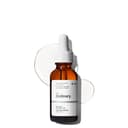
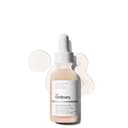
The reference review of hydroxy acids classifies them partly by molecular weight, because that is what governs how fast an acid diffuses into the skin. In practice the AHAs line up in a predictable order. Mandelic acid is the largest of the three common AHAs, so it penetrates most slowly and evenly — the reason it is the standard recommendation for reactive skin, and a common choice on deeper skin tones where irritation can leave dark marks behind. Lactic acid is mid-sized and mildly hydrating, which makes it the better fit when your skin is dry as well as sensitive. Glycolic acid is the smallest and fastest, and it is the one to leave alone — our glycolic vs lactic comparison explains why the size difference matters more than the number on the bottle, and the glycolic strength ladder shows how quickly that one climbs out of gentle territory.
A higher percentage is also not automatically stronger. An acid only works efficiently within a certain pH range, so a well-buffered 10% mandelic can be far kinder than a badly formulated 7% glycolic. What we weight is the whole formula: the acid, the pH where a brand publishes it, and the hydrating and soothing support around it.
Where azelaic acid fits — and where it doesn’t
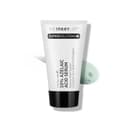
Azelaic acid is on this list with an honest caveat: it is not really an exfoliant. It does not slough the surface the way an AHA or BHA does. What it does is calm inflammation and fade the marks it leaves behind, and a comprehensive pharmacological review finds its evidence for rosacea redness and inflammatory lesions comparable to metronidazole. If your complaint is redness rather than roughness, it is very often the right acid-shaped product for you even though it will not resurface anything. Our azelaic acid guide covers what it does and does not do.
Rinse-off before leave-on
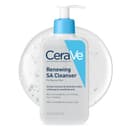
The gentlest possible way to introduce an acid is to put it in something you wash off after a minute. A salicylic acid cleanser gives you a short, mild contact time and no all-night exposure, which is exactly what a nervous barrier wants. It is genuinely weaker than a leave-on treatment — that is the point — and it is a good stepping stone if a serum has burned you before.
Frequency, and the signs you have gone too far
Start at once a week, not the two-to-three nights a resilient skin type can begin with, and hold there for a few weeks before adding a second night. Apply to fully dry skin, never straight out of a hot shower, and follow with a plain moisturizer. Do not use an acid on the same night as retinol; alternate them instead. And patch test every new acid — the AAD recommends exactly this for reactive skin before anything goes on the whole face.
The warning signs of over-exfoliation are specific: a tight, waxy shine, stinging from products that never used to sting, new flaking, and redness that does not settle within an hour. Any of those means stop entirely, not “switch to a gentler acid” — our over-exfoliation guide and barrier repair guide cover the reset.
Who should skip acids entirely
If your barrier is currently compromised — raw, flaking, stinging from water — repair first and exfoliate later. If you have diagnosed rosacea, note that the AAD lists glycolic and lactic acid among the ingredients to keep off a rosacea-prone face; azelaic acid is the exception, and our rosacea routine takes the gentler approach. And if you are still working out whether your skin is sensitive or just currently irritated, the sensitive skin routine is the better place to start than any product on this page.