Glycolic Acid vs Lactic Acid: Which Is Gentler?
Lactic acid is the gentler of the two. Here's how much gentler it actually is, when glycolic is still the better call, and the best-value pick for each acid.
How this is funded: we earn a commission if you buy through our links, at no extra cost to you. It never changes which product we recommend, and we’ll tell you when we’d skip one. Full disclosure.
The best-value pick for each acid
Two fragrance-free, budget formulas that both publish their concentration, so the acid itself is the only real variable. We have not tested either — the picks come from the published formulation facts, and prices are checked daily.
Gentler pick — lactic acid
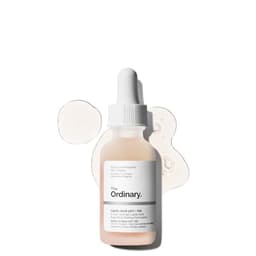
The Ordinary Lactic Acid 10% + HA
A stated 10% lactic acid buffered with hyaluronic acid and an anti-irritant. The AHA to start on for dry, sensitive or acid-curious skin.
$9.20 · View on AmazonPrice as of September 9, 2026. #ad How we’re funded
Stronger pick — glycolic acid
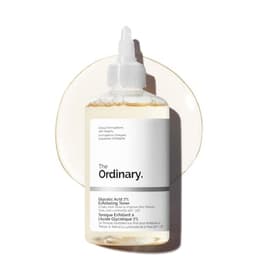
The Ordinary Glycolic Acid 7% Exfoliating Toner
A stated 7% glycolic at a published pH of 3.5-3.9 — more smoothing and glow, for skin that already handles acids comfortably.
$13.50 · View on AmazonPrice as of September 9, 2026. #ad How we’re funded
Lactic and glycolic acid are the two most common alpha hydroxy acids (AHAs), and they do the same broad job — dissolving the bonds between dull surface cells to reveal smoother, brighter skin. The difference is intensity, and it comes down to one physical fact: molecule size. The reference review of hydroxy acids classifies them by exactly this, because a smaller molecule diffuses into the skin faster and further. Glycolic is the smallest AHA there is; lactic is meaningfully larger. Everything else — which one stings, which one hydrates, which one your skin should meet first — follows from that.
Glycolic acid: the potent one
Glycolic acid has the smallest molecule of any AHA, which lets it penetrate the surface more deeply and work more aggressively. That makes it the strongest choice for rough texture, dullness, sun damage and the look of fine lines — when it suits your skin, the smoothing and glow are noticeable. The flip side is irritation: glycolic is more likely to sting, and it’s easy to overdo, especially at higher percentages. It rewards resilient, non-sensitive skin. Our glycolic acid guide covers strengths and how often to use it.
Lactic acid: the gentle, hydrating one
Lactic acid has a larger molecule, so it works more slowly and stays more superficial — gentler on the skin and much less likely to over-exfoliate. It has one bonus glycolic doesn’t: lactic acid is mildly hydrating, which offsets the dryness exfoliation can cause. That combination makes it the go-to AHA for dry, sensitive or acid-curious beginner skin that wants smoother, brighter results without the sting.
Head to head
| Lactic acid | Glycolic acid | |
|---|---|---|
| Molecule size | Larger — stays superficial | Smallest — penetrates deeper |
| Strength | Gentler | More potent |
| Bonus | Mildly hydrating | Strongest smoothing and glow |
| Best for | Dry, sensitive, beginner skin | Resilient skin, stubborn texture and dullness |
| Sun sensitivity | Increases it — wear SPF | Increases it — wear SPF |
How to choose — and use either safely
The shortcut: sensitive or dry skin, or new to acids → lactic; resilient skin chasing more visible smoothing → glycolic. If you’re unsure, lactic is the safer starting point — you can always step up later. Whichever you choose, the rules are the same: introduce it a couple of nights a week, don’t layer it with another acid or with retinol on the same night, and because AHAs increase sun sensitivity — the FDA notes the effect can last about a week — wear sunscreen daily. Ready to buy? Our best chemical exfoliants roundup lines up real lactic and glycolic products by acid type, and if your skin is reactive enough that even lactic acid is a gamble, the gentlest exfoliants for sensitive skin starts a rung lower. If you have settled on glycolic, our glycolic strength ladder shows how far up the percentages it is worth going.
General guidance, not medical advice. Barrier & Balm is written by a skincare enthusiast, not a dermatologist. For a diagnosis, a reaction, or a prescription active like tretinoin, see a qualified professional. Introduce any new active slowly and patch-test first.
Frequently asked questions
Which is gentler, glycolic acid or lactic acid?
Lactic acid. Its molecule is larger than glycolic acid's, so it penetrates more slowly and stays nearer the surface, and it is mildly hydrating, which offsets the dryness exfoliation causes. Glycolic acid has the smallest molecule of any AHA — it works deeper and faster, which is why it smooths more visibly but also stings and over-exfoliates more easily. For dry, sensitive or acid-new skin, lactic is the safer starting point.
Is lactic acid or glycolic acid better for beginners?
Lactic acid, in almost every case. Starting on the gentler acid lets you learn how your skin responds without risking the tightness, flaking and stinging that a too-strong first acid causes. Use it two nights a week to begin with, not nightly, and only step up to glycolic if lactic has been comfortable for a few weeks and you want more visible smoothing.
What's the difference between lactic acid and glycolic acid?
Both are alpha hydroxy acids (AHAs) that exfoliate the skin's surface, but glycolic acid has the smallest molecule, so it penetrates deeper and is the more potent of the two — great for texture and glow, but more likely to irritate. Lactic acid has a larger molecule, works more gently, and is mildly hydrating, which makes it the friendlier choice for dry and sensitive skin.
Which is better for sensitive skin, lactic or glycolic?
Lactic acid. Its larger molecule works more slowly and superficially, so it's less likely to sting or over-exfoliate, and it has a hydrating quality that offsets the dryness AHAs can cause. If your skin is sensitive or dry, start with lactic acid; save glycolic for when you know your skin tolerates acids well.
Is glycolic acid stronger than lactic acid?
Yes, at the same concentration glycolic acid is generally the stronger, deeper-penetrating AHA because its molecule is smaller. That makes it more effective for stubborn texture, dullness and sun damage, but also more irritating. Lactic acid trades some of that potency for gentleness and hydration.
Can I use lactic acid and glycolic acid together?
You usually don't need to, and combining two AHAs on the same night raises the risk of over-exfoliation. Pick one AHA for your skin type and use it a couple of nights a week. If you want to exfoliate more than one way, it's smarter to pair an AHA with a BHA on separate nights than to stack two AHAs.
Sources
- U.S. FDA — Alpha Hydroxy Acids — FDA on AHAs and increased sun sensitivity (accessed July 17, 2026)
- Chemical Peels for Skin Resurfacing — StatPearls (NCBI Bookshelf) — Reference overview of AHA/BHA exfoliation mechanisms (accessed July 17, 2026)
- Applications of hydroxy acids: classification, mechanisms, and photoactivity (PMC) — Kornhauser, Coelho & Hearing, Clin Cosmet Investig Dermatol 2010 — reference review of AHA/BHA/PHA classes, their mechanisms and the safety evaluation of hydroxy acid formulations on sun-exposed skin (accessed August 24, 2026)
- American Academy of Dermatology — Skin care basics — AAD consumer guidance on cleansing, moisturizing and sun protection (accessed July 17, 2026)
Keep reading
Lactic acid, explained
The gentle, hydrating AHA in depth — strengths, how to use it, and who it suits.
Read the guideBest chemical exfoliants
Lactic, glycolic, mandelic and a BHA compared by acid type — the real products.
See the picksAHA vs BHA
The bigger fork — surface-smoothing AHAs versus the pore-clearing BHA.
Compare the acidsGlycolic acid, explained
The most potent AHA in depth — what it does, what strength to use, and how often.
Read the guideSkincare routine for dry skin
Why lactic acid's gentle, hydrating exfoliation suits dry skin — where it fits in a routine.
See the routineLactic acid vs mandelic acid
If glycolic is too much, this is the next comparison: the two gentlest AHAs against each other.
Compare themGentlest exfoliants for sensitive skin
If even lactic acid stings, these are the picks that reactive skin usually tolerates — with live prices.
See the gentle picksGlycolic acid percentages
The strength ladder, 5% to professional peel — how far up it you should actually go.
See the strength ladderHow to use lactic acid
Once you've picked the gentler acid: when to apply it, how often, and what not to layer it with.
Read the how-to