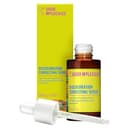
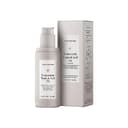
How we judged these
We do not own a lab and we will not pretend to have worn six brightening serums on matched halves of a face for twelve weeks. What we can do is read ingredient lists closely, which in this category separates the honest products from the ones trading on a trendy molecule. Four criteria, in order of how much they matter:
1. Free acid, or a derivative? The published research is on tranexamic acid itself. When a label says cetyl tranexamate mesylate you are buying an oil-soluble ester chosen for stability and skin penetration — a reasonable formulation choice, but one nobody has published a conversion rate for, so the dose reaching your pigment cells is genuinely unknown. 2. Is anything quantified? Three of our six state a figure; the two most expensive state nothing, which is worth knowing before you pay for the privilege. 3. What else is in the bottle? Tranexamic acid is almost always sold alongside niacinamide, and often alongside kojic acid, arbutin or an exfoliating acid. That can be useful depth or it can be four sensitizers stacked in one step. 4. Price per ml, and the irritants. Alcohol denat at position two, or a fragrant botanical oil in a formula advertised as fragrance-free, is a real mark against a product bought mostly by people with reactive, already-uneven skin — and we flag both where they appear.
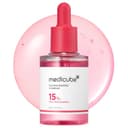
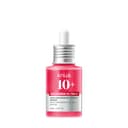
One thing we deliberately did notreward: the biggest number on the front. One serum here puts “15%” in its product name and that figure is 10% niacinamide plus 5% tranexamic acid added together. Another sells a “10%” that refers to its glycolic acid, not its tranexamic acid at all. Addition is not a formulation strength.
What tranexamic acid does — and where the evidence sits
Pigment production starts with a signal. When skin is inflamed or UV-stressed, keratinocytes release plasmin-driven messengers that prompt melanocytes to produce more melanin; tranexamic acid works upstream of that by interfering with the plasminogen pathway, which is why it suits the inflammation-and-hormone-driven kind of discoloration rather than a simple freckle. Our tranexamic acid explainer covers the mechanism properly.
The evidence base is real but it needs reading carefully. The 2018 systematic review and meta-analysis cited at the bottom of this page pooled trials of tranexamic acid for melasma and found it reduced severity — but that pooled picture includes oral tablets and intradermal injections alongside topical application, and the oral and injected routes are where much of the strength of the finding comes from. A serum you pat on at home is the weakest of the three delivery routes in that literature. That is not a reason to skip it. It is a reason to expect gradual fading over months rather than the transformation the before-and-after photographs imply, and to treat anyone promising to clear melasma from a bottle as selling you something.
It is also why every pick here pairs tranexamic acid with something else. Niacinamide is the usual partner and the best-supported one, interrupting pigment transfer at a different point in the same process; kojic acid and arbutin work the tyrosinase route instead. Stacking those routes is the reasonable way to build a brightening serum. Stacking four of them in one bottle, as two of these do, is also the reasonable way to end up stinging and unable to say which ingredient did it.
The label trick: free acid versus derivative
This is the single most useful thing to take away from this page. Scanning an ingredient list for the word “tranexamic” is not enough, because two quite different things carry it:
Tranexamic acid is the molecule from the research. It is water-soluble, so it sits in the water phase of a serum, and brands that use it tend to be the ones willing to put a figure on the label — our stated-concentration picks run from 4% to 5%. Cetyl tranexamate mesylate is an oil-soluble ester of it, designed to be more stable and to cross the skin barrier more readily before converting. The theory is sound and the ingredient is widely used by good formulators. The problem is purely one of disclosure: there is no published conversion figure, so a serum built on the ester cannot tell you — and cannot be made to tell you — how much tranexamic acid your skin actually receives.
We still made an ester-based serum our top pick, because at this price the trade is worth it: ten ingredients, nothing fragrant, niacinamide fourth, and cheap enough that you will still be using it in month three when brightening actives start to show anything. But if you want the molecule the trials used, at a number you can read, buy one of the stated-percentage picks instead.
How to choose the right one for your skin
If this is your first brightening serum, start with the cheapest sensible formula and one active pairing, not four. The top pick exists for exactly that: it does one thing, it costs very little, and if your skin dislikes it you have learned something for the price of a coffee rather than a restaurant dinner.
If you have been treating discoloration for a while and want the documented molecule at a disclosed strength, go to the stated-5% pick. It is free tranexamic acid, listed third, with kojic acid, niacinamide and licorice root behind it — genuinely more formula for genuinely more money, with the caveat that four brighteners at once is where irritation comes from.
If your skin is dry, mature or simply uncomfortable in a watery serum, texture should decide it, and the emollient pick is the one that doubles as your moisturizing step — milk thistle seed oil, tocopherol and bakuchiol in the same bottle. If your skin is dehydrated rather than dry — tight and dull but not flaky — the hydrating Korean formula with eight hyaluronic acid forms does more for how your skin looks next week, though its fifty-one ingredients are a lot of contact points for reactive skin.
If the marks sit on rough, dull texture, the glycolic serum treats both at once. Read its ingredient list first: alcohol denat is the second ingredient, which rules it out for dry or barrier-compromised skin entirely. And if your discoloration is post-acne marks rather than melasma, you may not need this category at all — those usually fade on their own once the breakouts stop, and the money is better spent on the acne. Our dark spot guide works through which kind of discoloration you are actually looking at.
How to use a tranexamic acid serum
Apply it to clean skin before your moisturizer, once or twice a day. Tranexamic acid has no UV sensitivity of its own and no special timing requirement, so morning or night both work — the exception is the glycolic pick above, which is a night-only product because of the acid. It layers comfortably with niacinamide, hyaluronic acid, peptides and moisturizers, and where everything sits in sequence is covered in our routine order guide.
Two habits matter more than which bottle you choose. First, sunscreen, every single day, without exceptions. This is not a throwaway line at the end of a product page: UV is what drives the pigment signal these serums are trying to interrupt, so using a brightener without daily SPF is paying to bail out a boat while leaving the hole in it. If your budget stretches to one purchase this month and you are treating discoloration, buy the sunscreen, not the serum. Second, give it three months. Melanin that is already in the upper layers of your skin has to be shed before you see a difference, and that is measured in skin-cycle weeks. Judging a brightening serum at a fortnight tells you only whether it stings.
One genuine conflict to manage: the glycolic pick and a retinol do not belong in the same routine on the same night, and stacking either on top of a four-brightener serum is how people end up with a compromised barrier and more discoloration than they started with. If you are already using retinol or a vitamin C, add tranexamic acid on its own and change nothing else for a month.