EltaMD vs La Roche-Posay
Two brands you will see on the same dermatology office shelf. One sells sunscreen almost exclusively; the other sells a whole routine. Compared on what the FDA labels actually say.
How this is funded: we earn a commission if you buy through our links, at no extra cost to you. It never changes which product we recommend, and we’ll tell you when we’d skip one. Full disclosure.
The four picks, two per brand
One face pick and one mineral pick from each brand, so the comparison is like for like. We own no units and have tested nothing: the specs come from each product's FDA OTC label and listing, and prices are checked daily.
EltaMD — the daily face pick
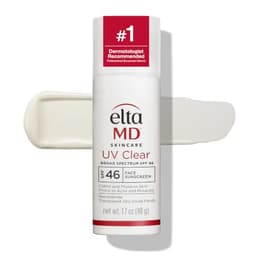
EltaMD UV Clear Broad-Spectrum SPF 46
Zinc oxide 9.0% plus octinoxate 7.5% at SPF 46, with 5% niacinamide. Oil-free, fragrance-free, and the lightest finish of these four — the one most people actually reapply.
$45.00 · View on AmazonPrice as of October 15, 2026. #ad How we’re funded
EltaMD — the 100% mineral pick
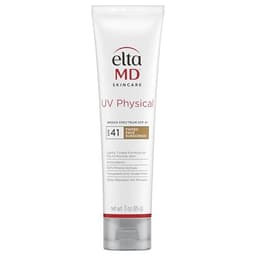
EltaMD UV Physical Tinted SPF 41
9% zinc oxide with 7% titanium dioxide and a universal iron-oxide tint to cancel the cast. Fragrance-free, water resistant 40 minutes, prestige price for 3 oz.
$50.00 · View on AmazonPrice as of October 15, 2026. #ad How we’re funded
La Roche-Posay — the 100% mineral pick
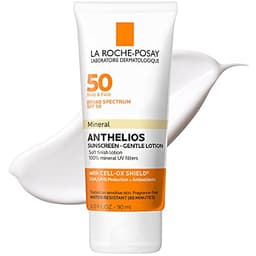
La Roche-Posay Anthelios Mineral SPF 50 Gentle Lotion
Titanium dioxide plus zinc oxide at SPF 50 with an antioxidant complex, fragrance-free, and noticeably cheaper per bottle than the EltaMD minerals. Some cast, as all true minerals have.
$25.97 · View on AmazonPrice as of October 15, 2026. #ad How we’re funded
La Roche-Posay — face and body
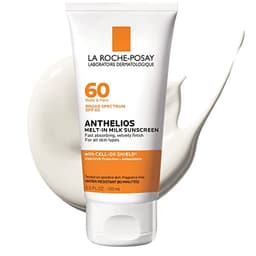
La Roche-Posay Anthelios Melt-in Milk SPF 60
Avobenzone 3%, homosalate 10%, octisalate 5%, octocrylene 7% at SPF 60 in a 150 ml bottle — no cast, cheap per ounce, generous enough for limbs. Contains fragrance.
The actives panels, side by side
Neither brand prints its filter percentages in its marketing copy, so the only honest place to compare them is the FDA over-the-counter drug label. Both of the panels below were read off DailyMed on October 14, 2026 — the other two products’ figures come from their own labels and listings, recorded in our registry on the dates shown on each product card.
| Product | Actives | Filter class | Size | Fragrance |
|---|---|---|---|---|
| EltaMD UV Clear SPF 46 | Zinc oxide 9.0%, octinoxate 7.5% (plus 5% niacinamide) | Hybrid — one mineral, one organic | 48 ml | Fragrance-free |
| EltaMD UV Physical Tinted SPF 41 | Zinc oxide 9%, titanium dioxide 7% | 100% mineral | 89 ml | Fragrance-free |
| La Roche-Posay Anthelios Mineral SPF 50 | Titanium dioxide + zinc oxide (percentages not published) | 100% mineral | 50 ml | Fragrance-free |
| La Roche-Posay Anthelios Melt-in Milk SPF 60 | Avobenzone 3%, homosalate 10%, octisalate 5%, octocrylene 7% | All organic filters | 150 ml | Contains fragrance |
Anthelios SPF 60 exists in several versions with different actives — some add oxybenzone. The panel above is the Cell-Ox Shield XL label. Always check the carton you are holding rather than a roundup, including this one.
What the filter difference actually means
This is the part of the comparison that is not a matter of taste. In its 2019 rulemaking the FDA said it had sufficient safety data on zinc oxide and titanium dioxide to propose that sunscreens containing them at up to 25% are generally recognized as safe and effective, while twelve other filters — including avobenzone, octinoxate, octisalate, octocrylene, homosalate and oxybenzone — still lacked the data for a positive determination. That is a statement about missing data, not about demonstrated harm, and the agency has not pulled any of those filters from the market. But it is the reason “mineral only” is a reasonable preference rather than a superstition, and it is the one axis on which these four products genuinely differ.
Within the minerals, the two are not interchangeable either. A review of the inorganic filters reports that zinc oxide has a broad UVA-UVB absorption curve while titanium dioxide provides better UVB protection — which is why most good mineral sunscreens use both, why the zinc-led formulas here are the stronger UVA choices, and why La Roche-Posay’s titanium-only tinted fluid is the option to think twice about if broad UVA coverage was your whole reason for buying mineral. We go through that in detail in zinc oxide vs titanium dioxide.
Where EltaMD wins
It puts niacinamide in a sunscreen
UV Clear carries 5% niacinamide, and that is not a marketing flourish: niacinamide is one of the better-documented topicals in skincare, with published evidence for barrier function, ceramide synthesis and pigmentation, and reviews of its use in redness-prone skin. Getting it inside the sunscreen means one fewer layer in the morning, which on reactive skin is a real advantage — fewer products, fewer variables, less chance of the whole routine being abandoned. Nothing in the Anthelios range does the same job.
Its mineral option is the most wearable one here
The reason people quit mineral sunscreen is the white cast, and UV Physical answers it the right way: a universal iron-oxide tint over a 9% zinc, 7% titanium base, which also adds a little visible-light protection. It is the most cosmetically elegant of the four, and the honest caveat is that a single universal tint cannot match the deepest skin tones — our sunscreen picks for deeper skin tones exist for exactly that gap.
The range is narrow, which is itself a feature
EltaMD, in this registry, is a sunscreen brand: two products, both SPF, both fragrance-free. There is no decision tree to get lost in. If you want someone to hand you a face sunscreen and stop talking, this is the brand that does it.
Where La Roche-Posay wins
You can build an entire routine out of it
Our registry carries a dozen La Roche-Posay products across cleansers, moisturizers, serums, a balm, an eye cream, an acne treatment and three sunscreens — a lineup that can cover every step of a routine for reactive skin without leaving the brand. That matters if the problem you are solving is not “which SPF” but “what do I do about skin that reacts to everything”. The Toleriane line in particular is built around that buyer, and the sensitive-skin moisturizer roundup explains why its Double Repair cream keeps turning up there.
Cost per ounce, and bottles big enough for a body
Sunscreen is the one product where price per ounce is a protection issue rather than a budget issue: the SPF on the label assumes a generous layer, reapplied, and nobody applies a generous layer of something they are rationing. A 150 ml bottle of Melt-in Milk covers face, neck, arms and legs; a 48 ml tube of UV Clear is a face-only product at several times the price per ounce. Both brands are honest value — they are just answering different questions.
A true 100% mineral option at a mid-range price
Anthelios Mineral SPF 50 is titanium dioxide plus zinc oxide with an antioxidant complex, fragrance-free, at a price well under the EltaMD minerals. It casts slightly, as every real mineral does. If you are buying mineral for the filter rather than for the finish, this is the efficient choice, and it is the reason it takes the top slot on our mineral sunscreen roundup.
Where they genuinely tie
Both brands pass the only test the AAD actually sets out: broad spectrum, SPF 30 or higher, water resistance stated on the label. Both keep most of their range fragrance-free. Both publish enough on their cartons for you to check them against the FDA panel, which is more than can be said for a lot of prestige skincare. And both are vulnerable to the same failure mode — being applied too thinly, too late, and not reapplied. The AAD notes that up to 80% of the sun’s UV penetrates cloud and that UVA passes through window glass, so the sunscreen that wins is the one that goes on every morning regardless of the weather or the commute. If you want the number, our guide to how much sunscreen to apply has it.
Which should you buy?
Acne-prone or redness-prone face, money no object: EltaMD UV Clear. The niacinamide and the oil-free, fragrance-free base are a genuinely better fit than anything in the Anthelios range, and the finish is the lightest of the four.
You want mineral only, and you want it to look invisible: EltaMD UV Physical Tinted, provided the universal tint suits your skin tone.
You want mineral only, at a sane price: La Roche-Posay Anthelios Mineral SPF 50, and accept the slight cast.
You react to zinc specifically:La Roche-Posay Anthelios 50 Tinted Mineral — titanium dioxide 11% and no zinc at all. It is not one of the four picks above; it sits on our tinted sunscreen roundup, and it carries the UVA caveat described earlier.
Face and body, high SPF, no cast, lowest cost per ounce:Anthelios Melt-in Milk SPF 60 — unless fragrance is a problem for you, in which case buy a fragrance-free body sunscreen instead and keep the face product separate.
You are starting from zero: neither, yet. Get a cleanser and a moisturizer that suit your skin first, then spend on SPF; our guideline-backed shortlist is the three-product version of that argument, and how to choose a sunscreen covers the decision without brand names attached.
A closing note on what this page is not. We own no units of either brand and have tested nothing — there is no “we wore both for six weeks” here, because it would not be true. What we have done is read two FDA labels, two listings and the published reviews behind the filters, and told you which product each fact favors. The specs are checkable, the prices on the cards are refreshed daily, and if a listing changes we would rather fix it than leave you comparing a number that has moved.
General guidance, not medical advice. Barrier & Balm is written by a skincare enthusiast, not a dermatologist. For a diagnosis, a reaction, or a prescription active like tretinoin, see a qualified professional. Introduce any new active slowly and patch-test first.
Frequently asked questions
Is EltaMD UV Clear a mineral sunscreen?
No. Its FDA label lists two actives: zinc oxide 9.0% and octinoxate 7.5%. Zinc oxide is a mineral filter and octinoxate is an organic (chemical) one, which makes UV Clear a hybrid. It is often shelved and discussed as a mineral sunscreen because zinc is the lead active, but if your reason for choosing mineral is to avoid organic filters altogether, UV Clear does not qualify — EltaMD UV Physical and La Roche-Posay Anthelios Mineral do.
Which brand is better for acne-prone skin?
EltaMD UV Clear is the stronger pick, and the reason is the 5% niacinamide alongside an oil-free, fragrance-free, non-comedogenic base — niacinamide has published evidence for barrier function, sebum and redness, which is unusual to find inside a sunscreen. La Roche-Posay's answer is to sell the acne treatment separately (its Effaclar line) and keep the sunscreen simple. If you want one product doing both jobs, EltaMD; if you would rather treat and protect in separate steps, La Roche-Posay is cheaper overall.
Which is better value?
La Roche-Posay, clearly, on cost per ounce — Anthelios Melt-in Milk is a 150 ml face-and-body bottle and Anthelios Mineral is a 50 ml face fluid, both at mid-range prices, against EltaMD's premium pricing on 48 ml and 89 ml tubes. That matters more than it sounds: sunscreen only delivers its SPF when applied generously and reapplied, so a bottle you ration is a bottle underperforming its label. Live prices on this page are pulled daily, so compare the actual numbers rather than the reputations.
Is SPF 60 meaningfully better than SPF 46?
Not by much, and not in the way the numbers suggest. The AAD's guidance is SPF 30 or higher, broad spectrum, water resistant — everything above that range buys small, diminishing increments, and real-world protection is dominated by how much you apply and whether you reapply. Pick the SPF you will wear every day over the higher number you will not.
Which should I choose if zinc oxide irritates my skin?
A minority of people do react to zinc oxide. La Roche-Posay's Anthelios 50 Tinted Mineral is the zinc-free option in the brand's range — titanium dioxide 11% and nothing else — and it is a pick on our tinted-sunscreen roundup rather than on this page. The honest trade is UVA coverage: reviews of the two mineral filters report that zinc oxide has a broad UVA-UVB absorption curve while titanium dioxide provides better UVB protection, so a titanium-only filter is the weaker single-mineral choice for UVA.
Do dermatologists prefer one of these brands?
Both turn up constantly in dermatology offices, and we are not going to pretend we have surveyed anyone. What we can say from the labels is why both are credible: simple actives panels, fragrance-free formulas in most of the range, and broad-spectrum claims that match what published guidance tells you to look for. Our dermatologist-recommended skincare page sets out those criteria in full and matches products to them.
Are either of these sunscreens fragrance-free?
EltaMD UV Clear and UV Physical are, as are La Roche-Posay's Anthelios Mineral and Anthelios 50 Tinted Mineral. Anthelios Melt-in Milk SPF 60 contains fragrance, which is the one real strike against it for reactive skin — fragrance is a leading cause of cosmetic contact allergy, and because fragrance formulas are treated as trade secrets you cannot see what is inside the word on the label.
Sources
- DailyMed — EltaMD UV Clear SPF 46 (zinc oxide and octinoxate sunscreen lotion) — FDA OTC label actives panel: zinc oxide 9.0% and octinoxate 7.5% — a hybrid mineral-plus-organic filter pair, not a 100% mineral sunscreen. Labeler CP Skin Health Group, Inc.; the tinted UV Clear carries the same two actives plus iron oxides (accessed October 14, 2026)
- DailyMed — La Roche-Posay Anthelios SPF 60 Melt-in Milk with Cell-Ox Shield XL (avobenzone, homosalate, octisalate and octocrylene lotion) — FDA OTC label actives panel for the Cell-Ox Shield XL version (NDC 49967-355): avobenzone 3%, homosalate 10%, octisalate 5%, octocrylene 7% — all organic filters, no mineral. Other Anthelios SPF 60 listings use different strengths and some add oxybenzone, so the exact label matters (accessed October 14, 2026)
- U.S. FDA — Questions and Answers: FDA's regulatory actions on over-the-counter sunscreen — FDA: "sufficient safety data on both zinc oxide and titanium dioxide to support a proposal that sunscreen products containing these ingredients (at concentrations of up to 25%) are GRASE" — while twelve other filters, including avobenzone, oxybenzone, homosalate, octinoxate, octisalate and octocrylene, still lack the data for a positive GRASE determination (accessed October 7, 2026)
- A review of inorganic UV filters zinc oxide and titanium dioxide (PubMed) — Schneider & Lim, Photodermatol Photoimmunol Photomed 2018 — review of the two mineral filters: "ZnO has a broad UVA-UVB absorption curve, while TiO2 provides better UVB protection" (accessed October 7, 2026)
- American Academy of Dermatology — How to decode a sunscreen label — AAD on SPF, broad spectrum and water resistance claims (accessed July 17, 2026)
- American Academy of Dermatology — Sunscreen FAQs — AAD: "UVA rays (or aging rays) can prematurely age your skin, causing wrinkles and age spots, and can pass through window glass", while "UVB rays (or burning rays) are the primary cause of sunburn and are blocked by window glass"; recommends broad-spectrum, SPF 30 or higher, water-resistant sunscreen applied "every day on skin not covered by clothing if you will be outside"; even on cloudy days "up to 80% of the sun's harmful UV rays can penetrate the clouds" (accessed October 11, 2026)
- Mechanistic Basis and Clinical Evidence for Nicotinamide (Niacinamide) in Skin (PMC) — Review of niacinamide's barrier, ceramide and pigmentation effects (accessed July 17, 2026)
- U.S. FDA — Fragrances in Cosmetics — FDA: "Even some products labeled 'unscented' may contain fragrance ingredients. This is because the manufacturer may add just enough fragrance to mask the unpleasant smell of other ingredients, without giving the product a noticeable scent"; fragrance formulas are "the kinds of cosmetic components that are most likely to be 'trade secrets'" and need not be disclosed component by component (accessed October 11, 2026)
Keep reading
Dermatologist-recommended skincare
The criteria published guidance actually sets out, and seven products that meet them.
See the picksBest sunscreen for face
The full roundup, including the cheaper options that beat both brands on price per ounce.
See the picksMineral vs chemical sunscreen
How the two filter classes work, what the FDA has and has not declared GRASE, and who should care.
Read the comparisonZinc oxide vs titanium dioxide
Why the two minerals are not interchangeable, and which covers UVA properly.
Read the comparisonCeraVe vs La Roche-Posay
The other office-shelf matchup: commodity barrier repair against reactive-skin formulation.
Read the comparisonBest mineral sunscreen
If you want zinc and titanium only, this is the shortlist and the honest truth about cast.
See the picksBest tinted sunscreens
Iron oxides, white cast and shade range — where both brands' tinted options land.
See the picksHow much sunscreen to apply
The amount the SPF number assumes, which is more than almost anyone uses.
Read the guide