The five picks side by side
Every figure in this table is read off the product’s own listing or the brand’s published ingredient list. Where a brand does not publish a number — which is the norm for moisturizer actives — the cell says so rather than guessing.
| Product | Named barrier ingredients | Size | Texture | Packaging |
|---|
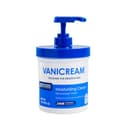
| Vanicream Moisturizing Skin Cream | Barrier emollients only — documented free of fragrance, dyes, lanolin, parabens and formaldehyde releasers | 453 ml | Rich cream | Pump tub |
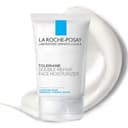
| La Roche-Posay Toleriane Double Repair | Ceramide-3, niacinamide, glycerin, prebiotic thermal water | 75 ml | Light cream | Tube |
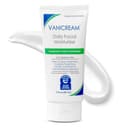
| Vanicream Daily Facial Moisturizer | Ceramides EOP, NG, NP, AS and AP + hyaluronic acid + squalane — 19 ingredients in total | 89 ml | Lightweight lotion | Tube |
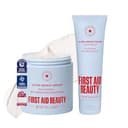
| First Aid Beauty Ultra Repair Cream | Colloidal oatmeal + ceramides + shea butter | 170 ml | Whipped rich cream | Tub |
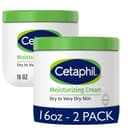
| Cetaphil Moisturizing Cream | Glycerin + emollients (no ceramide claim) | 340 ml | Rich cream | Tub or jar |
There is no concentration column because not one brand in this category publishes a percentage for its ceramides, niacinamide or oatmeal. Any site showing you one has made it up.
How we judged these
1. What the formula is documented to leave out
On reactive skin this is the single most useful criterion, and it is the one most roundups skip because “what is absent” does not photograph well. Fragrance is the headline: it is a leading cause of cosmetic contact allergy, it serves no function on the skin, and because fragrance formulas are treated as trade secrets you cannot see what is inside the word. That is also why “unscented” is not the same claim as “fragrance-free” — the FDA points out that a product can carry just enough masking fragrance to kill an off-odor and still have no noticeable scent. We unpack that trap in fragrance-free vs unscented. Beyond fragrance, the exclusions that matter are dyes, lanolin, formaldehyde releasers and essential oils; Vanicream is the only brand here that publishes all of them as a formal list, which is why it takes the top slot.
2. How long the ingredient list is
Every ingredient is a chance to react, so a short list is a real feature rather than minimalist aesthetics. It also makes a reaction diagnosable: if a 19-ingredient lotion upsets your skin, you have 19 suspects, not 60. That is why the Daily Facial Moisturizer earns a slot of its own alongside the tub — the published list is 19 items long, five of them ceramides, and most of the rest is the emulsifier base. If you are trying to identify a trigger, start from the shortest list on this page and add nothing else for two weeks.
3. Whether the barrier ingredients are named
“Soothing” and “calming” are not ingredients. Named lipids are: ceramide-3, ceramides EOP/NG/NP/AS/AP, squalane, cholesterol. Two of the picks here name their ceramides individually, one names colloidal oatmeal — a recognised skin protectant for itch rather than a cosmetic flourish — and one names nothing beyond glycerin and emollients, which is honest, cheap and still effective, but it is the reason Cetaphil sits at the budget end rather than the top. If the vocabulary itself is new to you, start with what ceramides actually do.
4. Whether the packaging keeps fingers out
A small criterion that matters more on compromised skin than people expect: an open jar gets dipped into with hands, and a barrier that is already struggling is one you want to introduce fewer organisms to. A pump tub solves it without costing anything. Two of these picks are tubes, one is a pump, two are tubs — and if you buy a tub, use a clean spatula rather than fingers.
How to choose between these five
If your skin reacts and you do not know to what
Buy the shortest list and change nothing else. Pair it with a fragrance-free cleanser and a mineral sunscreen, run that for two weeks, then introduce one product at a time — the method is in how to introduce new actives and the patch-test protocol is in how to patch test. An elimination routine only tells you something if you actually eliminate.
If you want one cream for morning and night
Pick on texture rather than formula. The rich creams here are better at night and in dry-winter conditions; the light cream and the lotion sit better under sunscreen and makeup. There is no chemistry reason you need two products — see day cream vs night creamfor why most “night” creams are simply richer ones.
If sensitive means itchy
Itch is a different complaint from tightness, and colloidal oatmeal is the ingredient with a recognised protectant role for it. That is the honest case for paying several times the per-ounce price of a plain ceramide cream: not better barrier repair, but an ingredient aimed at the symptom you actually have.
If sensitive means stinging on actives
Then the moisturizer is not your problem — the routine around it is. Skin that stings on vitamin C or retinol is usually skin with a compromised barrier, and the fix is to pause the actives, simplify, and rebuild. Our guide to repairing a damaged barrier is the right page for that, and any of these five creams is a reasonable part of the plan.
What we left out, and why
Anything fragranced, including “natural” fragrance. Essential oils are fragrance with better marketing, and several of them are documented contact allergens. On a product you apply twice daily to reactive skin there is no upside worth that risk.
Creams whose selling point is a soothing botanical. Centella, oat milk, chamomile and the like may well help, but none of these brands publishes a concentration for them, so the claim is unfalsifiable. We rank on facts we can read, and a named lipid beats an unnamed amount of a plant.
“Hypoallergenic” as a reason to buy. It is not a regulated term and no test is required before a label carries it. A published exclusion list is a claim with content; hypoallergenic on its own is not.
Thermal-water sprays and essences. Pleasant, and genuinely low-risk, but they evaporate. Sensitive skin needs an occlusive step to hold water in, which is the job this page is shopping for.
How to use a moisturizer on sensitive skin
Apply to damp skin, within a minute or so of cleansing, while there is still water on the surface to trap — this is the one piece of technique that changes the result more than the product choice does. Use enough: around a fingertip-and-a-half for the face is the practical amount, and how much moisturizer to use has the rest. Pat rather than rub, especially if your skin is inflamed. And give any new cream two weeks before you judge it; the barrier takes that long to show a change, and most products blamed for “not working” were abandoned in week one.
One last thing worth saying plainly: the most expensive cream on this page is not the best one, and the cheapest is not a compromise. All five are fragrance-free, all five do the same physical job, and the differences between them are about which problem you have — reactivity, itch, treatment dryness or budget — not about quality tiers. Buy the one whose exclusion list and texture match your skin, and spend what you saved on sunscreen.