Fragrance-Free vs Unscented
They are not synonyms, and the FDA regulates neither word. What 'unscented' can legally hide, and how to read an ingredient list instead of a front label.
How this is funded: we earn a commission if you buy through our links, at no extra cost to you. It never changes which product we recommend, and we’ll tell you when we’d skip one. Full disclosure.
Three products whose exclusions are actually published
The brands worth trusting on this are the ones that print what they leave out rather than a claim about smell. Three picks whose formulation facts we can check. We own no units and have tested nothing; prices are checked daily.
The published exclusion list
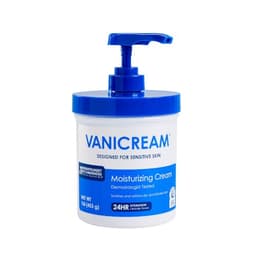
Vanicream Moisturizing Skin Cream
Documented free of fragrance, dyes, lanolin, parabens and formaldehyde releasers. The claim is a list you can check against the INCI, not an adjective.
Same discipline, cleanser
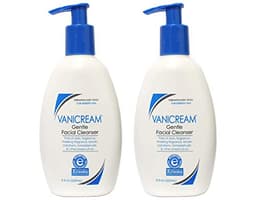
Vanicream Gentle Facial Cleanser
The same exclusions in a non-foaming gel-lotion, for when even 'gentle' cleansers sting. No actives, nothing to react to.
$25.66 · View on AmazonPrice as of October 11, 2026. #ad How we’re funded
Fragrance-free with actives
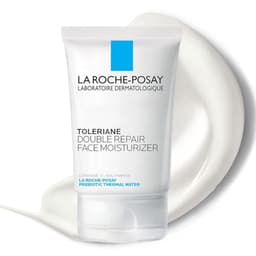
La Roche-Posay Toleriane Double Repair Face Moisturizer
Ceramide-3 and niacinamide in a light cream, fragrance-free and allergy-tested — proof that dropping fragrance does not mean dropping the formula.
$24.99 · View on AmazonPrice as of October 11, 2026. #ad How we’re funded
The two claims, side by side
| Fragrance-free | Unscented | |
|---|---|---|
| What it claims | No fragrance ingredients have been added | The product has no noticeable smell |
| Can contain masking fragrance? | No, if the claim is honest | Yes — the FDA says so explicitly, and that is the whole point of the distinction |
| Defined in regulation? | No | No |
| Can still smell of something? | Yes — raw ingredients have their own odor, which the FDA notes can be noticeable | Not usually; removing the smell is the objective |
| Useful for reactive skin? | Yes, and it is the claim to filter on | No — it tells you nothing about exposure |
The loophole that makes this worth reading
Masking agents are the mechanism, and the FDA’s cosmetics labeling guide is where the detail lives. A masking agent “may be declared by their individual name(s) or as ‘fragrance’” — and, crucially, one “present in a product at an insignificant level may be considered an incidental ingredient”. Incidental ingredients do not have to be declared at all.
Read that twice if you have reactive skin. A product can contain a masking fragrance, describe itself as unscented, and — if the level is low enough to count as incidental — not list it anywhere on the pack. That is a legal outcome, not a scandal, and it is the single best reason to treat “unscented” as meaningless for your purposes and to buy from brands that publish exclusions instead.
The second structural reason fragrance is opaque is the trade-secret allowance. The FDA describes fragrance and flavor formulas as “complex mixtures of many different natural and synthetic chemical ingredients” that are “the kinds of cosmetic components that are most likely to be ‘trade secrets’”, and the labeling rules let the whole compound be declared with one word. So even a fully compliant, honestly labeled fragranced product tells you almost nothing about what you are putting on your face.
How to read the label in ten seconds
Four passes down the ingredient list, in this order:
- Search for the word itself.“Fragrance”, “parfum” or “aroma”. Any of them means a fragrance compound is present and you cannot know what is in it.
- Look for named botanicals that function as fragrance. Lavender, bergamot, geranium, citrus peel oils, rose, ylang-ylang, peppermint, eucalyptus, sage. These behave like fragrance on reactive skin whatever the marketing says.
- Check the tail of the list. Named fragrance allergens such as linalool, limonene, citronellol and geraniol are usually clustered at the end.
- Then, and only then, read the front of the bottle. If the ingredient list is clean and the brand also publishes what it excludes, the claim is worth something.
Our guide to reading skincare ingredient labels covers the rest of what an INCI list tells you — concentration order, the 1% line and where actives tend to sit.
A real example from our own picks
This is not hypothetical, and it affects products we recommend. Two creams in our registry state that they contain no added fragrance, and both have fragrant botanicals in the ingredient list — one lists pelargonium (geranium), bergamot and sage oils; the other contains a fragranced base. Both are good products, and we recommend both in the right context. But we do not call either of them fragrance-free, because the INCI does not support it.
That is the standard worth holding a site to, including this one: the claim has to survive the ingredient list. It is also why our sensitive-skin moisturizer roundup ranks on published exclusions rather than on the words “gentle” and “soothing”, and why the gift picks flag the fragranced exceptions rather than quietly dropping them.
When fragrance is actually worth avoiding
On leave-on products, more than rinse-off
A cleanser is on your skin for forty seconds; a moisturizer is on it for sixteen hours. If you are going to make one swap, make it the leave-on product.
On compromised, sensitive or rosacea-prone skin
A barrier that is already struggling is a barrier that lets more of everything through, which is why things suddenly sting when they never used to. Our barrier repair guide starts by removing variables, and fragrance is the easiest one to remove.
Around the eyes
The thinnest skin on the body, and the place where irritation is most visible. Fragrance-free is close to a requirement for an eye product — every pick in our dark-circle eye cream roundup is fragrance-free for exactly that reason.
When you are trying to identify a trigger
You cannot run an elimination routine with an ingredient you are not allowed to see. A fragranced product is one line on a label standing in for dozens of compounds, which makes it the least diagnosable thing in your bathroom.
And when it genuinely does not matter
If your skin has never reacted to anything, fragrance is a preference. Enjoying how a product smells is a real reason to keep using it, and consistency beats purity — a fragranced sunscreen you apply every morning protects you far better than a fragrance-free one you find unpleasant and skip. The AAD’s skin care basics come down to cleansing, moisturizing and sun protection; none of that is undone by a pleasant smell on skin that tolerates it.
So the honest summary is narrower than the internet’s. Fragrance is not poison. “Unscented”, however, is not the claim you think it is — and if you have reactive skin, the five seconds it takes to scan an ingredient list for “parfum” is the highest-return habit in skincare.
General guidance, not medical advice. Barrier & Balm is written by a skincare enthusiast, not a dermatologist. For a diagnosis, a reaction, or a prescription active like tretinoin, see a qualified professional. Introduce any new active slowly and patch-test first.
Frequently asked questions
Can an unscented product contain fragrance?
Yes. The FDA says plainly that some products labeled 'unscented' may contain fragrance ingredients, because a manufacturer can add just enough fragrance to mask the unpleasant smell of other ingredients without giving the product a noticeable scent. 'Unscented' describes the result, not the recipe — so for reactive skin it is not the claim you want.
Is 'fragrance-free' regulated?
Not as a defined term. Cosmetic labeling has to be truthful and not misleading, but no regulation sets out what a brand must do before printing 'fragrance-free', and there is no certification behind it. In practice it is a reliable signal from brands that also publish an exclusion list, and a weaker one everywhere else. The ingredient list is the check.
How do I spot hidden fragrance in an ingredient list?
Look for 'fragrance', 'parfum' or 'aroma', which is how a whole fragrance compound is declared in one word. Then look for named botanicals that function as fragrance: lavender, bergamot, geranium, citrus oils, rose, ylang-ylang, peppermint, eucalyptus. Also watch for 'natural fragrance' and for named allergens such as linalool and limonene, which often appear at the end of a list.
Why do brands not have to say what is in their fragrance?
Because fragrance formulas are treated as trade secrets. The FDA notes that fragrance and flavor formulas are complex mixtures of natural and synthetic ingredients and are among the cosmetic components most likely to be trade secrets, and the labeling rules allow the whole compound to be declared as 'fragrance' rather than component by component. That is why one word on a label can stand for dozens of ingredients you cannot see.
Are essential oils better than synthetic fragrance?
Not for reactive skin. Several of the most common contact allergens in cosmetics are fragrance components found in essential oils, and a plant source does not change what a molecule does on an irritated barrier. If a product's ingredient list contains bergamot, geranium or sage oil, treat it as fragranced regardless of what the front of the box says about being free from synthetics.
Does fragrance-free mean the product has no smell?
No. The FDA points out that a product labeled fragrance free may still have a noticeable scent — pleasant or unpleasant — coming from its other ingredients. Raw materials smell of something. A faint oily or 'ingredient' smell in a fragrance-free cream is normal and is not a sign that fragrance has been sneaked in.
Does everyone need to avoid fragrance?
No. If your skin has never reacted to anything, fragrance is a preference rather than a risk, and a product you enjoy using is a product you will keep using. The case for avoiding it is strongest on skin that is sensitive, eczema-prone, rosacea-prone or currently compromised, on products that stay on the skin all day, and on anything applied near the eyes.
Sources
- U.S. FDA — Fragrances in Cosmetics — FDA: "Even some products labeled 'unscented' may contain fragrance ingredients. This is because the manufacturer may add just enough fragrance to mask the unpleasant smell of other ingredients, without giving the product a noticeable scent"; fragrance formulas are "the kinds of cosmetic components that are most likely to be 'trade secrets'" and need not be disclosed component by component (accessed October 11, 2026)
- U.S. FDA — Cosmetics Labeling Guide — FDA: fragrance and flavor compounds "may be declared in descending order of predominance as 'fragrance' and 'flavor'"; a masking agent "may be declared by their individual name(s) or as 'fragrance'", and one "present in a product at an insignificant level may be considered an incidental ingredient" — so it need not be declared at all (accessed October 11, 2026)
- American Academy of Dermatology — Skin care basics — AAD consumer guidance on cleansing, moisturizing and sun protection (accessed July 17, 2026)
- Moisturizers — StatPearls (NCBI Bookshelf) — Reference on humectants (hyaluronic acid), occlusives and emollients (accessed July 17, 2026)
Keep reading
Best moisturizers for sensitive skin
The category judged on exclusion lists rather than soothing claims — this page's logic, applied.
See the picksCetaphil vs Vanicream
One brand sells price and availability, the other sells a published list of what it leaves out.
Read the comparisonHow to read an ingredient label
Concentration order, the 1% line, and the rest of what an INCI list tells you.
Read the guideBest skincare for sensitive skin
The full routine for reactive skin, built from products whose formulas are disclosed.
See the routineBest skincare for rosacea
The concern where fragrance avoidance moves from sensible to non-negotiable.
See the routineHow to patch test
How to find out whether a product suits you before it goes on your face.
Read the guide