Barrier & Balm

Best Cleansers for Combination Skin

An oily T-zone and dry cheeks need one cleanser that does not pick a side — five picks, plus the two-cleanser approach that solves it properly.

By Stephen V.Last updated How we pick

Buy CeraVe Foaming Facial Cleanser. If your cheeks flake in winter, buy it for evenings and CeraVe Hydrating Cleanser for mornings instead of trying to find one bottle that does both. The foaming version is the pick because it is the rare gel-to-foam that removes oil and sunscreen without the squeaky, tight after-feel — three ceramides and niacinamide are built into the formula, so it puts something back as it strips. At 355 ml it is also cheap enough that running two cleansers is not an extravagance.

Combination skin is the most mis-sold skin type in the category, because the products aimed at it try to be neutral. A cleanser that is mild enough for dry cheeks will not shift a day of sebum and sunscreen off a T-zone, and one strong enough for the T-zone leaves the cheeks tight. The way out is not a cleverer single product. It is either a well-buffered medium cleanser, or two cleansers used at different times of day — which costs less than most people assume.

Who each pick is for, in one line:

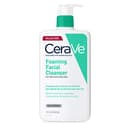
  • CeraVe Foaming Facial Cleanser— for most combination skin, and specifically for the evening wash.
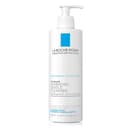
  • La Roche-Posay Toleriane Hydrating Gentle Cleanser— for combination skin whose dry patches are the louder problem.
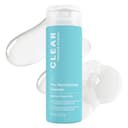
  • Paula’s Choice CLEAR Pore Normalizing Cleanser— for a T-zone that breaks out, when a 2% wash is too much.
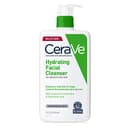
  • CeraVe Hydrating Facial Cleanser— for mornings, when there is nothing to remove but the night’s moisturizer.
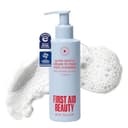
  • First Aid Beauty Ultra Gentle Cream-to-Foam— for people who want a lather without a stripping gel, and have itchy dry patches.

We own none of these and we test nothing — here is what we do instead. Formats, actives and stated percentages are read from the listings; prices come from a daily check of the live listing.

How this is funded: we earn a commission if you buy through our links, at no extra cost to you. It never changes which product we recommend, and we’ll tell you when we’d skip one. Full disclosure.

Quick picks

Ranked on formulation, stated concentration and buyer fit. Select a row to jump to the full write-up. We have not tested these products — here is exactly what we do instead.

#ProductBest forPrice
1
CeraVe Foaming Facial Cleanser

CeraVe Foaming Facial Cleanser

The reference gel-to-foam cleanser for oily skin: it removes oil and sunscreen without the tight, squeaky over-stripping cheap foaming washes cause, because ceramides and niacinamide are built in.

Best overall
$16.97 · View on Amazon

Price as of October 5, 2026. #ad How we’re funded

2
La Roche-Posay Toleriane Hydrating Gentle Cleanser

La Roche-Posay Toleriane Hydrating Gentle Cleanser

A creamy, low-lather cleanser that leaves barrier ingredients behind rather than only stripping oil off — ceramide-3, niacinamide and glycerin, from a brand built around reactive skin. The dry-and-sensitive cleanser that also does a little repair.

Best for dry patches
$19.99 · View on Amazon

Price as of October 5, 2026. #ad How we’re funded

3
Paula's Choice CLEAR Pore Normalizing Cleanser (0.5% Salicylic Acid)

Paula's Choice CLEAR Pore Normalizing Cleanser (0.5% Salicylic Acid)

A deliberately low 0.5% salicylic acid, which is the right call in a product that rinses off — you get the mild exfoliation without the sting, and you save your skin's tolerance for the leave-on step that actually does the work.

Best for a breakout-prone T-zone
$28.00 · View on Amazon

Price as of October 5, 2026. #ad How we’re funded

4
CeraVe Hydrating Facial Cleanser

CeraVe Hydrating Facial Cleanser

A non-foaming, lotion-style cleanser for dry and sensitive skin — it cleans without surfactant stripping and leaves ceramides behind. The counterpart to the foaming version for the other end of the spectrum.

Best for mornings
$14.38 · View on Amazon

$16.9715% off

Price as of October 5, 2026. #ad How we’re funded

5
First Aid Beauty Ultra Gentle Cream-to-Foam Cleanser

First Aid Beauty Ultra Gentle Cream-to-Foam Cleanser

A cream that lathers to a soft foam, with colloidal oatmeal and glycerin — the pick for dry skin that misses a light lather but can't tolerate a stripping gel. The oatmeal makes it a sensible choice for itchy, eczema-prone dryness too.

Best lather without stripping
$27.00 · View on Amazon

Price as of October 5, 2026. #ad How we’re funded

The picks in full

#1Best overall

CeraVe Foaming Facial Cleanser

The reference gel-to-foam cleanser for oily skin: it removes oil and sunscreen without the tight, squeaky over-stripping cheap foaming washes cause, because ceramides and niacinamide are built in.

Strengths

  • Cuts oil and SPF without leaving skin tight
  • Ceramides + niacinamide keep the barrier intact
  • Fragrance-free, big-bottle value

Trade-offs

  • Too stripping for genuinely dry skin
  • Foaming format can feel like 'not enough' to heavy-makeup wearers
Key activeGentle surfactants + ceramides + niacinamide
Stated concentrationNot published
FormatGel-to-foam
Fragrance-freeYes
Best forOily, Combination

Formulation note. A gel that foams, with 3 ceramides + niacinamide + hyaluronic acid. The barrier ingredients are why it cleans oily skin without the tight after-feel.

Ingredients and claims read from the product listing, on July 17, 2026. “Not published” means the brand does not state that figure.

#2Best for dry patches

La Roche-Posay Toleriane Hydrating Gentle Cleanser

A creamy, low-lather cleanser that leaves barrier ingredients behind rather than only stripping oil off — ceramide-3, niacinamide and glycerin, from a brand built around reactive skin. The dry-and-sensitive cleanser that also does a little repair.

Strengths

  • Ceramide-3 + niacinamide + glycerin are left on the skin, not just rinsed away
  • Low-foaming and non-stripping, so skin doesn't feel tight afterward
  • Fragrance-free, from a French-pharmacy brand built for reactive skin

Trade-offs

  • The creamy finish can feel like a slight film — a plus for dry skin, less so if you like a squeaky-clean feel
  • Pricier than the drugstore basics, and won't remove heavy makeup in one pass
Key activeCeramide-3 + niacinamide + glycerin
Stated concentrationNot published
FormatCreamy low-lather cleanser
Fragrance-freeYes
Best forDry, Sensitive, Normal

Formulation note. Ceramide-3 + niacinamide + glycerin + La Roche-Posay prebiotic thermal spring water. It is one of the few cleansers that deposits barrier ingredients as it cleans; the low-foaming, creamy format is what keeps it from stripping dry skin.

Ingredients and claims read from the product listing, on July 29, 2026. “Not published” means the brand does not state that figure.

#3Best for a breakout-prone T-zone

Paula's Choice CLEAR Pore Normalizing Cleanser (0.5% Salicylic Acid)

A deliberately low 0.5% salicylic acid, which is the right call in a product that rinses off — you get the mild exfoliation without the sting, and you save your skin's tolerance for the leave-on step that actually does the work.

Strengths

  • Publishes an exact 0.5% — low on purpose, and honest about it
  • Fragrance-free, dye-free and non-abrasive
  • Rinses clean without the tight after-feel of the stronger washes

Trade-offs

  • Roughly triple the price of the 2% drugstore washes, for less acid
  • Sodium laureth sulfate sits high in the list — not the mildest surfactant system
Key activeSalicylic acid (BHA)
Stated concentration0.5%
FormatLightweight gel
Fragrance-freeYes
Best forSensitive, Acne-prone, Combination

Formulation note. 0.5% salicylic acid as the labeled active, with glycerin, panthenol and arginine, fragrance- and colorant-free. The brand's own reasoning is that a cleanser's contact time is short, so a lower acid load is enough — which is a more candid position than most 2% washes take.

Ingredients and claims read from the product listing, on August 18, 2026. “Not published” means the brand does not state that figure.

#4Best for mornings

CeraVe Hydrating Facial Cleanser

A non-foaming, lotion-style cleanser for dry and sensitive skin — it cleans without surfactant stripping and leaves ceramides behind. The counterpart to the foaming version for the other end of the spectrum.

Strengths

  • Non-foaming, doesn't strip
  • Leaves ceramides + hyaluronic acid on skin
  • Fragrance-free, gentle enough for twice daily

Trade-offs

  • Can feel like it doesn't fully remove heavy makeup in one pass
  • Too gentle for very oily skin that wants a deep clean
Key activeNon-stripping surfactants + ceramides
Stated concentrationNot published
FormatLotion (non-foaming)
Fragrance-freeYes
Best forDry, Sensitive, Normal

Formulation note. A low-foaming, cream cleanser with 3 ceramides + hyaluronic acid + niacinamide. Cleans by dissolving rather than stripping, which is what dry skin needs.

Ingredients and claims read from the product listing, on July 17, 2026. “Not published” means the brand does not state that figure.

#5Best lather without stripping

First Aid Beauty Ultra Gentle Cream-to-Foam Cleanser

A cream that lathers to a soft foam, with colloidal oatmeal and glycerin — the pick for dry skin that misses a light lather but can't tolerate a stripping gel. The oatmeal makes it a sensible choice for itchy, eczema-prone dryness too.

Strengths

  • Colloidal oatmeal is an FDA-recognized skin protectant that helps soothe itch
  • Cream-to-foam gives a gentle lather without the tight, stripped after-feel
  • Fragrance-free and glycerin-rich, so it hydrates as it cleans

Trade-offs

  • Prestige price for the bottle size
  • For the very driest skin, a true non-foaming cream is gentler still
Key activeColloidal oatmeal + glycerin
Stated concentrationNot published
FormatCream-to-foam
Fragrance-freeYes
Best forDry, Sensitive, Itchy / eczema-prone

Formulation note. Colloidal oatmeal (a recognized skin protectant for itch) + glycerin in a fragrance-free cream that lathers to a soft foam. The oatmeal is what earns it for dry skin that is also itchy or reactive; the cream-to-foam format bridges the gap between a stripping gel and a residue-leaving cream.

Ingredients and claims read from the product listing, on July 29, 2026. “Not published” means the brand does not state that figure.

The five compared on format and what they state

Format is the spec that decides how a cleanser behaves on combination skin, and it is the one thing every listing is honest about. Where an acid is involved, the stated percentage matters more than the acid’s name.

CleanserFormatKey ingredientsStated acidSize
CeraVe FoamingGel-to-foam3 ceramides, niacinamide, hyaluronic acid—355 ml
LRP Toleriane HydratingCreamy, low-latherCeramide-3, niacinamide, glycerin—400 ml
Paula’s Choice CLEAR PoreLightweight gelGlycerin, panthenol, arginine0.5% salicylic acid177 ml
CeraVe HydratingLotion, non-foaming3 ceramides, hyaluronic acid, niacinamide—355 ml
First Aid Beauty Ultra GentleCream-to-foamColloidal oatmeal, glycerin—177 ml

All five are fragrance-free, which is the filter that removed most of the shelf.

What combination skin actually is

Sebaceous glands are not distributed evenly across a face. They are densest through the forehead, nose and chin, and sparse across the cheeks and around the eyes. Combination skin is simply the normal consequence of that layout being pronounced in you — an oily central strip, drier outer face. It is not a disorder and it does not need correcting.

What it does need is to stop being treated as one surface. The oily zone is producing sebum you want removed before it mixes with sunscreen and makeup; the dry zone has a barrier that is already short on lipids, and every strong surfactant pass makes it shorter. The AAD’s own cleansing guidance comes down to the same thing: lukewarm water, a gentle non-abrasive cleanser, fingertips not a cloth, and no scrubbing. On combination skin you can add one more instruction — spend your lathering time on the T-zone and let the suds simply rinse across the cheeks. Our guide on how often to wash your face covers the frequency half of this.

What to look for, in order

1. A format matched to the time of day

Evening is when there is something to remove: sunscreen, sebum, pollution, makeup. That is the slot for a gel-to-foam. Morning is when there is almost nothing to remove, so a non-foaming lotion cleanser or even water is enough for most combination skin. Using the same strong wash twice a day is the most common reason a T-zone gets oilier and cheeks get flakier at the same time. The gel versus cream comparison goes through the surfactant difference in detail.

2. Barrier ingredients in the cleanser itself

Most cleansers only take things away. A handful deposit something as they rinse — ceramides, niacinamide, glycerin — and on combination skin that is what lets a foaming wash be used on dry cheeks without a penalty. Both CeraVe picks and the Toleriane do this; it is the reason they are here rather than a cheaper sulfate-based gel.

3. An acid only if you want one, and only at a stated strength

Salicylic acid in a cleanser is useful for a congested T-zone, with one caveat that the Paula’s Choice pick is unusually candid about: a cleanser is on your skin for 30 seconds, so a lower acid load is appropriate, and the brand states 0.5% rather than racing to the 2% ceiling. If you want salicylic acid to do the work of a treatment, it needs to be a leave-on step — see salicylic acid percentages for what each strength is for, and the salicylic cleansers if you want the wash versions compared on their own.

4. No fragrance, no grit, no clay as a daily habit

Fragrance is the most common cosmetic irritant and buys nothing. Physical scrubs make the dry half worse and do nothing for the oily half that a chemical exfoliant would not do better, as physical versus chemical exfoliation lays out. Clay washes are fine occasionally on the T-zone and punishing daily on the cheeks.

The two-cleanser approach, costed

Running a hydrating lotion cleanser in the morning and a foaming gel at night is the setup that actually fits combination skin, and because both CeraVe bottles are 355 ml and sit in budget territory, it is cheaper per month than a single mid-price cleanser. Keep the foaming one in the shower and the lotion one by the sink, which removes the decision entirely.

If you wear heavy sunscreen or long-wear makeup, the honest version of the evening step is two passes rather than two products — an oil or balm to dissolve, then the gel to clean. That is double cleansing, and it is worth it on those days and unnecessary on the others. For the single-product version of the question, see oil cleanser versus foaming cleanser.

How to tell your cleanser is wrong

Two signs, both quick. Tightness: if your cheeks feel tight or squeaky before you apply anything, the cleanser is too strong for them — well-cleansed skin feels like nothing. And rebound shine: a T-zone that is greasier two hours after washing than it was before is usually over-cleansed skin, not under-cleansed skin. Both are fixed by moving the strong wash to evenings only, not by escalating to something stronger.

What we left out, and why

No benzoyl peroxide washes: they are the right tool for inflammatory acne, which is a different problem from a congested T-zone, and they will dry out combination cheeks fast. No micellar waters as a primary cleanser — useful for a quick morning pass, but they leave residue if you do not rinse, which is the point of cleanser versus micellar water. And nothing with an undisclosed acid percentage.
Frequently asked questions

What is the best cleanser for combination skin?

CeraVe Foaming Facial Cleanser for most people: a gel-to-foam strong enough to clear an oily T-zone and sunscreen, but formulated with three ceramides and niacinamide so it does not leave the drier parts of the face tight. If your cheeks flake, the better answer is two cleansers rather than one — the foaming version at night, CeraVe Hydrating Cleanser in the morning.

Should I use two different cleansers for combination skin?

It is the simplest real solution, and it is cheap. Evening is when there is sunscreen and sebum to remove, so a foaming gel belongs there; morning has almost nothing to remove, so a non-foaming lotion cleanser is enough. Two large drugstore bottles cost less per month than one mid-price cleanser, and the setup stops you from over-cleansing dry cheeks twice a day.

Can I use a salicylic acid cleanser on combination skin?

Yes, and a lower strength is the sensible choice. A cleanser rinses off in well under a minute, so the acid has little contact time — which is why the 0.5% in the Paula's Choice pick is a more honest formulation than a 2% wash. Use it on the T-zone a few times a week rather than all over daily. If you want salicylic acid to do real work, it needs to be a leave-on product.

Why is my T-zone oily and my cheeks dry?

Because oil glands are not spread evenly across a face. They are densest on the forehead, nose and chin and sparse across the cheeks, so a pronounced version of the normal layout gives you an oily central strip and drier outer face. It is not a condition to be corrected, and stripping the oily part harder makes the dry part worse without reducing sebum output.

Does combination skin need a toner?

No, not as a category requirement. The astringent toners sold for combination skin are mostly solving a problem a harsh cleanser created. What can be useful is a leave-on exfoliating liquid used on the oily zone a few times a week, which is a treatment step rather than a toner. If your cleanser leaves your face feeling like it needs rebalancing, change the cleanser.

How often should combination skin be washed?

Twice a day is the standard answer, but the two washes should not be the same. A full cleanse at night and a gentle one — or just water — in the morning suits most combination skin. Washing a T-zone more often to control shine usually backfires: skin that has been stripped tends to feel greasier a couple of hours later.

Sources

Keep reading