Naturium vs The Ordinary
Two brands that both print their percentages — one sells the bare active, the other builds it into a finished product. Which approach your routine actually wants.
How this is funded: we earn a commission if you buy through our links, at no extra cost to you. It never changes which product we recommend, and we’ll tell you when we’d skip one. Full disclosure.
The two head-to-head pairs
The matchups where both brands sell the same active at a comparable number — niacinamide and azelaic acid. These four are the comparison in miniature. We own no units and have tested nothing; the picks come from each product's published formulation facts, and prices are checked daily.
The Ordinary — niacinamide
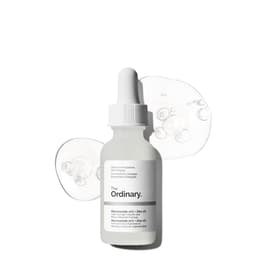
The Ordinary Niacinamide 10% + Zinc 1%
A stated 10% niacinamide with 1% zinc PCA in a water-light serum, at the lowest price in skincare. Above the 4-5% most studies used, which is a caveat rather than a bonus.
$6.00 · View on AmazonPrice as of October 11, 2026. #ad How we’re funded
Naturium — niacinamide
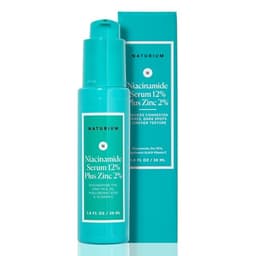
Naturium Niacinamide Serum 12% + Zinc 2%
Pushes to a stated 12% with 2% zinc in a lightweight serum built for oily skin. Higher again than the researched range, so it is a targeted choice, not a gentler one.
The Ordinary — azelaic acid
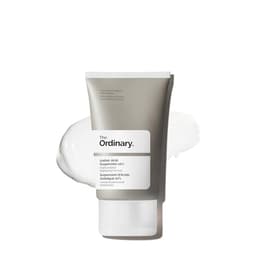
The Ordinary Azelaic Acid Suspension 10%
10% free azelaic acid — the form the rosacea and pigmentation trials used — in a silicone suspension that feels slightly grainy and can pill under sunscreen.
$12.20 · View on AmazonPrice as of October 11, 2026. #ad How we’re funded
Naturium — azelaic acid
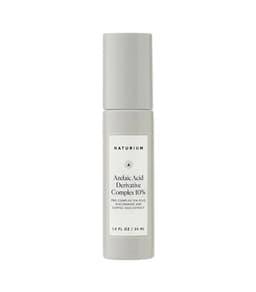
Naturium Azelaic Topical Acid 10%
A silky 10% complex built on potassium azeloyl diglycinate, a more soluble derivative, with niacinamide and a vitamin C derivative. Nicer to wear, less direct trial evidence at the same number.
$19.88 · View on AmazonPrice as of October 11, 2026. #ad How we’re funded
The real difference: bare active vs finished formula
Both brands grew out of the same frustration — that skincare charges prestige prices for actives it will not quantify — and both answered it by printing numbers on the bottle. That shared honesty is why the comparison is interesting rather than obvious. What separates them is what surrounds the number.
The Ordinary’s house style is to isolate: a 23% vitamin C suspended in silicones with no water phase, a 10% azelaic acid in a silicone cream-gel, a 2% hyaluronic acid in a slightly tacky gel. The base exists to keep the active stable and cheap, and the texture is whatever that costs. You are expected to supply the moisturizer, the buffering and the judgement.
Naturium’s house style is to finish: the same category of active, usually at a comparable or higher stated number, in a serum with squalane, shea, hyaluronic acid, antioxidants or a second active alongside it. Its multi-peptide serum is the clearest example — squalane, shea butter and ferulic acid turn a peptide solution into a cushiony lotion-serum you could use as your only treatment step. You pay a few dollars more and you skip a layer.
Neither is the more scientific approach. Isolating an active is better for diagnosing what your skin reacts to; building it into a formula is better for actually finishing the bottle. If you have abandoned three actives because of how they felt, that second thing is not a luxury. For where both brands sit against the rest of the field, see best skincare brands.
Pair by pair, on the numbers
Every figure below is read off the product’s own listing or the brand’s ingredient list. “Not published” means exactly that — neither brand quantifies peptides or retinol, and we will not invent a number for either of them.
| Active | The Ordinary | Naturium | Which to buy |
|---|---|---|---|
| Niacinamide | 10% + 1% zinc PCA, water-light serum, 30 ml | 12% + 2% zinc, lightweight serum, 30 ml | The Ordinary unless oil control is the only goal — both are above the researched 4-5%, and 12% is the more irritating of the two |
| Azelaic acid | 10% free azelaic acid, silicone cream-gel, 30 ml | 10% derivative complex (potassium azeloyl diglycinate) + niacinamide + vitamin C derivative, silky gel, 30 ml | The Ordinary if you want the form the trials used; Naturium if texture is why you stopped last time |
| Retinol | 0.5% retinol in squalane, 30 ml (also 0.2% and 1%) | Encapsulated retinol + bakuchiol, strength not published, 30 ml | The Ordinary — it is the only one of the two that tells you the dose, which is the whole point of a retinol ramp |
| Peptides | Seven named peptides + hyaluronic acid, water-light, 30 ml, levels not published | Copper and signal peptides + ferulic acid, cushiony lotion-serum, 30 ml, levels not published | Naturium on dry or mature skin, The Ordinary on oily skin and on price |
| Barrier cream | Not a category the brand competes in | Plant-derived sphingolipids and phospholipids with squalane and shea, 50 ml | Naturium by default — but “plant ceramide” is a looser label than a named ceramide like NP or AP |
| Vitamin C | 23% L-ascorbic acid suspension, gritty, 30 ml | Vitamin C appears as a derivative inside other formulas rather than as a flagship L-ascorbic serum | The Ordinary if you want maximum stated strength and will tolerate the texture; otherwise neither — see our vitamin C roundup |
The one place the numbers are not comparable
Azelaic acid is the matchup worth slowing down for, because both bottles say 10% and they do not mean the same thing. The Ordinary’s is free azelaic acid — the molecule in the published rosacea and pigmentation work. Naturium’s is a glycerinated complex built on potassium azeloyl diglycinate, a derivative that is far more soluble, which is exactly why it feels like a nice serum instead of a grainy cream.
That is a legitimate formulation choice and the derivative is not a trick. But a derivative at the same stated percentage does not inherit the parent molecule’s trial data, and anyone telling you the two are interchangeable is comparing label numbers rather than ingredients. Our azelaic acid explainer covers what the evidence supports, and best azelaic acid products ranks the field with this distinction applied throughout.
Which brand for which routine
Buy The Ordinary if…
- You want to know the dose. It is the only one of the two that states a retinol percentage, and on acids it publishes pH ranges as well — the second number that decides how strong an acid actually is.
- You are isolating a trigger. One active, one simple base, one variable. That is how you find out what your skin objects to.
- Budget is the binding constraint. Nothing matches it per milliliter of stated active.
- You already own a moisturizer you like, since most of these products need one over the top.
Buy Naturium if…
- Texture is why your last three actives are half-full in a drawer. This is the single best reason to pay the difference.
- You want one bottle to be the whole treatment step — active plus antioxidant plus emollient.
- Your skin is dry or mature and water-light serums feel like nothing.
- You want a vegan barrier cream and are comfortable with a plant-lipid label instead of named ceramides.
What neither brand solves
Sunscreen.Neither is where you should buy it, and no number of actives substitutes for it. If you are using acids or retinol from either brand, daily SPF is not optional — see best sunscreens for face.
Too many actives at once. The cheapness of single actives is precisely what tempts people into six-step routines that irritate their skin. Add one thing at a time and give it four weeks: how to introduce new actives has the method, and the ingredient conflict chart covers what can share a night.
Published concentrations for everything.Both brands go quiet on peptides, and Naturium goes quiet on retinol. That is the industry norm rather than a scandal, but it does mean that in those two categories you are buying on formulation reasoning rather than on a number — which is the same position every other brand puts you in.
If you came here expecting a winner: there isn’t one, and a page that declared one would be lying to you about a choice that genuinely turns on your own skin and habits. The useful version of the answer is the pair table above. Pick the active you need, read the row, and buy the column that matches how you actually use skincare.
General guidance, not medical advice. Barrier & Balm is written by a skincare enthusiast, not a dermatologist. For a diagnosis, a reaction, or a prescription active like tretinoin, see a qualified professional. Introduce any new active slowly and patch-test first.
Frequently asked questions
Is Naturium just a more expensive version of The Ordinary?
No — it is a different product format at a modest premium. Where The Ordinary tends to suspend an active in the simplest possible base, Naturium tends to put it into a finished serum or cream with emollients, antioxidants and supporting actives. You pay more per bottle and usually get a product you can apply on its own without building a routine around its texture. Whether that is worth it depends on whether texture is the reason you have abandoned actives before.
Which brand publishes more about its formulas?
Both publish percentages for their headline actives, which is unusual. The Ordinary goes further in two specific ways: it states pH ranges on some acid products, and its numbers generally refer to the free acid. Naturium's azelaic '10%' describes a derivative complex rather than free azelaic acid — the label says so in the ingredient list, but the front-of-bottle number invites a comparison it does not quite support.
Is a higher niacinamide percentage better?
No, and both brands are on the high side. Most of the published benefit for redness and barrier function appears around 4-5%; The Ordinary's serum states 10% and Naturium's states 12%. Higher means more irritation risk rather than more benefit, which is why a product at 5% is a perfectly reasonable choice and a 12% is a targeted one for very oily skin.
Which brand is better for sensitive skin?
Naturium, in most matchups, for a reason that has nothing to do with gentler chemistry: its textures are more cushioned and its actives often come with soothing or hydrating partners in the same bottle, which means fewer layers on reactive skin. The exception is niacinamide, where Naturium's higher stated percentage is the more aggressive of the two. Read the pair rather than the brand.
Can I mix products from both brands?
Yes — there is nothing brand-specific about layering. What matters is which actives you are combining, not whose bottle they came from. Our ingredient conflict chart covers which pairs are fine together, which to space out and which belong in separate routines.
Which brand is cheaper overall?
The Ordinary, consistently, and often by a wide margin per bottle. The honest caveat is that a cheap active you stop using because it feels unpleasant costs more than a mid-price one you finish. Prices on this site are pulled from a live feed and stamped with the date they were checked, so compare the two on the actual numbers rather than on reputation.
Sources
- Mechanistic Basis and Clinical Evidence for Nicotinamide (Niacinamide) in Skin (PMC) — Review of niacinamide's barrier, ceramide and pigmentation effects (accessed July 17, 2026)
- A Comprehensive Review of Azelaic Acid: Pharmacological Properties and Clinical Applications (PMC) — Review of azelaic acid's evidence for rosacea redness and inflammatory lesions, comparable to metronidazole (accessed July 20, 2026)
- Prospective, randomized, double-blind assessment of topical bakuchiol and retinol for facial photoageing (PubMed) — Dhaliwal et al., Br J Dermatol 2019 — bakuchiol matched retinol on wrinkles and pigmentation with fewer side effects over 12 weeks (accessed July 31, 2026)
- The Innovative and Evolving Landscape of Topical Exosome and Peptide Therapies: A Systematic Review (PMC) — 2024 PRISMA systematic review of topical peptide therapies for skin rejuvenation — signal, carrier and neurotransmitter-affecting peptides (accessed July 31, 2026)
- Moisturizers — StatPearls (NCBI Bookshelf) — Reference on humectants (hyaluronic acid), occlusives and emollients (accessed July 17, 2026)
Keep reading
The Ordinary vs CeraVe
Single-active budget picks against a barrier-repair range — a different axis to this one.
Read the comparisonThe Ordinary vs Paula's Choice
Budget against prestige, both of them unusually transparent about what is inside.
Read the comparisonBest niacinamide serums
The whole category ranked on stated percentage, including both brands' versions.
See the picksBest azelaic acid products
Free acid versus derivative, and which one the trials actually used.
See the picksIngredient conflict chart
If you are mixing brands, this is the page that says which actives can share a routine.
See the chartBest skincare brands
Where both of these sit in the wider field, and which brand to trust for what.
See the picks