Barrier & Balm

Pregnancy-Safe Skincare

What the AAD says to stop, what published reviews call preferred, and a six-product routine built only from what is left — plus why 'pregnancy-safe' is a marketing phrase, not a regulated one.

By Stephen V.Last updated How we pick

If you buy one thing, buy a 100% mineral sunscreen — La Roche-Posay Anthelios Mineral SPF 50 is the pick, for anyone who wants the one product that does the most work in pregnancy. Melasma is the complaint people find most frustrating in pregnancy, it is driven by sun exposure, and the AAD’s pregnancy guidance is specific about the format: “Choose a physical sunscreen that contains zinc oxide, titanium dioxide, or both during pregnancy to avoid skin irritation.” Everything else on this page is a supporting act.

Two things to say before the picks. First, “pregnancy-safe” is not a regulated claim— no agency defines it, no test is required before a bottle carries it, and a brand can print it next to an ingredient list its own category guidance says to limit. Second, we are not your doctor and this is not advice: every statement below is attributed to the American Academy of Dermatology or to a published review of topical safety in pregnancy, and the only correct final step is to show your actual products to your obstetrician and your dermatologist. What this page can honestly do is tell you what those two sources say, which of the products in our registry are consistent with it, and where the published record simply does not answer the question.

How this is funded: we earn a commission if you buy through our links, at no extra cost to you. It never changes which product we recommend, and we’ll tell you when we’d skip one. Full disclosure.

Quick picks

Ranked on formulation, stated concentration and buyer fit. Select a row to jump to the full write-up. We have not tested these products — here is exactly what we do instead.

#ProductBest forPrice
1
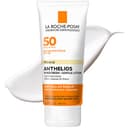
La Roche-Posay Anthelios Mineral SPF 50 Gentle Lotion

La Roche-Posay Anthelios Mineral SPF 50 Gentle Lotion

A 100% mineral SPF 50 with antioxidants for skin that can't tolerate chemical filters. A little cast is the honest trade for a pure-mineral, fragrance-free formula.

Best sunscreen
$19.48 · View on Amazon

$25.9925% off

Price as of October 11, 2026. #ad How we’re funded

2
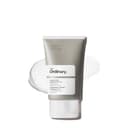
The Ordinary Azelaic Acid Suspension 10%

The Ordinary Azelaic Acid Suspension 10%

A multitasker with genuine evidence for redness, bumps and post-acne marks — and one of the few actives that's usually fine for rosacea-prone skin. A stated 10%, for a few dollars.

Best active for marks and breakouts
$12.20 · View on Amazon

Price as of October 11, 2026. #ad How we’re funded

3
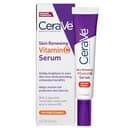
CeraVe Vitamin C Serum with 10% Pure Vitamin C

CeraVe Vitamin C Serum with 10% Pure Vitamin C

A stated 10% pure vitamin C with ceramides and hyaluronic acid — the gentlest way into L-ascorbic acid, because the barrier support is in the same bottle. Fragrance-free.

Best morning brightening step
$23.86 · View on Amazon

$28.9918% off

Price as of October 11, 2026. #ad How we’re funded

4
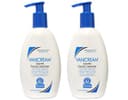
Vanicream Gentle Facial Cleanser

Vanicream Gentle Facial Cleanser

The most stripped-back gentle cleanser here — no fragrance, no dyes, none of the usual contact allergens. When even 'gentle' cleansers sting, this is the reset. Amazon now carries it only as a two-pack of the 8 fl oz pump bottle, so the checkout price is mid-pack on this page even though the per-bottle cost stays low.

Best cleanser
$25.66 · View on Amazon

Price as of October 11, 2026. #ad How we’re funded

5
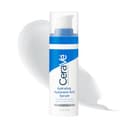
CeraVe Hyaluronic Acid Serum (B5 + Ceramides)

CeraVe Hyaluronic Acid Serum (B5 + Ceramides)

The best-rounded hyaluronic acid serum here because it isn't only HA — ceramides and vitamin B5 mean it hydrates and helps the barrier hold that water in. Fragrance-free.

Best hydration step
$16.97 · View on Amazon

$22.9926% off

Price as of October 11, 2026. #ad How we’re funded

6
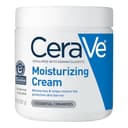
CeraVe Moisturizing Cream

CeraVe Moisturizing Cream

The default dry-skin cream and hard to beat on value — three ceramides plus hyaluronic acid in a big, cheap tub. Rich enough for very dry skin, fragrance-free enough for most sensitive skin.

Best moisturizer for stretching skin
$18.96 · View on Amazon

Price as of October 11, 2026. #ad How we’re funded

The picks in full

#1Best sunscreen

La Roche-Posay Anthelios Mineral SPF 50 Gentle Lotion

A 100% mineral SPF 50 with antioxidants for skin that can't tolerate chemical filters. A little cast is the honest trade for a pure-mineral, fragrance-free formula.

Strengths

  • 100% mineral (titanium dioxide + zinc) at SPF 50
  • Antioxidant complex added
  • Fragrance-free

Trade-offs

  • Slight white cast, as all true mineral filters have
  • Thicker than a chemical sunscreen
Key activeTitanium dioxide + zinc oxide (SPF 50)
Stated concentrationSPF 50
FormatFluid lotion
Fragrance-freeYes
Best forSensitive, Reactive, Rosacea-prone

Formulation note. 100% mineral filters at SPF 50 + antioxidants. Pure-mineral means some cast — an honest trade for people whom chemical filters irritate.

Ingredients and claims read from the product listing, on July 17, 2026. “Not published” means the brand does not state that figure.

#2Best active for marks and breakouts

The Ordinary Azelaic Acid Suspension 10%

A multitasker with genuine evidence for redness, bumps and post-acne marks — and one of the few actives that's usually fine for rosacea-prone skin. A stated 10%, for a few dollars.

Strengths

  • Stated 10% azelaic acid — good evidence for redness and pigmentation
  • Generally well-tolerated by rosacea-prone skin
  • Can be layered with most other actives

Trade-offs

  • Silicone suspension has a distinctive, slightly grainy feel
  • Can pill under some sunscreens if over-applied
Key activeAzelaic acid
Stated concentration10%
FormatSilicone cream-gel
Fragrance-freeYes
Best forRosacea-prone, Blemish-prone, Sensitive

Formulation note. 10% azelaic acid. Evidence supports it for rosacea redness, mild acne and pigmentation, and it's gentle enough for reactive skin — an unusually broad, well-tolerated active.

Ingredients and claims read from the product listing, on July 17, 2026. “Not published” means the brand does not state that figure.

#3Best morning brightening step

CeraVe Vitamin C Serum with 10% Pure Vitamin C

A stated 10% pure vitamin C with ceramides and hyaluronic acid — the gentlest way into L-ascorbic acid, because the barrier support is in the same bottle. Fragrance-free.

Strengths

  • Publishes 10% pure vitamin C — a stated, sensible starting strength
  • Ceramides + HA offset the dryness L-ascorbic acid can cause
  • Fragrance-free and widely stocked

Trade-offs

  • Opaque tube helps stability but you still can't see oxidation
  • 10% is effective but not the highest available
Key activeL-ascorbic acid (vitamin C)
Stated concentration10%
FormatLight lotion-serum
Fragrance-freeYes
Best forSensitive, Dry, Normal

Formulation note. 10% pure vitamin C + hyaluronic acid + 3 essential ceramides. The ceramide inclusion is what makes it the tolerable entry point.

Ingredients and claims read from the product listing, on July 17, 2026. “Not published” means the brand does not state that figure.

#4Best cleanser

Vanicream Gentle Facial Cleanser

The most stripped-back gentle cleanser here — no fragrance, no dyes, none of the usual contact allergens. When even 'gentle' cleansers sting, this is the reset. Amazon now carries it only as a two-pack of the 8 fl oz pump bottle, so the checkout price is mid-pack on this page even though the per-bottle cost stays low.

Strengths

  • Free of fragrance, dyes and common contact allergens
  • Very mild, non-foaming clean
  • Pump dispenser

Trade-offs

  • So mild it won't remove heavy sunscreen in one pass
  • No actives — purely a cleanser
  • Amazon stocks it only as a two-pack now, so you pay for two bottles up front
Key activeMinimal gentle surfactants
Stated concentrationNot published
FormatLight gel-lotion
Fragrance-freeYes
Best forSensitive, Allergy-prone

Formulation note. Formulated without fragrance, dyes, lanolin, parabens and formaldehyde releasers. Chosen for what it omits — the cleanser for an elimination routine.

Ingredients and claims read from the product listing, on October 8, 2026. “Not published” means the brand does not state that figure.

#5Best hydration step

CeraVe Hyaluronic Acid Serum (B5 + Ceramides)

The best-rounded hyaluronic acid serum here because it isn't only HA — ceramides and vitamin B5 mean it hydrates and helps the barrier hold that water in. Fragrance-free.

Strengths

  • Ceramides + vitamin B5 alongside the hyaluronic acid
  • Fragrance-free and non-sticky
  • Layers well under any moisturizer

Trade-offs

  • Slightly pricier than the pure-HA budget option
  • Multiple HA weights but exact percentages not published
Key activeHyaluronic acid + ceramides
Stated concentrationNot published
FormatLight gel-serum
Fragrance-freeYes
Best forDry, Normal, Sensitive

Formulation note. Hyaluronic acid + 3 essential ceramides + vitamin B5. HA draws water in; the ceramides help stop it evaporating — which is why HA works better with them than alone.

Ingredients and claims read from the product listing, on July 17, 2026. “Not published” means the brand does not state that figure.

#6Best moisturizer for stretching skin

CeraVe Moisturizing Cream

The default dry-skin cream and hard to beat on value — three ceramides plus hyaluronic acid in a big, cheap tub. Rich enough for very dry skin, fragrance-free enough for most sensitive skin.

Strengths

  • 3 essential ceramides + hyaluronic acid in a barrier-repair base
  • Enormous quantity for the price
  • Fragrance-free

Trade-offs

  • Tub packaging is less hygienic than a pump — use clean hands
  • Too heavy for oily skin in summer
Key activeCeramides + hyaluronic acid
Stated concentrationNot published
FormatRich cream
Fragrance-freeYes
Best forDry, Normal, Sensitive

Formulation note. Ceramides 1, 3 and 6-II + hyaluronic acid, using MVE technology for slow release. A genuine barrier-repair formula at a commodity price.

Ingredients and claims read from the product listing, on July 17, 2026. “Not published” means the brand does not state that figure.

What the sources actually say

This is the whole basis of the page, so it goes near the top rather than buried under the picks. Two sources, both cited in full at the bottom.

The AAD’s stop list

The American Academy of Dermatology’s pregnancy skin care guidance says not to use retinoids— naming “prescription acne treatments like isotretinoin, tretinoin, and tazarotene, along with over-the-counter skin care containing retinol like adapalene” — and not to use hydroquinone, the skin-lightening ingredient. The same page lists prescription medicines that are off the table too: finasteride, spironolactone, the tetracycline-class antibiotics, and 5-fluorouracil.

That first item is the one that affects most routines, because retinol is the single most recommended anti-aging active in skincare and it is in a great many night creams, eye creams and “renewing” serums. If you have been using one, this is the product to put in a cupboard. Our retinol explainercovers what it is doing and why it is the active with the strongest evidence — which is exactly why it is also the one with the clearest caution here.

The AAD’s use-sparingly list

Separately, the AAD lists ingredients to limit rather than eliminate: salicylic acid at high doses (greater than 2%), benzoyl peroxide, parabens, phthalates, phenol, triclosan, and essential oils— naming rosemary, basil, jasmine and sage. Note where that leaves a standard 2% salicylic acid cleanser: below the dose the AAD flags, and a conversation to have with your own clinician rather than a yes or a no from a website.

What a published review calls preferred

The 2022 review of topical product safety in pregnancy in the Journal of Clinical and Aesthetic Dermatologyis blunter on some points and more permissive on others. On retinoids: “Until more data are available, the safest course is to avoid the use of retinoic acid during pregnancy.” On salicylic acid: risk “is low if use is restricted to local areas for a limited duration.” On azelaic acid: it is “preferred in pregnancy”, though it “should only be used for strict indications on small skin surfaces, preferably not in the first trimester.” On hyaluronic acid: it “is considered safe and can be used liberally.” And on sunscreen, physical filters — titanium dioxide and zinc oxide — are “the safest option”.

Those four sentences are why the picks on this page are what they are. The azelaic caveat in particular is a real one and we are not going to bury it: “small skin surfaces, preferably not in the first trimester” is a narrower instruction than how most people use a 30 ml bottle of it.

The routine, in the order you apply it

StepPickStated strengthSizeWhy it is on this page
Cleanse (AM + PM)Vanicream Gentle Facial CleanserNo actives474 ml (two-pack)Documented free of fragrance, dyes, lanolin, parabens and formaldehyde releasers — two of which are on the AAD’s limit list
Treat (AM)CeraVe Vitamin C Serum10% L-ascorbic acid30 mlThe dermatologist quoted in the AAD’s own pregnancy guidance recommends a vitamin C product in the morning
Treat (PM, small areas)The Ordinary Azelaic Acid Suspension10% azelaic acid30 mlCalled “preferred in pregnancy” by the 2022 review — with its limits on area and first trimester
HydrateCeraVe Hyaluronic Acid SerumNot published30 mlHyaluronic acid “is considered safe and can be used liberally”; ceramides and B5 help hold the water in
MoisturizeCeraVe Moisturizing CreamNot published340 mlCeramides 1, 3 and 6-II plus hyaluronic acid, in a tub big enough for the belly and legs as well as the face
Protect (AM, last)La Roche-Posay Anthelios Mineral SPF 50SPF 50, 100% mineral50 mlThe AAD names zinc oxide and titanium dioxide specifically for pregnancy; physical filters are called the safest option

Blank strength cells are blank because the brand publishes no percentage for that ingredient. That is the norm for ceramides and hyaluronic acid, and we would rather print “not published” than a number nobody stated.

Melasma is the concern worth planning for

The AAD describes melasma — “patches or freckle-like spots on your face” — as something many people find especially frustrating in pregnancy. It is also the concern where the usual first-line answers are unavailable: hydroquinone is on the AAD’s do-not-use list and retinoids are too. What is left is prevention and the gentler brighteners.

Prevention is sunscreen, applied properly and reapplied, and it matters more here than in any other scenario on this site because pigment that is being provoked daily will not respond to anything you layer over it. How much sunscreen to apply has the amounts, and best mineral sunscreenshas the wider field if the pick here is not to your taste. A tinted mineral is worth considering too, since iron oxides absorb some visible light — see best tinted sunscreens.

For treatment, the AAD’s page quotes its dermatologist recommending a vitamin C product in the morning and a glycolic acid product in the evening for pregnancy-related color changes. Our vitamin C serum roundup and glycolic acid toners cover both categories on their stated percentages; take the specific products you pick to your clinician rather than treating a magazine-length quote as clearance. And read best skincare for dark spots for the full pigment playbook, with the retinoid steps mentally crossed out.

What this page deliberately does not tell you

Whether niacinamide is fine. Neither of our two sources addresses it. It is one of the most-used actives in skincare and its absence from a stop list is not the same thing as clearance, so we are not going to manufacture a verdict. Ask.

Whether your specific sunscreen is fine. The 2022 review singles out chemical filters including benzophenone-3 for caution, which is why every sunscreen suggestion on this page is 100% mineral. If you already own a chemical sunscreen you love, that is a question for your clinician, and in the meantime a mineral one is the lower-variable choice.

Anything about prescription products. Adapalene is sold over the counter in the US and the AAD names it in the retinoid group anyway. If you are on a prescription acne or pigmentation regimen, that conversation is with the prescriber, today, not with a roundup.

That a pregnancy routine needs to be bigger. It almost certainly needs to be smaller. A cleanser, a moisturizer and a mineral sunscreen is a complete, defensible routine, and simplifying what you already own is cheaper and lower-risk than replacing it. The serums here are optional.

Two practical notes

Skin gets itchy and tight as it stretches, and that is a dryness problem rather than an active-ingredient problem. Use a big tub of a fragrance-free ceramide cream on damp skin after a shower; the same product works on the face. If a patch becomes genuinely inflamed rather than dry, that is a clinician’s call, not a cosmetics one.

Fragrance is the easiest thing to drop.Phthalates are on the AAD’s limit list and they are, as that page puts it, ingredients that “help fragrances and skin care products stay on your skin” — and because fragrance formulas are trade secrets, a fragranced product is the one place you cannot audit the ingredient list. Every pick on this page is fragrance-free. If you want to understand why the front-of-bottle wording matters here, read fragrance-free vs unscented.
Frequently asked questions

Is retinol safe during pregnancy?

No — both of our sources are clear. The AAD's pregnancy skin care guidance says not to use retinoids, naming prescription isotretinoin, tretinoin and tazarotene "along with over-the-counter skin care containing retinol like adapalene". A 2022 review of topical safety in pregnancy puts it as: "Until more data are available, the safest course is to avoid the use of retinoic acid during pregnancy." If you have been using a retinol, stop and tell your obstetrician what you were using.

Is azelaic acid safe in pregnancy?

The 2022 review in the Journal of Clinical and Aesthetic Dermatology describes azelaic acid as "preferred in pregnancy", but with real limits: it "should only be used for strict indications on small skin surfaces, preferably not in the first trimester". That is narrower than how most people use a bottle of it, so treat it as the active most likely to be approved rather than one you can assume. Ask your clinician about your specific product.

What sunscreen should I use while pregnant?

A 100% mineral one. The AAD is specific: "Choose a physical sunscreen that contains zinc oxide, titanium dioxide, or both during pregnancy to avoid skin irritation." The 2022 review agrees that physical filters are the safest option and flags caution on chemical filters such as benzophenone-3. SPF 30 or higher, broad spectrum, applied generously and reapplied — and it matters more than usual, because sun exposure drives the melasma that pregnancy makes more likely.

Can I use salicylic acid while pregnant?

It depends on the dose and how much skin it covers, and it is a question for your own clinician. The AAD lists salicylic acid at high doses — greater than 2% — among the ingredients to discuss with a dermatologist rather than use freely. The 2022 review says the risk "is low if use is restricted to local areas for a limited duration". A standard 2% cleanser used on the face is below the threshold the AAD flags; a body wash used daily over a large area is a different conversation.

Does 'pregnancy-safe' on a label mean anything?

Not in any regulated sense. No US agency defines the phrase and no testing is required before a product carries it, so it is a marketing claim rather than a clearance. The useful move is to ignore the front of the bottle and read the ingredient list against the lists your clinician gives you — which is also the only way to catch a retinyl palmitate or a retinaldehyde hiding in a product that never says 'retinol' on the front.

Is hyaluronic acid safe during pregnancy?

The 2022 review of topical products in pregnancy says hyaluronic acid "is considered safe and can be used liberally". That makes it the least contentious active ingredient in a pregnancy routine, which is one reason a hydrating serum plus a ceramide cream is the backbone of the routine on this page rather than anything more interesting.

What should I do about pregnancy melasma?

Prevent first, treat second. Daily mineral sunscreen, generously applied and reapplied, is the step that makes anything else possible, and a tinted mineral adds some visible-light absorption from its iron oxides. For treatment, the dermatologist quoted in the AAD's pregnancy guidance recommends a vitamin C product in the morning and a glycolic acid product in the evening. Hydroquinone and retinoids — the usual first-line options — are both on the AAD's do-not-use list for pregnancy.

Do I need to replace my whole routine?

Usually not. In most cases a pregnancy routine is the routine you already own with the retinoid and any hydroquinone removed, the fragranced products swapped for fragrance-free ones, and the sunscreen switched to mineral. That is three decisions, not a shopping trip. Show the products you already have to your obstetrician or dermatologist before buying replacements for them.

Sources

  • American Academy of Dermatology — Dermatologist-approved pregnancy skin care — AAD: do not use retinoids during pregnancy ("prescription acne treatments like isotretinoin, tretinoin, and tazarotene, along with over-the-counter skin care containing retinol like adapalene"), nor hydroquinone, finasteride, spironolactone, tetracycline-class antibiotics or 5-fluorouracil; use sparingly high-dose salicylic acid, benzoyl peroxide, parabens, phthalates, phenol, triclosan and essential oils (accessed October 11, 2026)
  • Skin Changes and Safety Profile of Topical Products During Pregnancy (PMC) — Putra, Jusuf & Dewi, J Clin Aesthet Dermatol 2022 — "Until more data are available, the safest course is to avoid the use of retinoic acid during pregnancy"; salicylic acid risk "is low if use is restricted to local areas for a limited duration"; azelaic acid is "preferred in pregnancy" and "should only be used for strict indications on small skin surfaces, preferably not in the first trimester"; hyaluronic acid "is considered safe and can be used liberally"; physical zinc oxide / titanium dioxide sunscreens are "the safest option" (accessed October 11, 2026)
  • American Academy of Dermatology — How to decode a sunscreen label — AAD on SPF, broad spectrum and water resistance claims (accessed July 17, 2026)
  • U.S. FDA — Questions and Answers: FDA's regulatory actions on over-the-counter sunscreen — FDA: "sufficient safety data on both zinc oxide and titanium dioxide to support a proposal that sunscreen products containing these ingredients (at concentrations of up to 25%) are GRASE" — while twelve other filters, including avobenzone, oxybenzone, homosalate, octinoxate, octisalate and octocrylene, still lack the data for a positive GRASE determination (accessed October 7, 2026)
  • U.S. FDA — Fragrances in Cosmetics — FDA: "Even some products labeled 'unscented' may contain fragrance ingredients. This is because the manufacturer may add just enough fragrance to mask the unpleasant smell of other ingredients, without giving the product a noticeable scent"; fragrance formulas are "the kinds of cosmetic components that are most likely to be 'trade secrets'" and need not be disclosed component by component (accessed October 11, 2026)

Keep reading