Barrier & Balm

Best Skincare Gifts for Teens

How to give a teenager skincare without it reading as a comment on their face. Six picks that are kind, cheap and hard to react to — plus what to keep out of the box.

By Stephen V.Last updated How we pick

This is the gift with the highest chance of landing badly, and the reason has nothing to do with the products. A teenager unwrapping an acne wash hears a sentence, and it is not “I thought you’d like this.” So the first rule of this page is the opposite of what the aisle pushes you toward: lead with the moisturizer, not the treatment. Everything here is chosen to read as a nice thing rather than a correction.

The second thing working against you is that teen skincare is the single most aggressively marketed corner of the category right now — twelve-step routines, retinol on fourteen-year-olds, $60 serums sold through a phone. Most of it is unnecessary and some of it is actively bad for young skin, which tends to be oilier and more reactive than the adult skin those products are formulated for. A short, gentle, well-chosen routine is both the better gift and, conveniently, the much cheaper one.

Six picks below, all fragrance-free per the listing, all inexpensive enough to give two or three together without it becoming a production. Prices are pulled live and stamped with the date they were read. And if you know for certain that acne is what they want help with, we say where to shop for that further down — a request is not the same as an unsolicited gift.

How this is funded: we earn a commission if you buy through our links, at no extra cost to you. It never changes which product we recommend, and we’ll tell you when we’d skip one. Full disclosure.

Quick picks

Ranked on formulation, stated concentration and buyer fit. Select a row to jump to the full write-up. We have not tested these products — here is exactly what we do instead.

#ProductBest forPrice
1
CeraVe Oil Control Moisturizing Gel-Cream

CeraVe Oil Control Moisturizing Gel-Cream

The moisturizer CeraVe built specifically for oily skin — an oil-free gel-cream that hydrates with ceramides and niacinamide while an oil-absorbing complex keeps shine down. It does the barrier job of a good CeraVe without the heavy finish, which is why it's the default oily-skin pick.

Best overall
$15.97 · View on Amazon

$19.9920% off

Price as of September 12, 2026. #ad How we’re funded

2
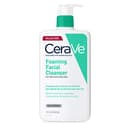
CeraVe Foaming Facial Cleanser

CeraVe Foaming Facial Cleanser

The reference gel-to-foam cleanser for oily skin: it removes oil and sunscreen without the tight, squeaky over-stripping cheap foaming washes cause, because ceramides and niacinamide are built in.

Best cleanser
$16.97 · View on Amazon

Price as of September 12, 2026. #ad How we’re funded

3
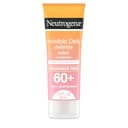
Neutrogena Invisible Daily Defense SPF 60

Neutrogena Invisible Daily Defense SPF 60

The budget high-SPF pick: fragrance-free broad-spectrum SPF 60 with antioxidants at a drugstore price. Nothing fancy, and that's the appeal for a product you should use by the half-teaspoon.

Best sunscreen
$12.99 · View on Amazon

$19.9935% off

Price as of September 12, 2026. #ad How we’re funded

4
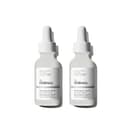
The Ordinary Niacinamide 10% + Zinc 1%

The Ordinary Niacinamide 10% + Zinc 1%

The default niacinamide serum for a reason — a stated 10% with zinc, for a couple of dollars. Worth knowing that 10% is above the 4-5% most studies use, so sensitive skin may prefer less.

Best first serum
$10.80 · View on Amazon

$12.0010% off

Price as of September 12, 2026. #ad How we’re funded

5
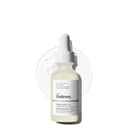
The Ordinary Hyaluronic Acid 2% + B5

The Ordinary Hyaluronic Acid 2% + B5

The value benchmark: a stated 2% multi-weight hyaluronic acid with B5 for a few dollars. Do apply it to damp skin and seal with moisturizer, or in a dry climate HA can pull water the wrong way.

Best hydration add-on
$9.90 · View on Amazon

Price as of September 12, 2026. #ad How we’re funded

6
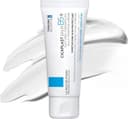
La Roche-Posay Cicaplast Balm B5

La Roche-Posay Cicaplast Balm B5

A soothing repair balm to keep on hand for the flaky, over-exfoliated, retinol-irritated patch. Panthenol and madecassoside calm and protect while a compromised barrier recovers.

Best rescue balm
$18.99 · View on Amazon

Price as of September 12, 2026. #ad How we’re funded

The picks in full

#1Best overall

CeraVe Oil Control Moisturizing Gel-Cream

The moisturizer CeraVe built specifically for oily skin — an oil-free gel-cream that hydrates with ceramides and niacinamide while an oil-absorbing complex keeps shine down. It does the barrier job of a good CeraVe without the heavy finish, which is why it's the default oily-skin pick.

Strengths

  • Oil-absorbing complex plus niacinamide targets shine, not just hydration
  • 3 essential ceramides + hyaluronic acid still support the barrier
  • Fragrance-free, oil-free, non-comedogenic, and inexpensive

Trade-offs

  • The matte finish can feel a touch bare on drier patches of combination skin
  • Does not publish the niacinamide percentage
Key activeNiacinamide + oil-absorbing complex
Stated concentrationNot published
FormatOil-free gel-cream
Fragrance-freeYes
Best forOily, Combination, Acne-prone

Formulation note. Niacinamide + hyaluronic acid + ceramides NP, AP and EOP, with a silica-based oil-absorbing technology in a lightweight gel-cream. The oil-absorbers and matte finish are what set it apart from the richer CeraVe creams; the niacinamide strength itself is not disclosed.

Ingredients and claims read from the product listing, on July 28, 2026. “Not published” means the brand does not state that figure.

#2Best cleanser

CeraVe Foaming Facial Cleanser

The reference gel-to-foam cleanser for oily skin: it removes oil and sunscreen without the tight, squeaky over-stripping cheap foaming washes cause, because ceramides and niacinamide are built in.

Strengths

  • Cuts oil and SPF without leaving skin tight
  • Ceramides + niacinamide keep the barrier intact
  • Fragrance-free, big-bottle value

Trade-offs

  • Too stripping for genuinely dry skin
  • Foaming format can feel like 'not enough' to heavy-makeup wearers
Key activeGentle surfactants + ceramides + niacinamide
Stated concentrationNot published
FormatGel-to-foam
Fragrance-freeYes
Best forOily, Combination

Formulation note. A gel that foams, with 3 ceramides + niacinamide + hyaluronic acid. The barrier ingredients are why it cleans oily skin without the tight after-feel.

Ingredients and claims read from the product listing, on July 17, 2026. “Not published” means the brand does not state that figure.

#3Best sunscreen

Neutrogena Invisible Daily Defense SPF 60

The budget high-SPF pick: fragrance-free broad-spectrum SPF 60 with antioxidants at a drugstore price. Nothing fancy, and that's the appeal for a product you should use by the half-teaspoon.

Strengths

  • Fragrance-free broad-spectrum SPF 60
  • Antioxidant complex included
  • Cheap enough to apply generously and reapply

Trade-offs

  • Slightly heavier finish than prestige options
  • Can pill under some makeup
Key activeChemical UV filters (SPF 60)
Stated concentrationSPF 60
FormatLotion
Fragrance-freeYes
Best forNormal, Combination

Formulation note. Fragrance-free broad-spectrum SPF 60 + antioxidants. Being cheap is a feature: the biggest sunscreen mistake is under-applying, and price is why people ration it.

Ingredients and claims read from the product listing, on July 17, 2026. “Not published” means the brand does not state that figure.

#4Best first serum

The Ordinary Niacinamide 10% + Zinc 1%

The default niacinamide serum for a reason — a stated 10% with zinc, for a couple of dollars. Worth knowing that 10% is above the 4-5% most studies use, so sensitive skin may prefer less.

Strengths

  • Stated 10% niacinamide + 1% zinc for oil control
  • Among the cheapest actives in skincare
  • Fragrance-free, water-light texture

Trade-offs

  • 10% is higher than the researched 4-5% and can pill or sting
  • Zinc suspension can feel slightly draggy
Key activeNiacinamide
Stated concentration10%
FormatWater-light serum
Fragrance-freeYes
Best forOily, Combination, Blemish-prone

Formulation note. 10% niacinamide + 1% zinc PCA. Most published benefit for redness and barrier appears around 4-5%; 10% is not 'stronger is better' and can irritate — an honest caveat on a genuinely useful, cheap serum.

Ingredients and claims read from the product listing, on July 17, 2026. “Not published” means the brand does not state that figure.

#5Best hydration add-on

The Ordinary Hyaluronic Acid 2% + B5

The value benchmark: a stated 2% multi-weight hyaluronic acid with B5 for a few dollars. Do apply it to damp skin and seal with moisturizer, or in a dry climate HA can pull water the wrong way.

Strengths

  • Stated 2% HA across multiple molecular weights
  • Very inexpensive
  • Now includes ceramides in the reformulated version

Trade-offs

  • Can feel tacky if over-applied
  • In very dry air, apply to damp skin and seal — or it can be drying
Key activeHyaluronic acid
Stated concentration2%
FormatSlightly tacky gel
Fragrance-freeYes
Best forNormal, Dry, Combination

Formulation note. 2% hyaluronic acid at low, medium and high molecular weights, plus B5 and ceramides. HA is a humectant — it needs water to grab, so apply damp and seal.

Ingredients and claims read from the product listing, on July 17, 2026. “Not published” means the brand does not state that figure.

#6Best rescue balm

La Roche-Posay Cicaplast Balm B5

A soothing repair balm to keep on hand for the flaky, over-exfoliated, retinol-irritated patch. Panthenol and madecassoside calm and protect while a compromised barrier recovers.

Strengths

  • Panthenol (B5) + madecassoside + shea to soothe and protect
  • Great rescue for retinol or acid over-use
  • Multi-use on lips, hands and dry patches too

Trade-offs

  • Occlusive balm — too heavy as an all-over moisturizer for oily skin
  • A rescue product, not a daily active
Key activePanthenol (B5) + madecassoside
Stated concentrationNot published
FormatRich balm
Fragrance-freeYes
Best forIrritated, Compromised barrier, All

Formulation note. Panthenol + madecassoside + shea butter in an occlusive balm. Built to shield and soothe irritated skin — the thing to reach for when an active pushed the barrier too far.

Ingredients and claims read from the product listing, on July 17, 2026. “Not published” means the brand does not state that figure.

Why the moisturizer is first and not the face wash

Because of what each one implies. A cleanser is neutral and a moisturizer is generous; an acne wash is a diagnosis. That is the whole reason an oil-free gel-cream leads this list rather than the medicated product you were probably steered toward.

It is also the better product for most teenagers on the merits. Oily, breakout-prone skin is the most common teenage skin type, and the instinct — theirs and everyone else’s — is to strip it: harsh foaming washes, alcohol toners, skipping moisturizer entirely because “my skin is already oily.” That is the reliable route to a damaged barrier, and damaged barriers get oilier and break out more. A light, oil-free gel-cream with ceramides is the corrective to all of it, and nobody unwrapping it feels judged.

How to put the gift together

If you’re buying one thing, buy the gel-cream. It suits oily and combination skin, which covers most teenagers, and it will not clash with anything they have already been given.

If you’re buying two, add the cleanser. A gentle gel-to-foam wash that does not leave skin tight is the single most useful swap available to a teenager washing with hand soap or a scrub, and together the pair is a complete, defensible routine.

If you’re buying three, add the sunscreen — genuinely the highest-value habit anyone can start at that age, and cheap. The one to avoid is a thick, greasy formula: teenagers abandon sunscreen over texture and shine, not principle. Our how much sunscreen to apply guide is worth passing on, because under-application is the usual reason a high SPF underperforms.

If they are clearly already into skincare, the niacinamide serum is the safest possible “real” active to give — hard to irritate with, useful for oiliness and post-spot marks, and cheap enough that it does not matter if it is not their thing. The hyaluronic acid serum is the equivalent for someone whose skin runs dry rather than oily; just tell them to apply it to damp skin and seal it with moisturizer.

The balm is the one to add for a kind reason. Teenagers who have started using anything active — a salicylic acid wash, a prescription from a dermatologist, or something they found online — usually have a raw, flaky patch somewhere. A soothing repair balm is the product nobody buys themselves and everybody needs, and it carries no judgement at all.

What to keep out of the box

Retinol. Teenage skin is not photoaged skin, so the thing retinol is best at is a problem they do not have yet, and the irritation it causes is a problem it will create. There is no upside here. The same goes for anything sold as anti-aging, firming or collagen-boosting.

Strong exfoliating acids. A 10% glycolic toner or a high-percentage peel is how a teenager ends up over-exfoliated, which looks like shiny, tight, stinging skin and gets mistaken for progress. If exfoliation is genuinely wanted, a low-strength salicylic product used a couple of times a week is the ceiling — our signs of over-exfoliation guide is the one to read first.

Anything marketed at them on social media at a premium price. The viral teen-skincare market runs on packaging, scent and peer pressure, and much of it is a $50 version of a $15 formula aimed at skin that does not need it. If they have specifically asked for a named product, that is different — a request is a request.

And unsolicited acne treatment. This is the important one. If a teenager has asked for help with breakouts, buy it gladly — our acne-prone skin roundup is the right place, and benzoyl peroxide and salicylic acid both have real evidence behind them. If they have not asked, a surprise acne product is a comment on their face wrapped in paper, and no amount of good formulation fixes that.

A note for the adult buying this

Persistent or scarring acne is a medical problem, not a shopping one. The American Academy of Dermatology’s guidance is clear that moderate to severe acne responds to prescription treatment in a way that no gift-shop routine does. If that is what is going on, the genuinely useful present is an appointment, and a nice moisturizer alongside it. Nothing on this site is medical advice.

Frequently asked questions

What skincare should a teenager actually use?

A gentle cleanser, a light moisturizer and a daily sunscreen. That's it, and it covers the great majority of teenage skin. Actives can be added later and one at a time if there's a specific reason; the multi-step routines marketed to teenagers online are mostly unnecessary and, in the case of retinol and strong acids, counterproductive on young skin.

Is it rude to give a teenager skincare?

It depends entirely on what you give. A moisturizer, a gentle cleanser or a sunscreen reads as a treat. An acne wash, a pore treatment or a dark-spot product reads as a comment on their face. Stay in the first group unless they have specifically asked for something in the second.

Should teens use retinol?

No, not as a gift and generally not at all. Retinol's strongest evidence is for photoaged skin — a problem teenagers don't have — while its most reliable effect on young, reactive skin is irritation and flaking. If a teenager needs a retinoid for acne specifically, that's a conversation with a dermatologist, not a present.

Does oily teenage skin need moisturizer?

Yes, and skipping it usually makes things worse. Stripping oily skin with harsh washes and no moisturizer damages the barrier, and a damaged barrier tends to get oilier and break out more. The right answer is a light, oil-free gel-cream rather than no moisturizer at all.

Is expensive teen skincare worth it?

Almost never. The viral products marketed to teenagers are typically a premium-priced version of a formula available for a fraction of the cost, often with added fragrance that young, reactive skin does well without. The products that dermatology-adjacent sources actually recommend for this age group are inexpensive.

Sources

Keep reading