Good Molecules vs The Ordinary
Two brands at almost the same price, both willing to print their percentages. One optimizes for texture and fragrance-free formulas, the other for strength and range.
How this is funded: we earn a commission if you buy through our links, at no extra cost to you. It never changes which product we recommend, and we’ll tell you when we’d skip one. Full disclosure.
The two matchups people actually search for
Niacinamide and azelaic acid — the two products where both brands sell the same active at the same stated percentage, so the only variables are the base and the price. We own no units and have tested nothing; the picks come from each product's published formulation facts, and prices are checked daily.
Good Molecules — azelaic acid
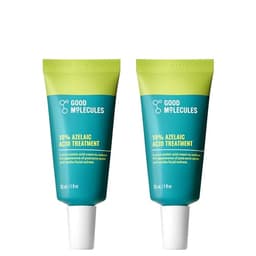
Good Molecules 10% Azelaic Acid Treatment (2-pack)
A stated 10% free azelaic acid third on the ingredient list, in a smooth fragrance-free cream with bisabolol, centella and ginger root to calm the base. The answer to the grainy-suspension complaint.
$23.98 · View on AmazonPrice as of October 17, 2026. #ad How we’re funded
The Ordinary — azelaic acid
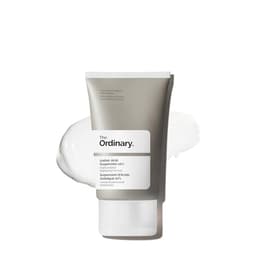
The Ordinary Azelaic Acid Suspension 10%
The same 10% free azelaic acid — the form the rosacea and pigmentation trials used — in a silicone suspension that feels slightly grainy and can pill under sunscreen.
$12.20 · View on AmazonPrice as of October 17, 2026. #ad How we’re funded
Good Molecules — niacinamide
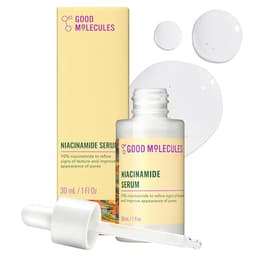
Good Molecules Niacinamide Serum (10%)
A stated 10% niacinamide in a minimal fragrance-free base, at about the lowest price in the category. Nothing special in the formula, and nothing wrong with it either.
$5.97 · View on AmazonPrice as of October 17, 2026. #ad How we’re funded
The Ordinary — niacinamide
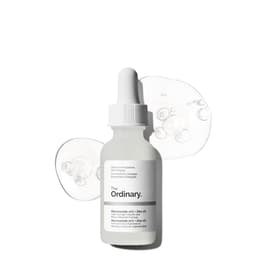
The Ordinary Niacinamide 10% + Zinc 1%
The same stated 10%, plus 1% zinc PCA for oil control. The zinc suspension can feel slightly draggy, which is the only real difference between the two.
$6.00 · View on AmazonPrice as of October 17, 2026. #ad How we’re funded
Same strategy, different optimization
Comparing these two is harder than comparing either with a prestige brand, because they agree about almost everything. Both sell single actives in simple bases. Both print percentages on the bottle. Both price a serum at roughly the cost of a sandwich. Neither spends money on the packaging. If you lined up their niacinamide serums without labels, you would struggle to tell them apart.
What separates them is which direction they lean when a formulation forces a choice. The Ordinary consistently leans toward more active, disclosed: a 7% glycolic toner with its pH published, a 0.5% retinol, a 23% vitamin C suspension, seven peptides named individually in the ingredient list. The texture is whatever that costs, and sometimes it costs a lot — the grainy azelaic suspension is the standing example.
Good Molecules consistently leans toward same idea, nicer to use: the same 10% free azelaic acid in a cream rather than a silicone suspension, a glycolic toner at a deliberately low 3.5% with niacinamide and ferment filtrate alongside it, a retinol cream at 0.1% with bakuchiol to buffer it. Its formulas are more often fragrance-free, and more often built so that a beginner does not quit in week two.
Neither of those is the more rigorous approach. A higher stated dose is not better if it drives you off the product, and a gentler formula is not better if it is below the level anything happens at. Which is why the only useful version of this comparison is pair by pair.
Pair by pair, on the numbers
Every figure below is read off the product’s own listing or the brand’s published ingredient list. “Not published” means exactly that — neither brand quantifies its peptides, and we will not invent a number for either of them.
| Active | Good Molecules | The Ordinary | Which to buy |
|---|---|---|---|
| Azelaic acid | 10% free azelaic acid, third on the INCI, in a smooth fragrance-free cream with bisabolol, centella and ginger root. 2 × 30 ml | 10% free azelaic acid in a silicone suspension — slightly grainy, can pill under sunscreen. 30 ml | Good Molecules, clearly — identical active, better base. Only caveat is paying for a two-pack |
| Niacinamide | Stated 10% in a minimal fragrance-free base. 30 ml | Stated 10% plus 1% zinc PCA; the zinc can feel slightly draggy. 30 ml | A coin flip. The Ordinary if you want the zinc for oil control, Good Molecules if the texture bothers you |
| Glycolic acid toner | 3.5% glycolic spelled out inside the INCI, plus salicylic acid, niacinamide, HA and ferment filtrate. No pH published. 120 ml | 7% glycolic with a published pH range of 3.5–3.9, plus aloe, ginseng and Tasmanian pepperberry. 240 ml | The Ordinary on strength, disclosure and cost per ml; Good Molecules if acids have gone badly for you before |
| Retinol | Stated 0.1% retinol with 0.3% bakuchiol, fragrance-free light cream. 30 ml | Stated 0.5% retinol in squalane, also available at 0.2% and 1%. 30 ml | Good Molecules to start, The Ordinary to progress — and The Ordinary is the one with a ladder to climb |
| Peptides | Argireline, SNAP-8 and copper tripeptide-1 named; levels not published. Contains bergamot fruit oil. 30 ml | Seven peptides named individually plus HA, glycerin, amino acids and sugars; levels not published. Labeled fragrance-, essential-oil- and alcohol-free. 30 ml | The Ordinary — more peptides named, better hydrating base, and no essential oil |
| Vitamin C | Not a category we have a registry entry for | 23% L-ascorbic acid suspension, anhydrous, gritty. 30 ml | The Ordinary by default — but see our vitamin C roundup before buying a 23% suspension |
The one place the direction reverses
If you have read this far expecting “Good Molecules is the gentle one,” the peptide row is worth slowing down for. The Good Molecules Super Peptide Serum reads like a minimalist formula — a short ingredient list, three well-known peptides named outright — but citrus aurantium bergamia (bergamot) fruit oil sits near the end of it. That is a fragrant essential oil, so the product is not fragrance-free, and on reactive skin it behaves exactly like fragrance.
The Ordinary’s Multi-Peptide + HA Serum, meanwhile, is labeled fragrance-, essential-oil- and alcohol-free, names seven peptides in its ingredient list rather than three, and sits in a base of hyaluronic acid, glycerin, amino acids and sugars that is a decent hydrating serum in its own right. Neither brand publishes a peptide percentage, which is the category norm rather than a scandal — the peptides explainer covers what the evidence actually supports, and best peptide serums ranks the wider field.
The general lesson is the one this site keeps repeating: read the ingredient list, not the brand’s reputation. A brand that gets gentleness right four times out of five still has the fifth product.
Which brand for which routine
Buy Good Molecules if…
- You are buying azelaic acid. Same stated 10% free acid, smoother base, no fragrance, three added soothers. There is no formulation argument for the suspension here.
- You are starting your first acid or your first retinol. 3.5% and 0.1% are deliberately low, and low is how you end up still using it in April.
- Texture has made you abandon actives before. That is the single best reason to choose between two products at the same price.
- You want fragrance-free as the default — with the peptide serum as the exception to check.
Buy The Ordinary if…
- You want the stronger stated dose, or a ladder of them. Retinol at 0.2%, 0.5% and 1% is a genuine progression; a single 0.1% cream is not.
- You care about pH on acids, which is the number almost no brand publishes and which decides as much as the percentage does.
- You are building a whole routine from one brand. The range is far deeper — vitamin C, lactic acid, mandelic acid, hyaluronic acid, copper peptides.
- You are buying peptides, where it is both the fragrance-free option and the one naming more actives.
What neither brand solves
Sunscreen.Neither is where you buy it, and no number of cheap actives substitutes for it — especially if you are using the glycolic toners, since the FDA requires AHA products to carry a sunburn alert for a reason. See best sunscreens for face.
The temptation of cheap actives.The real risk with both brands is not quality, it is quantity: when a serum costs less than a coffee, people buy six and use them all at once. One new active at a time, four weeks apart — how to introduce new actives has the method, and the ingredient conflict chart covers what can share a night.
Moisturizer and cleanser.Both brands are treatment-step specialists. The foundation comes from elsewhere — best drugstore skincare builds the cheap version of that routine.
If you want the short version: buy the azelaic from Good Molecules, the glycolic and the peptides from The Ordinary, and flip a coin on the niacinamide. There is no brand-level winner here, and a page that declared one would be inventing a distinction the formulas do not support.
General guidance, not medical advice. Barrier & Balm is written by a skincare enthusiast, not a dermatologist. For a diagnosis, a reaction, or a prescription active like tretinoin, see a qualified professional. Introduce any new active slowly and patch-test first.
Frequently asked questions
Is Good Molecules the same company as The Ordinary?
No. They are separate brands with separate owners; the resemblance is a shared strategy — simple formulas, printed percentages, very low prices. Both grew out of the same frustration with prestige skincare charging a premium for actives it would not quantify, and both answered it by putting the numbers on the label.
Which brand is cheaper, Good Molecules or The Ordinary?
They are close enough that it varies product by product and week by week, which is why this site pulls prices from a live feed and stamps them with the date they were checked. Compare the actual numbers on the cards above rather than the brands' reputations. The Ordinary tends to win on cost per millilitre in the large-format acids; Good Molecules is often the cheapest entry point in niacinamide and retinol.
Which brand is better for sensitive skin?
Good Molecules, on most matchups — but read the product, not the brand. Its azelaic treatment is fragrance-free with three added soothers, its glycolic toner is a deliberately low 3.5%, and its retinol cream is a mild stated 0.1%. The exception is important: the Good Molecules Super Peptide Serum contains bergamot fruit oil, which behaves like fragrance on reactive skin, while The Ordinary's Multi-Peptide + HA is labeled fragrance-, essential-oil- and alcohol-free.
Which brand publishes more about its formulas?
The Ordinary, by a margin, and in one specific way that matters: it publishes pH alongside percentage on its acids. Its Glycolic Acid 7% toner lists a pH range of 3.5-3.9, which is the second number that decides how strong an acid actually is, and it prints the FDA's AHA sunburn alert in full. Good Molecules does something unusual too — its glycolic toner spells out '3.5%' inside the ingredient list itself — but it publishes no pH for it.
Is Good Molecules' azelaic acid better than The Ordinary's?
On formulation, yes, and this is the clearest win on the page. Both are a stated 10% free azelaic acid — the form the published trials used, not a derivative — but Good Molecules puts it in a smooth cream base with bisabolol, centella leaf vesicles and ginger root extract, fragrance-free and silicone-free, while The Ordinary's is a silicone suspension that many people find grainy and that can pill under sunscreen. The catch is practical: Amazon currently stocks the Good Molecules version only as a two-pack, so you pay for two tubes up front.
Can I mix products from both brands?
Yes — there is nothing brand-specific about layering. What matters is which actives you are combining, not whose bottle they came from. The one thing to watch here is doubling up by accident: both brands' glycolic toners also contain salicylic acid, so they are not clean single-acid products if you are trying to isolate one variable.
Which brand should a beginner start with?
Good Molecules, if the first product is an acid or a retinol. A 3.5% glycolic toner and a 0.1% retinol cream are both lower-risk starting points than a 7% toner and a 0.5% retinol, and starting low is the single best predictor of still using the product in three months. Start with The Ordinary if your first product is niacinamide or a peptide serum, where the strength question does not really arise.
Sources
- Mechanistic Basis and Clinical Evidence for Nicotinamide (Niacinamide) in Skin (PMC) — Review of niacinamide's barrier, ceramide and pigmentation effects (accessed July 17, 2026)
- A Comprehensive Review of Azelaic Acid: Pharmacological Properties and Clinical Applications (PMC) — Review of azelaic acid's evidence for rosacea redness and inflammatory lesions, comparable to metronidazole (accessed July 20, 2026)
- Applications of hydroxy acids: classification, mechanisms, and photoactivity (PMC) — Kornhauser, Coelho & Hearing, Clin Cosmet Investig Dermatol 2010 — reference review of AHA/BHA/PHA classes, their mechanisms and the safety evaluation of hydroxy acid formulations on sun-exposed skin (accessed August 24, 2026)
- The Innovative and Evolving Landscape of Topical Exosome and Peptide Therapies: A Systematic Review (PMC) — 2024 PRISMA systematic review of topical peptide therapies for skin rejuvenation — signal, carrier and neurotransmitter-affecting peptides (accessed July 31, 2026)
- Prospective, randomized, double-blind assessment of topical bakuchiol and retinol for facial photoageing (PubMed) — Dhaliwal et al., Br J Dermatol 2019 — bakuchiol matched retinol on wrinkles and pigmentation with fewer side effects over 12 weeks (accessed July 31, 2026)
- U.S. FDA — Alpha Hydroxy Acids — FDA on AHAs and increased sun sensitivity (accessed July 17, 2026)
Keep reading
Naturium vs The Ordinary
The other budget matchup: bare active versus finished formula, on the same percentages.
Read the comparisonThe Ordinary vs Paula's Choice
Budget against prestige, both of them unusually transparent about what is inside.
Read the comparisonBest azelaic acid products
The whole category ranked on free acid versus derivative, with both brands in it.
See the picksBest niacinamide serums
Both 10% serums ranked against the field, including the ones that use a lower, better-researched dose.
See the picksBest glycolic acid toners
3.5% versus 7% in context, and why a published pH changes the answer.
See the picksBest skincare brands
Where both of these sit in the wider field, and which brand to trust for what.
See the picks