Lactic Acid vs Salicylic Acid
One is a water-soluble AHA that smooths and hydrates the surface. The other is an oil-soluble BHA that gets down inside a clogged pore. Which one you need is decided by where your problem is, not by how strong you want to be.
How this is funded: we earn a commission if you buy through our links, at no extra cost to you. It never changes which product we recommend, and we’ll tell you when we’d skip one. Full disclosure.
The best-value pick for each acid
Both publish their strength, which is rarer than it should be. We have not tested either — the picks come from the published formulation facts, and prices are checked daily.
Surface pick — lactic acid
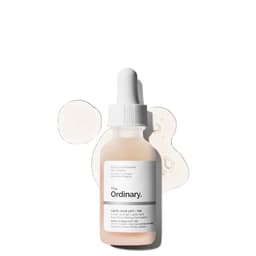
The Ordinary Lactic Acid 10% + HA
A stated 10% lactic acid with hyaluronic acid and a pepperberry anti-irritant, at a published pH of 3.60-3.80. The AHA that leaves dry skin feeling least stripped.
$9.20 · View on AmazonPrice as of November 5, 2026. #ad How we’re funded
Pore pick — salicylic acid
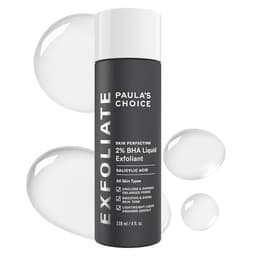
Paula's Choice Skin Perfecting 2% BHA Liquid Exfoliant
A stated 2% salicylic acid in the leave-on liquid that set the category standard. Oil-soluble, so it works inside the pore rather than on top of it.
$37.00 · View on AmazonPrice as of November 5, 2026. #ad How we’re funded
Lactic acid and salicylic acid are the two acids most people end up choosing between, and the comparison is usually framed as gentle versus strong. That framing is wrong, and it is why so many people buy the wrong one. The real difference is solubility: lactic acid dissolves in water, salicylic acid dissolves in oil. Everything else — which problems each fixes, which skin types each suits, how drying each feels — follows from that one property.
What lactic acid does
Lactic acid is an alpha hydroxy acid (AHA). Applied at a low pH it weakens the bonds holding dead cells onto the skin surface, so they shed more readily and the fresher surface underneath reflects light better. That is the classic AHA payoff an FDA consumer guide describes for this family of water-soluble acids: smoother texture, a brighter and more even surface, softer-looking fine lines over time.
What sets lactic acid apart from the rest of the family is that it is also a humectant. It holds water, so it is the one AHA that gives something back while it strips something away, and that is the entire reason it is recommended for dry, dull or flaky skin where a glycolic would be punishing. The trade-off is reach: because it is water-soluble, it cannot travel into the oily environment of a pore. It works on the roof, not inside the building. Our lactic acid guide covers the mechanism, and best lactic acid serums ranks the bottles on whether they publish a strength at all.
What salicylic acid does
Salicylic acid is a beta hydroxy acid (BHA), and its defining property is that it is lipophilic— oil-loving. That lets it penetrate the sebum filling a clogged follicle and loosen the plug of oil and dead cells from inside, which no water-soluble acid can do. It is also mildly anti-inflammatory, which is why it tends to calm the redness around a spot rather than just unclog the pore underneath it.
That makes salicylic acid the better-matched acid for blackheads, whiteheads, congestion, enlarged pores and oily shine, and it is why 2% leave-on BHA products have been a fixture of acne routines for decades. The AAD treats topical salicylic acid as a standard over-the-counter option for mild comedonal acne. Its cost is dryness: going after sebum means removing lipids your barrier was using, so on already-dry skin a daily leave-on BHA is often too much. Our salicylic acid guide covers how to ramp it, and salicylic acid percentages explains why 2% is the usual ceiling.
At a glance
| Lactic acid | Salicylic acid | |
|---|---|---|
| Family | AHA | BHA |
| Solubility | Water-soluble — works on the surface | Oil-soluble — works inside the pore |
| Best for | Dullness, rough texture, flakiness, dry skin | Blackheads, congestion, oily shine, spots |
| Typical strength | 5-10% leave-on | 0.5-2% leave-on |
| Side effect to expect | Tingling; less stripping than other AHAs | Dryness and flaking if overused |
| Hydrating? | Yes — it is also a humectant | No — it removes oil |
| Sun sensitivity | Increases it; carries the AHA sunburn alert | Increases it; no AHA alert required |
How to choose
Run your own skin through three questions. First: can you see the problem, or feel it?Visible plugs, bumps you can feel under the surface and shine by lunchtime are pore problems → salicylic. Dullness, roughness, flaking and marks left over from old breakouts are surface problems → lactic.
Second: is your skin oily or dry?This is the tiebreaker when both descriptions sound a bit right. Oily skin has lipids to spare and will usually take a BHA comfortably; dry skin does not, and will be more comfortable on lactic acid even if there is some congestion in the mix. If your skin is combination, treating the zones differently is legitimate — a BHA on the nose and chin, a lactic acid everywhere else — and our combination skin routine shows how to arrange that without over-treating.
Third: how reactive are you? If acids have stung you before, neither of these is the place to start. A larger-molecule AHA like mandelic, or a rinse-off salicylic cleanser rather than a leave-on liquid, buys you the same category of benefit at a fraction of the irritation. See gentlest exfoliants for sensitive skin and best salicylic acid cleansers.
Using them safely
Whichever you pick, the rules are the same and they are boring on purpose. Start at two nights a week and hold for a fortnight before adding a third. Clinical references on chemical exfoliation are consistent that the right strength and frequency, rather than the maximum available, are what keep the process safe. One exfoliating step per evening: an acid plus a retinoid plus a scrub is three signals to the same layer of skin, and the result is a compromised barrier rather than a faster outcome. Keep your acid and your retinoid on different nights, and read signs of over-exfoliation so you catch the tight, waxy, stinging stage early.
Sunscreen every morning, without exceptions. Both acids make skin more vulnerable to UV, and with lactic acid the FDA-recommended sunburn alert on the label says so outright. Follow either acid with a plain moisturizer; the barrier does the repair work overnight and it needs the lipids. And give any acid eight to twelve weeksbefore judging it — surface smoothness shows up in two or three weeks, but tone and congestion take a cycle or two longer.
The bottom line
Lactic acid for the surface, salicylic acid for the pore. If your complaint is that your skin looks dull, feels rough or flakes, lactic acid is the more comfortable and better-matched choice, and it is the kinder one on dry skin because it holds water while it exfoliates. If your complaint is blackheads, congestion or shine, salicylic acid is the only one of the two that can physically reach the problem. You need one of them. Pick by where the trouble is, start twice a week, and wear sunscreen.
General guidance, not medical advice. Barrier & Balm is written by a skincare enthusiast, not a dermatologist. For a diagnosis, a reaction, or a prescription active like tretinoin, see a qualified professional. Introduce any new active slowly and patch-test first.
Frequently asked questions
Can I use lactic acid and salicylic acid together?
You can, but most people should not start there. Both are exfoliating acids, so using them in the same routine mainly multiplies the irritation risk rather than the benefit. If you have a genuine reason for both — rough, dull skin plus congested pores — alternate nights, keep each to two nights a week at first, and give yourself a plain night between them. Layering them wet-on-wet in one sitting is how barriers get wrecked.
Which is better for blackheads?
Salicylic acid, clearly. Blackheads are plugs of oil and dead cells inside the pore, and salicylic acid is oil-soluble, so it can get into that environment and loosen the plug from inside. Lactic acid is water-soluble and works on the surface, so at best it tidies the texture around a blackhead without reaching the plug itself. For stubborn congestion, a 2% leave-on BHA used consistently beats any AHA.
Which is better for dry or sensitive skin?
Lactic acid, usually. It is a humectant as well as an exfoliant, so it holds water while it loosens dead cells, and it tends to leave dry skin feeling less stripped than other acids. Salicylic acid is not off limits on dry skin — a rinse-off cleanser is a gentle way in — but a leave-on BHA on already-dry skin is how people end up flaky and tight. If your skin is reactive rather than just dry, mandelic acid is gentler still than either.
Do both make my skin more sensitive to the sun?
Both increase sun sensitivity and both need daily broad-spectrum sunscreen, but the labeling differs: products with an alpha hydroxy acid carry the FDA-recommended sunburn alert, which salicylic acid products do not. Treat that as a labeling distinction rather than a safety one. Exfoliated skin burns more easily either way, and unprotected UV undoes the tone and texture improvement you are using the acid to get.
Is salicylic acid stronger than lactic acid?
Not in a way the word 'stronger' captures. A 2% salicylic acid and a 10% lactic acid are both standard, well-tolerated strengths for their respective jobs — the percentages are not comparable because the acids work in different places. What is true is that salicylic acid is more drying for most people, because it goes after sebum, while lactic acid brings its own water-holding properties along.
Can I use either one while pregnant?
This is a conversation for your own doctor rather than a web page, and guidance differs between leave-on and rinse-off products and between concentrations. We keep a dedicated page on what is usually considered safe and what is usually avoided, but a pregnancy decision should be made with your obstetrician or dermatologist who knows your history, not from a comparison article.
Sources
- U.S. FDA — Alpha Hydroxy Acids — FDA on AHAs and increased sun sensitivity (accessed July 17, 2026)
- U.S. FDA — Beta Hydroxy Acids in Cosmetics — FDA on salicylic acid as a beta hydroxy acid (accessed July 17, 2026)
- Applications of hydroxy acids: classification, mechanisms, and photoactivity (PMC) — Kornhauser, Coelho & Hearing, Clin Cosmet Investig Dermatol 2010 — reference review of AHA/BHA/PHA classes, their mechanisms and the safety evaluation of hydroxy acid formulations on sun-exposed skin (accessed August 24, 2026)
- American Academy of Dermatology — Acne: Diagnosis and treatment — AAD overview of benzoyl peroxide, retinoids, salicylic and azelaic acid for acne (accessed July 17, 2026)
- American Academy of Dermatology — Skin care basics — AAD consumer guidance on cleansing, moisturizing and sun protection (accessed July 17, 2026)
Keep reading
Lactic acid, explained
The AHA that hydrates as it exfoliates, and who it suits best.
Read the guideSalicylic acid, explained
The oil-soluble BHA that clears pores, and how to use it without drying out.
Read the guideBest lactic acid serums
Six picks ranked on published strength and pH — with live prices.
See the picksBest salicylic acid cleansers
The rinse-off route into a BHA, for skin that cannot take a leave-on.
See the picksAHA vs BHA
The same choice one level up: the whole acid family, side by side.
Compare themLactic acid vs glycolic acid
If you have settled on an AHA, this is the next decision to make.
Compare themHow often to exfoliate
The ceiling for either acid, and why more frequency is not more result.
Read the guideWhat not to mix with salicylic acid
The combinations that compound irritation instead of adding benefit.
Read the guide