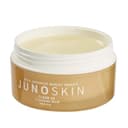
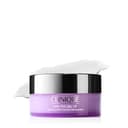
How we judged these
A balm that cost four times as much did not get credit for being luxurious. Four criteria, in order of how much they should move your decision.
1. Does it emulsify? This is the only functional difference that really separates a good balm from a bad one. A proper cleansing balm contains emulsifiers, so when you add water it turns milky and rinses off; one without them just spreads oil around and leaves a film you then have to scrub off. Every pick here emulsifies. It is also the reason we rank balms above plain facial oils for this job, and why a rinse that leaves your face feeling coated means you added water too late, not that you bought the wrong product. 2. Cost per use, which means size.These six range from 38 ml to 150 ml, a nearly fourfold spread, and the sticker prices do not track it. One of our picks is excellent and is also, per gram, the most expensive thing on the page by a distance — we say so on its card rather than hiding it.
3. What the brand publishes about fragrance.Balms are scented by default, because the oil base needs something and because the melt-away experience is half of why people enjoy them. Exactly one of these six carries a fragrance-free claim. Three of the others have a sibling product — a “mild,” “calming” or “sensitive” version — which is a reasonable signal about what the standard one contains. We record a missing claim as not published, never as “probably fine.” 4. How long the ingredient list is.Not because short is automatically gentle — it is not, and we say so on the pick that leads with it — but because when a product stings, a short list is the difference between identifying the culprit and throwing the tub away.
One thing we did not weight at all: the texture category. Sherbet, solid-to-oil, dense balm — these describe how the product behaves in the tub, not how well it cleans. Pick the one whose size and disclosure suit you, and the texture will be fine.
Balm, oil or micellar water: what each one is for
The three products get recommended interchangeably and they are not interchangeable.
A cleansing balm is a solid oil phase with emulsifiers that melts on contact. You apply it to a dryface — this is the step everyone gets wrong — massage for thirty to sixty seconds so the oil can dissolve the sunscreen, then add water to turn it milky and rinse. It is the most thorough of the three and the least messy to travel with.
A cleansing oildoes the same chemistry in liquid form. It is faster, easier to spread over a large area, and usually cheaper per milliliter — the best-value first cleanse on this site is actually an oil rather than a balm, and it is on our Korean skincare picks page. Balms win on travel (nothing to leak) and on the sense of control; oils win on volume and price. Oil cleanser vs foaming cleanser works through which one belongs in which step.
Micellar wateris not a first cleanse. It is a surfactant solution on a cotton pad, and it is excellent for a quick partial removal — eye makeup, a tired night, the gym — and notably worse than a balm at taking off a full layer of mineral sunscreen. Our cleansing balm vs micellar water comparison covers when each is the right call. The short version: if you wear sunscreen daily, you want a balm or an oil, and micellar water is a convenience product you own in addition.
Why this step exists at all
Because modern sunscreen is designed not to come off. Water resistance, film-formers and the silicone bases that make a modern SPF wearable all work against a water-based cleanser, and dermatology guidance on gentle cleansing assumes you are removing ordinary daily grime — not a deliberately persistent film. A foaming wash strong enough to strip that on its own is a foaming wash strong enough to damage your barrier, which is the trade people make without realizing it when they skip this step and then buy a harsher cleanser to compensate.
Double cleansing solves it by splitting the work: oil dissolves oil first, then a gentle water-based wash takes the residue. You get a cleaner face from two mild steps than from one aggressive one. The full method is in how to double cleanse, and what goes in the second step is in how to choose a cleanser.
Two corrections to the usual advice, though. You do not need this in the morning. There is nothing on your face at 7am that a splash of water and your normal cleanser cannot handle, and double cleansing twice a day is how people with normal skin talk themselves into a compromised barrier. And you do not need it on a day you wore no sunscreen and no makeup. The balm is a tool for a specific job, not a daily moral obligation.
How to choose between these six
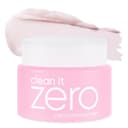
If you want the default. Buy the sherbet balm that invented the category. It melts faster than anything else here, rinses without residue, costs drugstore money and comes in three sizes so a trial is cheap. The one reason not to: it publishes no fragrance-free claim, and the brand sells a separate calming version precisely because some people need one.
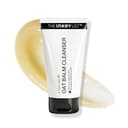
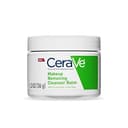
If your skin is reactive, eczema-prone or recovering. Two picks compete and they answer different questions. The oat balm is the one with a published number — 5% oat kernel oil, in the largest tub on this page — and is built around soothing rather than deep-cleaning claims; oat is a genuine, if uncommon, allergen, so patch test it. The CeraVe balm is the only one here that actually says fragrance-free, which for a lot of reactive skin is the question that settles it. Its catch is size: at 38 ml it is a travel product sold as one, and the worst cost per use on the page. If fragrance is your trigger, buy it anyway and accept the arithmetic. Our sensitive-skin cleanser picks cover what to use for the second cleanse.
If you wear real makeup. The prestige balm earns its price exactly once: on long-wear foundation and waterproof eye makeup that the cheaper balms leave traces of. If your evening routine is sunscreen and nothing else, it is an expensive way to do a job a $12 tub does identically. Buy the 1 oz size first and find out which camp you are in.
If you are trying to work out what your skin reacts to. The ten-ingredient balm is the most useful product on this page, and not because ten is a magic number. When something stings, a short list is a short suspect list. That is a real, practical advantage during an elimination period, and it disappears the moment you know what your trigger is.
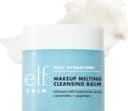
If you just want it to be cheap.The drugstore solid-to-oil balm does the job for the least money and holds its texture in a warm bathroom better than the sherbets do. Treat the hyaluronic acid in it as texture, not treatment — a humectant in a product you rinse off inside a minute has almost no opportunity to do anything, which is true of every “hydrating” claim on every cleanser. What hyaluronic acid actually does explains why.
Using a balm properly, in four steps
Dry hands, dry face.Water on your skin or on your fingers starts the emulsification early and the oil never gets a chance to dissolve the sunscreen. This single mistake is behind most “my balm does not work” complaints. Massage for thirty to sixty seconds, including the hairline, the jaw and the sides of the nose, which is where SPF collects and where congestion shows up first. Add water and keep massaginguntil the balm turns milky — that is the emulsifiers working, and it is what makes it rinse cleanly. Rinse, then do your normal cleanse. If your face feels coated afterwards, you added the water too early or rinsed too soon, not that the product failed.
Two cautions. Use a spatula or clean fingers: a tub you dip wet hands into is a tub you are inoculating nightly, and these are anhydrous products whose preservative systems are not designed for that. And go gently around the eyes— cleansing balms are the best tool for waterproof mascara, but dragging at the eye area nightly is its own problem, which is why the one pick explicitly cleared for eye use is also our fragrance-free one.
What “non-comedogenic” is worth on a balm
Very little, and less here than almost anywhere else. The claim rests on an old rabbit-ear assay whose correlation with human breakouts has been questioned in the dermatology literature for decades, it is unregulated, and it is being applied to a product that is on your face for under two minutes before being rinsed off. A balm that genuinely emulsifies and rinses clean is far less likely to congest you than a “non-comedogenic” one that leaves a film. We cover the claim in full in what non-comedogenic actually means. If you break out after starting a balm, the likeliest cause is incomplete rinsing — add thirty seconds of water-and-massage before you blame the formula.