How we judged these
There is no shortage of lists that rank Korean products by how popular they are on TikTok. That tells you what sells, not what is in the bottle. We used four criteria instead, and they are the same four we apply to every roundup on this site.
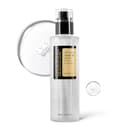
1. Does the brand publish a number?This is where Korean skincare is genuinely better than its Western equivalent at the same price, and it is the reason three of these seven picks have a percentage printed in the product name itself. A product that tells you it is 96% snail secretion filtrate or 15% of a niacinamide blend is a product you can reason about. One that says “pore control” is not. Where a brand publishes nothing — and two of our picks publish nothing about fragrance — we record it as not published rather than guessing in its favor. 2. Cost per milliliter, not sticker price. The Korean advantage is mostly a volume advantage. A 200 ml cleansing oil and a 200 ml toner are the two picks here that change your habits, because you stop rationing them.
3. Does it fill a slot nothing else fills? We did not include a Korean cleanser that does what a CeraVe foaming wash already does. Every pick below either has no good Western equivalent at the price, or beats one on texture by a margin you would actually notice. 4. Can you buy it today, from a listing that names the brand?This matters more in this category than any other. Imported skincare attracts relabeled and gray-market listings, and several of the most-searched Korean products are sold on Amazon under titles that do not name the brand at all. We resolved every ASIN on this page through Amazon’s own catalog, matched the brand and model in the returned title, and confirmed each one in stock before writing it up. One famous Korean sunscreen is missing from this page for exactly that reason: we could not find a listing that named the brand.
The sunscreen problem, stated plainly
This is the part most Korean skincare roundups skip, so we will put it first. In the United States, as the FDA puts it, “sunscreens are regulated as drugs, which means they must satisfy the safety and efficacy standards for nonprescription drug products.” Other countries regulate sunscreen as a cosmetic. Korea is one of them.
Three practical consequences follow. First, a Korean sunscreen bought through a marketplace carries no US Drug Facts panel, so there is no stated active-ingredient percentageto compare against an American product — you know it uses zinc oxide, but not how much. Second, the SPF figure was measured to a different standard than the one behind the number on a US bottle; the two are not directly comparable. Third, the PA+ ratingyou see on Korean labels is a UVA measure from a different system entirely, and it does not map onto the “broad spectrum” claim the FDA requires you to look for.
None of that makes Korean sunscreen bad. The cosmetic gap is real: Korean formulas use UV filters that have never been approved for sale in the US, which is precisely why they feel better and leave less cast. Our position is a split one. Buy the Korean sunscreen for the days you will actually wear it — commuting, working indoors, running errands — because the best sunscreen is the one you do not resent applying. Keep an FDA-regulated bottle from our face sunscreen picks for the beach, the hike and the all-day exposure, where the regulatory paperwork is the whole point. If the filter question is new to you, mineral vs chemical sunscreen explains what each kind is actually doing.
What Korean skincare does better — and what it does not
Better: hydration as a separate step.The single most useful idea to import is not a product, it is a sequence. Western routines jump from cleanser to serum to moisturizer; the Korean one puts a thin, watery layer of hydration in between, which is what a toner and an essence are for. It is not an extra expense so much as a redistribution — you need less moisturizer on top when the skin underneath is not thirsty. Our toner vs essence comparison draws the line between the two, and the Korean skincare routine lays out the full order if you want the method rather than the shopping list.
Better: price per milliliter on the basics. The oil cleanser and the toner on this page are 200 ml each. The American equivalents are usually 100 to 150 ml at the same price or more. That sounds like a trivia point until you notice it changes behavior: people who own 200 ml of cleansing oil use enough of it to actually remove their sunscreen, and people rationing a small bottle do not.
Not better: evidence per active.Snail filtrate, heartleaf, birch sap and rice water are pleasant, well-tolerated ingredients with a thin published evidence base compared with retinoids, niacinamide and the hydroxy acids. That is not an accusation — a hydrating essence does not need a clinical trial to be worth buying — but it does mean the Korean products on this page are mostly support, and the treatment steps that change skin over months are the same ones they always were. Two of our seven picks are on this list specifically because they are the exception: both lead on actives with real literature behind them.
Not better: fragrance disclosure.Four of the seven picks here publish no fragrance-free claim, and in several cases the brand sells a separate “mild” or “calming” version that is explicitly fragrance-free — which tells you what the standard version probably contains. If you are reactive, that is the fork in the road. Start with the mild variant, and read fragrance-free vs unscented before you trust the word on any label.
How to choose, depending on what you want
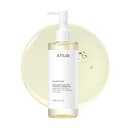
If you are buying one thing.Buy the cleansing oil. It is the pick with the clearest advantage over the Western equivalent, the biggest bottle, the lowest risk and the most obvious payoff — sunscreen comes off completely, which is the single most common failure in an otherwise good routine. The method is in how to double cleanse, and the short version is that the oil goes on a dry face, gets emulsified with water, and is followed by your normal wash.
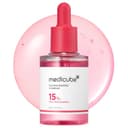
If your concern is dark spots or post-acne marks.Go straight to the brightening serum. It leads on tranexamic acid and niacinamide, which is the pairing with the most published support for discoloration of anything in this roundup, and it states a figure rather than gesturing at “glow.” Compare it against the Western options in our tranexamic acid serum picks before you commit — this is one of the categories where the Korean product is competing on even terms rather than winning by default.
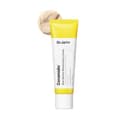
If your skin is dry or your barrier is unhappy. The ceramide cream is the pick, and it is the one product here we would put against any Western moisturizer at the price. Layer it over the essence rather than instead of it. If you want the full comparison of what ceramides actually do, the ceramide explainer covers the mechanism, and our ceramide moisturizer roundup puts the Western options side by side.
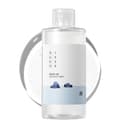
If you are oily and have been told to skip hydration. You have been told wrong, and the toner is the cheapest way to prove it. A watery hydrating layer on oily skin reduces the rebound oil production that stripping cleansers cause. 200 ml is enough to be generous with it for months.
One note on the repeat brand.Round Lab appears twice on this list — the toner and the sunscreen — and that is a result rather than a shortcut. Both products won their slots on the same quality: a plain, legible claim and an unusually light texture for what they are. If you would rather not buy two products from one brand, the toner is the more replaceable of the two.
What we deliberately left off
Sheet masks. They are the most recognizable Korean product and the least worth a roundup slot: a sheet mask is twenty minutes of occlusion and a serum you could have applied from a bottle. Enjoy them, do not budget for them. Ten-step starter kits. Nobody needs ten steps, and a kit is the most expensive way to discover which four you will keep. Any “glass skin” product. Glass skin is a lighting and makeup outcome. The closest a routine gets is hydration plus exfoliation plus sunscreen, which is what this page already is. Centella products with nothing else in them. Centella asiatica is a decent soother, and a centella serum with no other active is a toner with a markup.
How to layer these without a mess
Thinnest to thickest, which for this set means: cleansing oil, then your normal face wash, then toner on damp skin, then the essence, then the brightening serum, then eye cream, then the ceramide cream, then sunscreen in the morning. That is seven steps and you do not need all seven — it is an order, not a prescription. The full rules are in how to layer skincare, and if anything balls up under your sunscreen, why your skincare is pilling is almost always a layering problem rather than a product problem. The two things not to do: do not use the essence and the toner on dry skin (they work on damp), and do not add the brightening serum in the same week you start anything else new.