The routine, step by step
Eczema-prone skin does not want a long routine. It wants a short one performed reliably, with the moisturizer step done properly rather than the active step done cleverly. Here is the whole thing, and the table below is the specs behind it.
| Step | Product | Named protectants / lipids | Format | Fragrance |
|---|
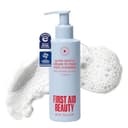
| Cleanse (PM, rinse AM) | First Aid Beauty Ultra Gentle Cream-to-Foam | Colloidal oatmeal + glycerin | Cream that lathers to a soft foam | Fragrance-free |
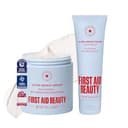
| Moisturize (AM + PM) | First Aid Beauty Ultra Repair Cream | Colloidal oatmeal + ceramides + shea butter | Whipped rich cream | Fragrance-free |
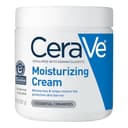
| Moisturize, budget version | CeraVe Moisturizing Cream | Ceramides 1, 3 and 6-II + hyaluronic acid | Rich cream, 340 ml tub | Fragrance-free |
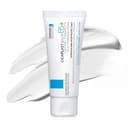
| Spot repair | La Roche-Posay Cicaplast Balm B5 | Panthenol (B5) + madecassoside + shea | Occlusive balm, 40 ml | Fragrance-free |
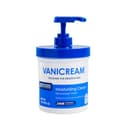
| Elimination-routine option | Vanicream Moisturizing Skin Cream | Barrier emollients only — no fragrance, dyes, lanolin, parabens or formaldehyde releasers | Rich cream, pump tub | Fragrance-free |
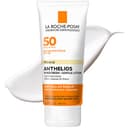
| Protect (AM) | La Roche-Posay Anthelios Mineral SPF 50 | Titanium dioxide + zinc oxide, both mineral filters | Gentle lotion | Fragrance-free |
How we judged these
1. Fragrance-free, and not “unscented”
This is the one criterion with no exceptions on this page. The AAD’s home-treatment guidance says it directly: “Choose ones that say ‘fragrance-free.’ Avoid products labeled ‘unscented,’ as these can contain fragrance that has been covered up.” The FDA explains why that happens — a manufacturer may add just enough fragrance to mask an unpleasant base odor without giving the product a noticeable scent, and the label can still say unscented. Every pick here is fragrance-free, which is why several otherwise excellent barrier creams are not on the list at all. Our fragrance-free vs unscented comparison goes through the labeling rules in detail.
2. Cream or ointment, not lotion
The AAD is specific that for eczema you should use “a cream or ointment instead of lotion, which contains more oil to leave your skin more hydrated.” That rules out most of the pleasant, light lotions this site recommends elsewhere. Four of the five moisturizing picks here are rich creams or a balm; the lightest thing on the page is the sunscreen. If you have been using a gel or a water-light lotion on eczema-prone skin and wondering why it is not holding, that is probably the answer.
3. Named protectants and named lipids
“Soothing” is not an ingredient. Colloidal oatmeal is — it is a recognized skin protectant — and so are ceramides NP, AP and EOP, panthenol, madecassoside, glycerin and shea butter. Two picks here lead with colloidal oatmeal, two lead with named ceramides, and one leads with panthenol and madecassoside for the actively irritated patch. The ceramides explainer covers why the lipid class matters so much for a leaky barrier, and how to repair a skin barrier is the method that sits behind this whole page.
4. Nothing in the formula that provokes a flare
This is why the list is short. Essential oils and fragrant botanicals are out, which disqualifies some genuinely good ceramide creams — a five-ceramide K-beauty cream we rate highly elsewhere contains bergamot, geranium and sage oils, and that is enough to keep it off this page. Alcohol-heavy toners and exfoliating acids are out during a flare. And strong surfactants are out at the cleanse step, because a stripped barrier is the starting condition we are trying to fix.
How to actually use it
The damp-skin rule is the whole technique
The AAD’s instruction is to “apply your moisturizer after bathing, when your skin is still damp, to help seal in moisture,” and to “limit your bath or shower to 5-10 minutes and use warm water.” Those two sentences are worth more than any product on this page. A rich cream applied to bone-dry skin half an hour after a hot shower is doing a fraction of the job the same cream does on damp skin within a minute of a short, warm one. Our guide to how much moisturizer to use covers quantity; the timing is the part people skip.
Twice a day is a floor, not a target
Eczema-prone skin is one of the few cases where re-applying moisturizer through the day is straightforwardly useful rather than fussy. The AAD frames frequency as “as often as your dermatologist recommends,” which in practice means more often than you are doing it now. Keep the big tub where you will use it and the balm in a bag.
Sunscreen, even though it feels like one more thing
Mineral filters are the sensible default for reactive skin, and the FDA has proposed that sunscreens containing zinc oxide and titanium dioxide at up to 25% are generally recognized as safe and effective, while twelve organic filters still lack the data for that determination. The pick here is a fragrance-free mineral lotion. If the white cast is the obstacle, a tinted mineral is the practical answer — see tinted sunscreen picks and how to avoid a white cast. Our mineral sunscreen roundup has the wider field.
What to leave on the shelf during a flare
Exfoliating acids. AHAs and BHAs on actively inflamed, compromised skin will sting and make it worse. Both have a place in a routine for eczema-prone skin between flares, used sparingly; neither belongs on a flare. See signs of over-exfoliation if you are not sure which situation you are in.
Retinol, during a flare. It is a legitimate anti-aging active and eczema-prone skin can often use it on good weeks, introduced slowly with plenty of moisturizer. During a flare it is simply one more irritant. How to introduce new actives is the method for coming back to it.
Fragranced “natural” products. Essential oils are fragrance. Lavender, tea tree, geranium and citrus oils are common contact allergens, and plant-derived is not the same as gentle.
Foaming cleansers and long hot showers. The two most common own-goals, and both are free to fix.
Anything that promises to cure eczema.Nothing on a shelf does. A good routine reduces how often and how badly you flare; prescription treatment handles the rest, and persistent, weeping or infected skin is a doctor’s job, not a cream’s.
How this differs from a sensitive-skin routine
The two overlap heavily and the products are often the same, but the problems are not. Sensitive skin reacts — it stings, flushes and objects to specific ingredients. Eczema-prone skin is a barrier that leaks water and itches, flaring in patches, often with a family history and often seasonal. The practical differences are the format (creams and ointments rather than light lotions), the frequency (more often than twice a day in a flare), the colloidal oatmeal, and the fact that there is a prescription tier above the shelf. If your skin is reactive but not itchy or flaring, our sensitive-skin routine is the better page, and cleansers for sensitive skin covers that step in more depth.
One last honest note. There is a genuinely large gap between the cheapest and most expensive moisturizer on this page, and it does not map to how well they work. The colloidal-oatmeal cream earns the top slot for itch specifically; the three-ceramide tub at a quarter of the price does the barrier job nearly as well and comes in a quantity you can use generously on arms and legs, which is often what eczema-prone skin needs most. Buy the big tub, apply it to damp skin twice a day, and keep the expensive one for the face and the bad weeks. If flares keep coming regardless, that is information for a dermatologist rather than a reason to buy a fourth cream — our guideline-backed picks explain what published guidance does and does not support.