Barrier & Balm

Best Micellar Waters

Every bottle here is mild surfactant dissolved in water, so the differences are small, specific and easy to check: how long the ingredient list is, whether fragrance is on it, and what you pay per 100 ml.

By Stephen V.Last updated How we pick

A micellar wateris one of the simplest products in skincare: a very mild surfactant dissolved in water, at a low enough concentration that it lifts makeup, sunscreen and the day’s grime onto a cotton pad without needing to be rinsed. The surfactant molecules cluster into micelles— tiny spheres with water-loving outsides and oil-loving centers — and those centers are what grab the oily film off your skin. There is no active ingredient, no concentration to optimize and nothing to build tolerance to.

Which makes this an unusual category to rank, because the formulas genuinely are similar and the marketing works hard to suggest otherwise. So we compared the four things that actually differ: how long the ingredient list is, whether a fragrance-free claim exists (the field that matters most if you are buying this for reactive skin), single-phase or bi-phase, which decides whether it handles waterproof makeup at all, and cost per 100 ml, where the spread across these six bottles is roughly fourfold for the same basic job. Every pick is real, currently sold and carries honest drawbacks. Prices below are live.

How this is funded: we earn a commission if you buy through our links, at no extra cost to you. It never changes which product we recommend, and we’ll tell you when we’d skip one. Full disclosure.

Quick picks

Ranked on formulation, stated concentration and buyer fit. Select a row to jump to the full write-up. We have not tested these products — here is exactly what we do instead.

#ProductBest forPrice
1
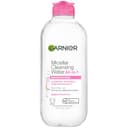
Garnier Micellar Cleansing Water, Sensitive Skin

Garnier Micellar Cleansing Water, Sensitive Skin

Seven ingredients, 400 ml, fragrance-free and the cheapest bottle on the shelf. There is no good reason to pay more unless you are removing waterproof makeup.

Best overall
$8.82 · View on Amazon

Price as of November 5, 2026. #ad How we’re funded

2
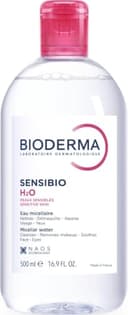
Bioderma Sensibio H2O Micellar Water

Bioderma Sensibio H2O Micellar Water

The original micellar water and still the one to buy for genuinely reactive skin — a short, fragrance-free, no-rinse formula. You pay roughly double the drugstore price for the shorter ingredient list.

Best for reactive skin
$19.99 · View on Amazon

$20.995% off

Price as of November 5, 2026. #ad How we’re funded

3
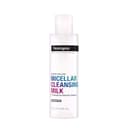
Neutrogena Makeup Melting Nourishing Micellar Milk

Neutrogena Makeup Melting Nourishing Micellar Milk

The fragrance-free option for dry or sensitive skin that finds water-thin micellar liquids stripping. It is a milk, not a water, and the smaller bottle costs more per use.

Best for dry skin
$13.49 · View on Amazon

Price as of November 5, 2026. #ad How we’re funded

4
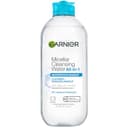
Garnier SkinActive Micellar Water for Waterproof Makeup

Garnier SkinActive Micellar Water for Waterproof Makeup

The two-phase version, and the only bottle here that reliably takes off waterproof mascara and long-wear foundation. Shake it, use it on the eyes, and keep the plain one for the rest of your face.

Best for waterproof makeup
$8.82 · View on Amazon

$11.9926% off

Price as of November 5, 2026. #ad How we’re funded

5
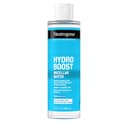
Neutrogena Hydro Boost Micellar Water with Hyaluronic Acid

Neutrogena Hydro Boost Micellar Water with Hyaluronic Acid

Micellar water with hyaluronic acid added, which is a small real benefit if your skin feels tight after cleansing — and an alcohol-free claim on the label to back it up.

Best for dehydrated skin
$11.91 · View on Amazon

Price as of November 5, 2026. #ad How we’re funded

6
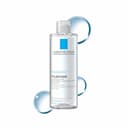
La Roche-Posay Micellar Cleansing Water for Sensitive Skin

La Roche-Posay Micellar Cleansing Water for Sensitive Skin

A 400 ml pharmacy-brand micellar water built on La Roche-Posay thermal spring water and glycerin. Good, but it is the one pick here whose fragrance status we could not pin down — so a reactive face is better served by Bioderma or Garnier.

Best pharmacy formula
$14.99 · View on Amazon

$19.9925% off

Price as of November 5, 2026. #ad How we’re funded

The picks in full

#1Best overall

Garnier Micellar Cleansing Water, Sensitive Skin

Seven ingredients, 400 ml, fragrance-free and the cheapest bottle on the shelf. There is no good reason to pay more unless you are removing waterproof makeup.

Strengths

  • Seven-ingredient formula: water, hexylene glycol, glycerin, poloxamer 184, disodium cocoamphodiacetate, disodium EDTA and myrtrimonium bromide
  • Labeled fragrance-free, oil-free, paraben-free and free of drying alcohols
  • 400 ml for drugstore money — the lowest cost per use here by a wide margin

Trade-offs

  • Single-phase, so it will not shift waterproof mascara or long-wear foundation
  • Garnier sells several near-identical bottles by cap color; the formulas differ
  • No pump — you tip it onto a pad, and it is easy to use more than you need
Key activePoloxamer 184 and myrtrimonium bromide micelles
Stated concentrationNot published
FormatWater-thin, no-rinse liquid
Fragrance-freeYes
Best forSensitive, Normal, Dry, Combination

Formulation note. The US 13.5 fl oz formula is water, hexylene glycol, glycerin, poloxamer 184, disodium cocoamphodiacetate, disodium EDTA and myrtrimonium bromide — two mild surfactants doing the lifting, glycerin for comfort and nothing else. Retailer labeling states fragrance-free, oil-free, paraben-free, sulfate-free, silicone-free and free of drying alcohols. Formulas vary by region, so check the bottle you are buying.

Ingredients and claims read from the product listing, on November 4, 2026. “Not published” means the brand does not state that figure.

#2Best for reactive skin

Bioderma Sensibio H2O Micellar Water

The original micellar water and still the one to buy for genuinely reactive skin — a short, fragrance-free, no-rinse formula. You pay roughly double the drugstore price for the shorter ingredient list.

Strengths

  • Short formula with no fragrance, no alcohol and no parabens, sold for sensitive skin and eyes
  • Explicitly a no-rinse product — the brand's own instruction, not an assumption
  • Sold in 100, 250 and 500 ml, so you can trial it before committing

Trade-offs

  • Roughly twice the cost per ml of the drugstore bottles for a similar job
  • The Amazon listing sells it by size tier name rather than printing the volume — check the selector before you buy
  • Like every single-phase micellar water, it struggles with waterproof makeup
Key activeMild non-ionic micellar surfactants
Stated concentrationNot published
FormatWater-thin, no-rinse liquid
Fragrance-freeYes
Best forSensitive, Reactive, Normal, Dry

Formulation note. Sold on very good tolerance, a no-rinse formula and no fragrance; retailer listings describe it as free of alcohol, parabens and fragrance, and third-party ingredient databases put the formula at around ten ingredients. Bioderma sells 100, 250 and 500 ml bottles plus a pump version, and the Amazon listing names a size tier instead of a volume, which is why sizeMl is Not published here rather than guessed.

Ingredients and claims read from the product listing, on November 4, 2026. “Not published” means the brand does not state that figure.

#3Best for dry skin

Neutrogena Makeup Melting Nourishing Micellar Milk

The fragrance-free option for dry or sensitive skin that finds water-thin micellar liquids stripping. It is a milk, not a water, and the smaller bottle costs more per use.

Strengths

  • States fragrance-free and oil-free, and is sold for sensitive and dry skin
  • Milk texture has more slip than a water, which is kinder around the eyes
  • Cleared by the brand for eye, lip and face makeup

Trade-offs

  • A micellar milk, not a micellar water — heavier, and most people will want to rinse
  • 6.7 fl oz against 13.5 fl oz elsewhere: the highest cost per use on this page
  • Not the choice if you want the barely-there feel micellar water is known for
Key activeMicellar surfactants in a milk base
Stated concentrationNot published
FormatLight cleansing milk
Fragrance-freeYes
Best forDry, Sensitive, Normal

Formulation note. A 6.7 fl oz (about 198 ml) micellar milk sold as a fragrance-free, oil-free eye, lip and face makeup remover for sensitive and dry skin. The milk base is the point of difference — more emollient slip than a micellar water, which is why it suits dry skin and the eye area, and also why it leaves more behind on the skin.

Ingredients and claims read from the product listing, on November 4, 2026. “Not published” means the brand does not state that figure.

#4Best for waterproof makeup

Garnier SkinActive Micellar Water for Waterproof Makeup

The two-phase version, and the only bottle here that reliably takes off waterproof mascara and long-wear foundation. Shake it, use it on the eyes, and keep the plain one for the rest of your face.

Strengths

  • Bi-phase formula: the oil layer dissolves what water alone leaves behind
  • Same 400 ml bottle and same drugstore price as the single-phase version
  • Sold for face, lips and eyes, so one pad handles eye makeup too

Trade-offs

  • Leaves an oily film that most people will want to rinse or follow with a cleanser
  • Has to be shaken before every use or you get the water layer only
  • No fragrance-free claim published for this variant
Key activeBi-phase oil + micellar surfactant
Stated concentrationNot published
FormatTwo-layer liquid, shake to mix
Fragrance-freeNot published
Best forNormal, Combination, Oily, Makeup wearers

Formulation note. A 13.5 fl oz (400 ml) two-phase micellar water sold specifically for waterproof makeup on face, lips and eyes. The oil phase is the functional difference from the blue-cap bottle — it is what dissolves film-forming waterproof pigments — and it is also why skin feels coated afterwards. Garnier publishes no fragrance-free claim for this variant, unlike the sensitive-skin one.

Ingredients and claims read from the product listing, on November 4, 2026. “Not published” means the brand does not state that figure.

#5Best for dehydrated skin

Neutrogena Hydro Boost Micellar Water with Hyaluronic Acid

Micellar water with hyaluronic acid added, which is a small real benefit if your skin feels tight after cleansing — and an alcohol-free claim on the label to back it up.

Strengths

  • Adds hyaluronic acid, so skin is left less tight than after a plain micellar cleanse
  • States alcohol-free on the listing and is sold for sensitive skin
  • 13.5 fl oz at drugstore price

Trade-offs

  • No fragrance-free claim published
  • The hyaluronic acid is in a product you wipe off — do not expect serum-level hydration
  • Single-phase, so waterproof eye makeup still needs the bi-phase bottle
Key activeMicellar surfactants + hyaluronic acid
Stated concentrationNot published
FormatWater-thin, no-rinse liquid
Fragrance-freeNot published
Best forDry, Dehydrated, Normal, Sensitive

Formulation note. A 13.5 fl oz (about 400 ml) micellar water sold with hyaluronic acid, labeled alcohol-free and sold for sensitive skin, removing makeup, dirt and oil. The hyaluronic acid is the differentiator against a plain micellar water, but it is a rinse-or-wipe product, so treat it as a comfort upgrade rather than a hydration step. No fragrance-free claim is published.

Ingredients and claims read from the product listing, on November 4, 2026. “Not published” means the brand does not state that figure.

#6Best pharmacy formula

La Roche-Posay Micellar Cleansing Water for Sensitive Skin

A 400 ml pharmacy-brand micellar water built on La Roche-Posay thermal spring water and glycerin. Good, but it is the one pick here whose fragrance status we could not pin down — so a reactive face is better served by Bioderma or Garnier.

Strengths

  • Thermal spring water and glycerin in the formula, per the retailer listing
  • Oil-free and sold as a cleanser, toner and makeup remover in one step
  • 400 ml at mid-price, cheaper per ml than Bioderma

Trade-offs

  • No fragrance-free claim on the listing, and third-party ingredient databases list fragrance in this formula
  • The product has been renamed and reformulated over the years, so listings describe different versions
  • Single-phase: not the bottle for waterproof mascara
Key activeMild micellar surfactants + glycerin
Stated concentrationNot published
FormatWater-thin, no-rinse liquid
Fragrance-freeNot published
Best forSensitive, Dry, Normal

Formulation note. The 13.52 oz (400 ml) listing describes an oil-free cleanser and toner built on La Roche-Posay thermal spring water plus glycerin, for sensitive skin. No fragrance-free claim appears, retailer copy mentions a mild scent and third-party ingredient databases list fragrance in the Ultra formula — so fragranceFree is Not published here rather than assumed either way.

Ingredients and claims read from the product listing, on November 4, 2026. “Not published” means the brand does not state that figure.

How we judged these

We own no units and we ran no tests, so there are no sentences here about how any of these felt on our faces. In a category where the formulas are this close together, the honest work is reading what each brand is prepared to put in writing. Four criteria:

1. The ingredient list, in full.Our top pick runs to seven ingredients: water, hexylene glycol, glycerin, poloxamer 184, disodium cocoamphodiacetate, disodium EDTA and myrtrimonium bromide. That is two mild surfactants doing the lifting, a humectant for comfort, a chelator and nothing else. A short list is not automatically gentler — that is a marketing idea, not a dermatological one — but it does mean that when your skin objects, there are seven suspects instead of thirty. 2. Is there a fragrance-free claim? This is the one spec worth paying for in this category. Three of these six state fragrance-free; one is sold for sensitive skin with no fragrance claim at all, and third-party ingredient databases list fragrance in it. 3. Single-phase or bi-phase? A plain micellar water cannot shift waterproof mascara, and no amount of rubbing will change that. Exactly one pick here has an oil phase, and it is the one to buy for long-wear makeup. 4. Cost per 100 ml, properly calculated. Bottles here run from 198 ml to 400 ml at prices that do not track volume, so sticker price tells you very little.

One thing we refused to weight: “micellar technology” as a differentiator. Every product on this page uses micelles, because that is what a dilute surfactant solution does. The phrase distinguishes none of them from each other.

What a micellar water is actually for

Micellar water occupies a specific slot, and most disappointment with it comes from expecting it to fill a different one. It is excellentas a quick morning cleanse on skin that was washed properly the night before, as a makeup-removal step before a real cleanser, as the thing you keep by the bed for the nights you cannot face a sink, and as travel kit — no rinsing means no bathroom required. Our travel skincare guide covers why a no-rinse cleanser earns its place in a carry-on.

It is mediocreas your only evening cleanse on a face wearing a full day of sunscreen. Sunscreen filters, especially the water-resistant ones, are formulated to stay put against water and sweat; a dilute surfactant on a cotton pad takes off most but not all of that film, and the residue is what people are describing when they say their skin feels “coated” by the end of the week. If you wear sunscreen daily — and you should — the honest sequence is micellar water or a balm first, then a short wash. That is what double cleansing actually means, and it takes about ninety seconds.

The two comparisons that settle the common questions: cleanser vs micellar water on whether it can replace your face wash, and cleansing balm vs micellar water on which removal method suits your makeup. If you decide the answer is a balm, our cleansing balm picks rank that shelf the same way.

Do you need to rinse it off?

The brands say no, and for the single-phase waters on this page that is a defensible claim: the surfactant concentration is low, and what stays behind is a trace amount plus some glycerin. Bioderma states the no-rinse instruction outright, which is worth something — it is a label commitment rather than an inference.

Two honest caveats. The bi-phasebottle leaves an oily film by design, and most people will want to follow it with water or a cleanser; that is not a defect, it is the cost of dissolving waterproof pigment. And if your skin feels tight or faintly tacky an hour after a no-rinse cleanse, rinse. Nothing is lost by doing so, and the AAD’s basic guidance — be gentle, do not strip — matters more than any one product’s instructions. Our how often to wash your face guide covers how little cleansing most skin actually needs.

Fragrance-free is the only claim worth paying extra for

If you are buying a micellar water because your skin is reactive, the fragrance line is where you should spend your attention. Fragrance is among the more common causes of contact reactions in cosmetics, and a wipe-on, no-rinse product sits on skin rather than being washed away within a minute.

It is also the claim most likely to be muddled on a listing. “Unscented” is not the same as “fragrance-free”— an unscented product can contain masking fragrance to cover a raw-material smell — and FDA labeling rules do not require a brand to break out the individual components of “fragrance” on the INCI, so a single word can stand in for dozens of materials. We work through the difference in fragrance-free vs unscented.

That is why one pick on this page carries an honest caveat rather than a clean bill of health: it is sold for sensitive skin, its own listing makes no fragrance-free claim, and third-party ingredient databases list fragrance in the formula. We have not dropped it — it is a good formula with thermal spring water and glycerin, and plenty of people use it happily — but if reactivity is your reason for shopping here, buy one of the three that states the claim instead. For the wider reactive-skin shelf, see our cleansers for sensitive skin.

Which bottle should you buy?

If you want the sensible default, buy the 400 ml fragrance-free bottle with the seven-ingredient list. It is also the cheapest product on this page, which does not happen often, and there is no second bottle here that does the same job better for a general face.

If your skin is genuinely reactive— redness-prone, quick to sting, dermatitis in the picture — the pharmacy original is worth roughly double the money for a short, fragrance-free formula with an explicit no-rinse instruction and a long history of being used on exactly that skin. Note the listing quirk: it is sold by size tier name rather than printed volume, so check the selector before you pay.

If your skin is dryand water-thin liquids leave it feeling tight, buy the micellar milk instead. The emollient base gives more slip, which is kinder around the eyes, and it states fragrance-free. It is the highest cost per use here, partly because the bottle is half the size of the others. If you want to stay with a water, the hyaluronic-acid version is a cheaper way to take the edge off — treat the HA as a comfort upgrade rather than a hydration step, because you are wiping it off. Our cleansers for dry skin cover the rest of that routine, and glycerin, explained covers the humectant doing most of the comfort work in all of these.

If you wear waterproof mascara, long-wear foundation or liner, you need the bi-phase bottle and no single-phase water will substitute for it. Shake it, hold the pad still for a few seconds rather than scrubbing, and expect to follow it with a rinse. Many people end up owning two bottles — the plain one for the face, the two-phase one for the eyes — which is cheaper than it sounds given what these cost.

How to use micellar water without irritating your skin

Saturate the pad properly — a dry pad dragging across skin is the actual cause of most micellar-water irritation, not the formula. Press and hold for a few seconds over mascara or a stubborn patch, let the micelles do the dissolving, then wipe once in one direction. Do not scrub, do not go back and forth over the same spot, and do not use the same face of the pad twice.

Reusable cotton rounds work and cut the waste, as long as they are washed often; a rough flannel does not, because the friction is the problem. On the eye area, a cotton bud dipped in the bi-phase bottle is more precise and far gentler than a pad. And if you are using an acid or a retinoid, the cleansing step is where over-cleansing quietly compounds irritation — see how to choose a cleanser for the full logic, and how to calm irritated skin if you have already overdone it.

What a micellar water will not do, whatever a listing suggests: it is not a toner, it does not treat acne, it does not exfoliate, and it does not “purify pores.” It takes things off the surface of your skin gently and then gets out of the way. For eight to twenty dollars, that is a perfectly good thing to be.
Frequently asked questions

Do you have to rinse micellar water off?

For a single-phase micellar water, no — the surfactant concentration is low and the brands design it as a no-rinse product, with Bioderma stating that instruction on the label. A bi-phase bottle is different: the oil layer is what dissolves waterproof makeup, and it leaves a film most people will want to rinse. And if your face feels tight or tacky an hour later, rinse regardless. Nothing is lost by doing it.

Can micellar water replace my face wash?

For a morning cleanse on skin that was washed the night before, yes. As your only evening cleanse on a face wearing sunscreen, no. Water-resistant sunscreen filters are built to survive water and sweat, and a dilute surfactant on a cotton pad takes off most but not all of that film. If you wear sunscreen daily, use the micellar water first and follow with a short wash.

Is micellar water good for sensitive skin?

It is one of the better options, because it cleans without the mechanical scrubbing or higher surfactant load of a foaming wash. Buy on the fragrance claim rather than on the words 'for sensitive skin', though — those are different promises. Three picks on this page state fragrance-free; one is marketed for sensitive skin with no fragrance claim at all and is listed as containing fragrance in third-party ingredient databases.

What is the difference between micellar water and a toner?

They are doing opposite jobs. A micellar water is a cleansing step — the micelles grab oil and lift it off onto a pad. A toner goes on after cleansing to add hydration, soothe, or deliver an active, and it is left on the skin. The confusion exists because both are thin, watery liquids applied with a pad, and because a few products are sold as both. If a bottle removes makeup, it is a cleanser.

Why does micellar water sting my eyes?

Usually technique rather than formula: a dry pad dragged across the lash line, scrubbing, or a product that was never cleared for the eye area. Saturate the pad, press and hold for several seconds, then wipe once. For waterproof eye makeup, a bi-phase product on a cotton bud is far gentler than repeated passes with a plain water. If one specific bottle stings every time, check whether it carries a fragrance-free claim — several here do not.

Does micellar water expire?

It has a preservative system and a period-after-opening symbol on the packaging like any water-based cosmetic — typically six to twelve months after opening for a product you dip pads into repeatedly. The practical risk with the big 400 ml bottles is not the chemistry, it is time: if a bottle lasts you eighteen months, buy the smaller one. Keep it out of a hot, sunlit bathroom window and do not decant it into an uncleaned travel bottle.

Is an expensive micellar water worth it?

Sometimes, and for a narrower reason than the price suggests. You are not buying a more effective cleanse — these formulas all work the same way. You are buying a shorter ingredient list, a stated fragrance-free claim and in one case an explicit no-rinse label commitment. If your skin is reactive, those are worth paying for. If it is not, the cheapest fragrance-free 400 ml bottle on this page is the whole answer.

Sources

  • American Academy of Dermatology — Face washing 101 — AAD guidance on gentle cleansing technique (accessed July 17, 2026)
  • American Academy of Dermatology — Skin care basics — AAD consumer guidance on cleansing, moisturizing and sun protection (accessed July 17, 2026)
  • U.S. FDA — Fragrances in Cosmetics — FDA: "Even some products labeled 'unscented' may contain fragrance ingredients. This is because the manufacturer may add just enough fragrance to mask the unpleasant smell of other ingredients, without giving the product a noticeable scent"; fragrance formulas are "the kinds of cosmetic components that are most likely to be 'trade secrets'" and need not be disclosed component by component (accessed October 11, 2026)
  • U.S. FDA — Cosmetics Labeling Guide — FDA: fragrance and flavor compounds "may be declared in descending order of predominance as 'fragrance' and 'flavor'"; a masking agent "may be declared by their individual name(s) or as 'fragrance'", and one "present in a product at an insignificant level may be considered an incidental ingredient" — so it need not be declared at all (accessed October 11, 2026)

Keep reading