What you are actually trying to replace
Three separate things, and most “dupe” lists conflate them.
1. The active. L-ascorbic acid is the form of vitamin C with the strongest evidence behind it in dermatology, and it is the form the Duke paper tested. Any serum claiming to replace a C E Ferulic-style product should be using L-ascorbic acid rather than a derivative, unless it is explicitly offering you the gentler route. Four of the five picks here use it; the fifth is a derivative and says so.
2. The stabilisation.This is the part people miss. L-ascorbic acid in water is chemically unstable — it oxidises on exposure to air and light, turning yellow then brown, and an oxidised serum is a less useful serum. The whole point of the published research was that ferulic acid improved the stability of a C-and-E solution as well as its performance. A serum that pairs vitamin C with vitamin E and ferulic acid is doing something specific, not decorating the ingredient list. So is an anhydrous suspension, which is the different approach The Ordinary takes. Our why vitamin C serums turn brown guide covers what oxidation looks like in practice.
3. The stated strength. Vitamin C is one of the few categories where brands do publish numbers, which makes comparison unusually easy. Every pick here states its concentration except the derivative. Higher is not automatically better: 10% is an effective, well-tolerated working strength, 15% is where the published research sits, and 23% is a high dose that sensitive skin frequently does not enjoy. Our guide to vitamin C forms explains which derivatives are worth considering and how often to use vitamin C covers the routine.
How each alternative compares
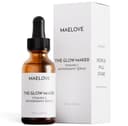
Maelove Glow Maker — the formula match
The only serum in our registry that uses all three parts of the studied combination with a stated 15% L-ascorbic acid, plus vitamin E and ferulic acid. Fragrance-free and lightweight. If your reason for looking at alternatives is price rather than tolerance, this is the pick and the rest of this page is optional reading. The usual L-ascorbic caveats apply: buy fresh, store it cool and out of the light, and replace it when it darkens. It can tingle for the first week.
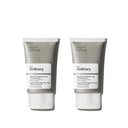
The Ordinary Vitamin C Suspension 23% — different route, same goal
A stated 23% L-ascorbic acid suspended in silicones rather than dissolved in water. The anhydrous base is a genuine stability strategy — water is what lets vitamin C oxidise, so removing it removes the problem — and it delivers the highest stated dose here at the lowest cost per use. The trade is texture: it is gritty and slightly draggy, and that is a common complaint rather than a rare one. Not a starting point for sensitive skin at 23%.
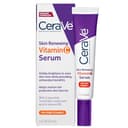
CeraVe 10% Pure Vitamin C — the tolerable entry
A stated 10% L-ascorbic acid with three ceramides and hyaluronic acid in the same bottle, fragrance-free. It is the gentlest way into pure vitamin C precisely because the barrier support is built in rather than left for you to layer. The honest limitation is that 10% is a sensible working strength rather than the studied 15%, and the opaque tube that helps stability also means you cannot see oxidation happening.
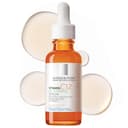
La Roche-Posay Pure Vitamin C12 — for oily, blemish-prone skin
A stated 12% L-ascorbic acid with salicylic acid and hyaluronic acid, so it does mild texture work alongside the antioxidant job. That makes it a reasonable choice if congestion is part of your complaint and a redundant one if you already use a BHA elsewhere. One thing to know before you buy: it contains parfum, so it is out if you are avoiding fragrance — see our fragrance-free picks.
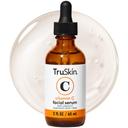
TruSkin Brightening Vitamin C — the gentle derivative
Built on sodium ascorbyl phosphate rather than L-ascorbic acid. A derivative is more stable and less irritating, which is the point, but it has to convert in the skin and its evidence base is thinner than L-ascorbic acid’s. That is a fair trade for skin that has genuinely reacted to pure vitamin C, and a poor one if you are choosing it because it is cheaper. It also carries botanical extracts that the most reactive skin sometimes objects to.
What no alternative can give you
Two things, stated plainly so this page is useful rather than flattering. The first is the exact formulation of the original: pH, chelators, the precise ratio and the delivery base all affect how much active actually reaches your skin, and none of that is captured by matching three ingredients on a list. A serum with the same headline trio is a product built on the same published principle, not a copy. The second is packaging and formulation discipline— an amber bottle, an airless pump, batch consistency. These are not trivial for an ingredient that degrades on contact with air, and they are part of what separates price tiers in this category more than in almost any other.
What we can tell you is that every pick above states a concentration you can check, and that is a higher bar than most of this site’s shelves clear. If you want the whole category ranked on its own terms rather than against one product, our best vitamin C serums page does that, and vitamin C 10% vs 20% settles the strength question.
How to use whichever one you buy
In the morning, on clean dry skin, before moisturizer and under sunscreen — the antioxidant and the SPF are complementary rather than alternatives, which is the entire logic of the photoprotection research above. Start three mornings a week if your skin is reactive and build from there. Keep the bottle somewhere cool and dark, buy the smallest size you will finish, and replace it when the liquid turns deep yellow or brown. Our vitamin C with sunscreen guide covers the layering and retinol with vitamin C covers the pairing people most often get wrong.