Barrier & Balm

Best Retinol Under $25

Nine of our eleven retinoids cost less than $25 — so the cap is not the constraint people assume. Six picks ranked on whether the brand will tell you the strength, with live prices.

By Stephen V.Last updated How we pick

The short answer

Top pick under $25

For anyone who wants to know what they are applying. An exact, labeled 0.5% retinol in squalane — the clearest disclosure on the shelf.

Budget pick

The cheapest sensible first retinol: a stated 0.1% retinol with 0.3% bakuchiol, fragrance-free.

Prices live from the retailer as of November 18, 2026. Retinol is not for use in pregnancy — see our pregnancy-safe skincare guide.

Buy The Ordinary Retinol 0.5% in Squalane if you want the best retinol under $25 and you want to know its strength: an exact, labeled 0.5% in a simple squalane base, for less than a sandwich. The budget pick is Good Molecules Gentle Retinol Cream — a stated 0.1% retinol with 0.3% bakuchiol, which is the cheapest honest way to find out whether your skin gets on with a retinoid at all. If the flaking is what has stopped you before, skip both and start with CeraVe Skin Renewing Retinol Serum, which buffers itself.

The useful fact about this price band is how little sits above it. Of the eleven retinol products in our registry, nine cost less than $25. Retinol is an old, cheap, well-characterised molecule; what costs money is the delivery system around it and the brand on the bottle — which is also why a stated 0.5% turns up on our best skincare under $10list. So the interesting question is not “what do I lose under $25” but “which of these will tell me what is in it”— and the answer is genuinely surprising.

Almost no brand publishes a retinol percentage. It is a cosmetic, not a drug, so there is no obligation to, and most do not. Two of the six picks below state an exact figure. The other four do not, and we record that as Not publishedrather than guessing a number — which is the entire reason their spec tables have an empty cell. An empty cell is a finding. It means you cannot compare that product on strength, cannot step up from it deliberately, and cannot tell whether a reaction means the dose was too high or the base disagreed with you. We own no units and have tested nothing; everything below is read off the published formula and the listing, with live prices from the retailer.

How this is funded: we earn a commission if you buy through our links, at no extra cost to you. It never changes which product we recommend, and we’ll tell you when we’d skip one. Full disclosure.

Quick picks

Ranked on formulation, stated concentration and buyer fit. Select a row to jump to the full write-up. We have not tested these products — here is exactly what we do instead.

#ProductBest forPrice
1
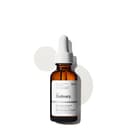
The Ordinary Retinol 0.5% in Squalane

The Ordinary Retinol 0.5% in Squalane

The clearest-labeled retinol you can buy: an exact 0.5% in a squalane base, at a price that makes 'start low and go slow' painless. This is where most people should begin.

Best overall under $25
$9.30 · View on Amazon

Price as of November 18, 2026. #ad How we’re funded

2
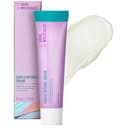
Good Molecules Gentle Retinol Cream

Good Molecules Gentle Retinol Cream

A stated 0.1% retinol with 0.3% bakuchiol alongside it, fragrance-free, for less than the price of lunch. The cheapest sensible way to find out whether your skin gets on with retinol at all.

Budget pick, and best first retinol
$7.97 · View on Amazon

Price as of November 18, 2026. #ad How we’re funded

3
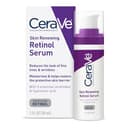
CeraVe Skin Renewing Retinol Serum

CeraVe Skin Renewing Retinol Serum

Encapsulated retinol with the buffering built into the formula — ceramides, niacinamide and hyaluronic acid in the same bottle — so the flaking that makes people quit retinol is designed out rather than left for you to layer against. Fragrance-free, and cheap enough to actually finish.

Best for skin that flakes
$18.34 · View on Amazon

$24.9927% off

Price as of November 18, 2026. #ad How we’re funded

4
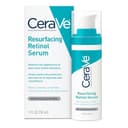
CeraVe Resurfacing Retinol Serum

CeraVe Resurfacing Retinol Serum

Encapsulated retinol with ceramides and licorice root, aimed squarely at post-acne marks rather than wrinkles. Gentle, barrier-friendly, and cheap — but the strength is unstated.

Best for post-acne marks
$16.49 · View on Amazon

$21.9925% off

Price as of November 18, 2026. #ad How we’re funded

5
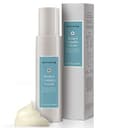
Naturium Retinol Complex Face Cream 2.5%

Naturium Retinol Complex Face Cream 2.5%

The most moisturizer-like retinol here — shea and murumuru butters, squalane and biomimetic lipids around a retinol-and-bakuchiol blend. Read the 2.5% carefully: it describes the blend, not the retinol.

Best for dry skin
$15.99 · View on Amazon

$19.9920% off

Price as of November 18, 2026. #ad How we’re funded

6
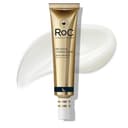
RoC Retinol Correxion Deep Wrinkle Night Cream

RoC Retinol Correxion Deep Wrinkle Night Cream

The drugstore retinol cream people actually keep buying — retinol delivered in a moisturizing cream base, which suits dry, mature skin that finds serums drying.

Best rich night cream
$21.97 · View on Amazon

$29.9927% off

Price as of November 18, 2026. #ad How we’re funded

The picks in full

#1Best overall under $25

The Ordinary Retinol 0.5% in Squalane

The clearest-labeled retinol you can buy: an exact 0.5% in a squalane base, at a price that makes 'start low and go slow' painless. This is where most people should begin.

Strengths

  • Publishes the exact strength — 0.5% — which almost no drugstore retinol does
  • Squalane base is occlusive and cushions irritation
  • Comes in 0.2% / 0.5% / 1% so you can step up deliberately

Trade-offs

  • Pure retinol in an anhydrous oil — no added soothing actives
  • Squalane finish can feel heavy over other oils
Key activeRetinol
Stated concentration0.5%
FormatLightweight oil serum
Fragrance-freeYes
Best forNormal, Dry, Not-too-sensitive

Formulation note. Retinol dispersed in squalane; no water phase, so no need for the pH and packaging fuss vitamin C needs. The strength is stated on the label, which is the exception, not the rule.

Ingredients and claims read from the product listing, on July 17, 2026. “Not published” means the brand does not state that figure.

#2Budget pick, and best first retinol

Good Molecules Gentle Retinol Cream

A stated 0.1% retinol with 0.3% bakuchiol alongside it, fragrance-free, for less than the price of lunch. The cheapest sensible way to find out whether your skin gets on with retinol at all.

Strengths

  • Publishes both figures — 0.1% retinol and 0.3% bakuchiol
  • The lowest-risk starting strength on this page
  • Fragrance-free, vegan, and the cheapest pick here by a wide margin

Trade-offs

  • 0.1% is deliberately mild — experienced users will outgrow it
  • Bakuchiol is a supporting act, not a second retinoid, whatever the box implies
Key activeRetinol + bakuchiol
Stated concentration0.1% retinol (with 0.3% bakuchiol)
FormatLight cream
Fragrance-freeYes
Best forSensitive, Dry, Beginners

Formulation note. One of the very few retinol creams that quantifies everything that matters: 0.1% retinol plus 0.3% bakuchiol, in a fragrance-free base with grapeseed oil and allantoin. Bakuchiol has a small supportive evidence base of its own and is included here to buffer, not to replace, the retinol.

Ingredients and claims read from the product listing, on August 15, 2026. “Not published” means the brand does not state that figure.

#3Best for skin that flakes

CeraVe Skin Renewing Retinol Serum

Encapsulated retinol with the buffering built into the formula — ceramides, niacinamide and hyaluronic acid in the same bottle — so the flaking that makes people quit retinol is designed out rather than left for you to layer against. Fragrance-free, and cheap enough to actually finish.

Strengths

  • Encapsulated, time-release retinol is gentler than a straight retinol
  • Ceramides NP, AP and EOP plus niacinamide and hyaluronic acid buffer the dryness
  • Fragrance-free and non-comedogenic, at a drugstore price

Trade-offs

  • Does NOT publish the retinol percentage — you cannot compare it on strength
  • Encapsulation trades speed for tolerance; not the pick if you want a high stated dose
Key activeRetinol (encapsulated)
Stated concentrationNot published
FormatLight cream-serum
Fragrance-freeYes
Best forSensitive, Dry, Normal

Formulation note. Encapsulated retinol with ceramides NP, AP and EOP, niacinamide and hyaluronic acid in CeraVe's MVE time-release base. The encapsulation and the buffering actives are both there to cut the irritation that ends most retinol attempts; the retinol percentage itself is not disclosed, which we flag rather than guess.

Ingredients and claims read from the product listing, on October 3, 2026. “Not published” means the brand does not state that figure.

#4Best for post-acne marks

CeraVe Resurfacing Retinol Serum

Encapsulated retinol with ceramides and licorice root, aimed squarely at post-acne marks rather than wrinkles. Gentle, barrier-friendly, and cheap — but the strength is unstated.

Strengths

  • Ceramides + niacinamide support the barrier while the retinol works
  • Encapsulated delivery is gentler on reactive skin
  • One of the least expensive 'real' retinol serums

Trade-offs

  • Concentration is not published
  • Marketed for marks, not deep wrinkles — set expectations accordingly
Key activeEncapsulated retinol
Stated concentrationNot published
FormatFluid lotion-serum
Fragrance-freeYes
Best forAcne-prone, Normal, Sensitive

Formulation note. Encapsulated retinol + 3 essential ceramides + niacinamide + licorice root extract. The ceramide payload is the reason it stays tolerable; the retinol strength is not disclosed.

Ingredients and claims read from the product listing, on July 17, 2026. “Not published” means the brand does not state that figure.

#5Best for dry skin

Naturium Retinol Complex Face Cream 2.5%

The most moisturizer-like retinol here — shea and murumuru butters, squalane and biomimetic lipids around a retinol-and-bakuchiol blend. Read the 2.5% carefully: it describes the blend, not the retinol.

Strengths

  • Genuinely rich base — shea butter, murumuru butter, squalane and linoleic acid
  • Fragrance-free and essential-oil-free
  • Doubles as the night moisturizer, so it replaces a step rather than adding one

Trade-offs

  • The headline 2.5% is the combined retinol-plus-bakuchiol figure — the retinol dose itself is not published
  • Too occlusive for oily or congestion-prone skin
Key activeRetinol + bakuchiol
Stated concentrationNot published
FormatRich cream
Fragrance-freeYes
Best forDry, Normal, Mature

Formulation note. Naturium states that the 2.5% refers to the combined retinol and bakuchiol complex, not to retinol alone — so the actual retinol dose is unpublished, which is why we record it as such. The base is the selling point: shea and murumuru butters, squalane, sodium hyaluronate, linoleic and oleic acids, tocopherol, all fragrance-free.

Ingredients and claims read from the product listing, on August 15, 2026. “Not published” means the brand does not state that figure.

#6Best rich night cream

RoC Retinol Correxion Deep Wrinkle Night Cream

The drugstore retinol cream people actually keep buying — retinol delivered in a moisturizing cream base, which suits dry, mature skin that finds serums drying.

Strengths

  • Retinol in an emollient cream is gentler for dry skin
  • Long track record and wide availability
  • Low price for a nightly retinol

Trade-offs

  • Concentration is not published
  • Contains fragrance — a consideration for reactive skin
Key activeRetinol
Stated concentrationNot published
FormatRich night cream
Fragrance-freeNo
Best forDry, Mature

Formulation note. Retinol in a moisturizing cream base. Contains fragrance, so it is not our pick for sensitive skin — the cream format is its advantage for dry skin.

Ingredients and claims read from the product listing, on July 17, 2026. “Not published” means the brand does not state that figure.

What $25 actually buys

Every price below is read live from the retailer, not typed in by us. All 6 sat under $25 as of November 18, 2026. Cost per ml is calculated from that price and the size printed on the listing — it is the number that decides which of these is actually cheap, and it does not always agree with the one on the shelf edge.

ProductSizeCost per mlPrice
30 ml$0.266
$7.97 · View on Amazon

Price as of November 18, 2026. #ad How we’re funded

30 ml$0.310
$9.30 · View on Amazon

Price as of November 18, 2026. #ad How we’re funded

50 ml$0.320
$15.99 · View on Amazon

$19.9920% off

Price as of November 18, 2026. #ad How we’re funded

30 ml$0.550
$16.49 · View on Amazon

$21.9925% off

Price as of November 18, 2026. #ad How we’re funded

30 ml$0.611
$18.34 · View on Amazon

$24.9927% off

Price as of November 18, 2026. #ad How we’re funded

30 ml$0.732
$21.97 · View on Amazon

$29.9927% off

Price as of November 18, 2026. #ad How we’re funded

Prices as of November 18, 2026, refreshed daily. A row showing “Check price on Amazon” is one our feed has no current offer for — we would rather show you nothing than a number we cannot stand behind.

How we ranked a shelf where nobody publishes a number

1. Is the strength stated?

This is the first criterion and it decides the top of the page. A labeled percentage is not a quality claim — a stated 0.1% is weaker than an unstated one might be — but it is the only thing that lets you manage a retinoid rather than hope. Retinol works by irritating skin into turning over faster, and the entire craft of using it is starting low, going slow, and stepping up deliberately when your skin tolerates the current dose. You cannot do any of that against an unknown. The Ordinary states 0.5% and sells 0.2% and 1% alongside it, so the ladder is built for you. Good Molecules states 0.1% retinol and 0.3% bakuchiol. Nobody else here states anything.

2. What is buffering it?

The reason most people quit retinol is not that it failed; it is the three weeks of flaking, tightness and stinging at the start. Two things reduce that: encapsulation, which releases the retinol slowly instead of all at once, and barrier ingredients in the same bottle— ceramides, niacinamide, hyaluronic acid, panthenol. Three picks here do both. That is a genuine formulation advantage and it is why an unstated encapsulated retinol can still be the right buy for someone who has already failed on a bare one. The trade-off is honest: encapsulation trades speed for tolerance.

3. Serum or cream, and what your skin wants to wear

A retinol you do not apply does nothing, and texture is most of why people apply things. Dry and mature skin usually does better with a retinol in a cream base, because the moisturizer step and the active step become one thing and the dryness never gets a chance to build. Oily and acne-prone skin generally prefers a light serum under its own moisturizer. The format is not a quality difference and you should not pay extra for either — our retinol cream roundup and retinol serum roundup rank each format on its own terms.

4. Fragrance

Five of the six picks here are fragrance-free. The sixth, RoC’s night cream, is not, and that is the reason it sits last rather than higher — you are applying an irritant by design, and adding the most common cosmetic allergen to it is a choice with no upside. It stays on the page because the cream base genuinely suits dry, mature skin and because plenty of people use it happily; it is simply not the pick for anyone whose skin reacts.

What $25 does not buy you

Two things, and only two. The first is a stated strength in a cream. If you want a retinol cream whose percentage is printed on the box, the cheapest one in our registry sits just above this cap at a stated 0.3%, and that disclosure is the whole reason to pay the difference. The second is a sophisticated supporting formula— the premium retinoids pair a stated retinol with a stated bakuchiol, ceramides, four peptides and soothing extracts, and are bought for tolerability rather than potency. Both are real upgrades. Neither changes what the retinol itself does.

What $25 emphatically does buy is the active. There is no cheap-retinol penalty in the way there is with, say, vitamin C, where formulation and packaging decide whether the active survives to your face at all. Retinol in an anhydrous base is stable and undemanding. Our retinol strengths guide covers what the numbers mean, and retinol vs retinoid explains where over-the-counter retinol sits next to prescription tretinoin.

How to start, whichever one you buy

Two nights a week, pea-sized, on dry skin, at night only, with sunscreen every morning without exception — retinoids raise sun sensitivity and skipping SPF undoes the point of using one. Build to three or four nights over six to eight weeks if your skin is comfortable. If it stings, the sandwich method— a thin layer of moisturizer before the retinol as well as after — buffers it without meaningfully reducing the effect, and is the standard way to ease in. Our sandwich method guide and how often to use retinol have the full ramp.

Expect the first visible change at around twelve weeks and the real change at six months to a year; this is the slowest-acting useful thing in skincare and the most commonly abandoned at week four. Do not layer it with benzoyl peroxide in the same application, do not add a second exfoliating acid while you are ramping, and do not use it in pregnancy — see pregnancy-safe skincare and what not to mix with retinol. If the peeling in the first month worries you, the retinol purge explains what is normal and what is not.
Frequently asked questions

Is cheap retinol as effective as expensive retinol?

The molecule is identical and inexpensive, so the active itself is not what you pay for. What more money buys is a stated strength in a cream, encapsulation, and a supporting formula built to make the ramp-up easier. Those matter for tolerability and for your ability to manage the dose — they do not make the retinol work harder. A labeled 0.5% at under $10 is doing the same chemistry as a labeled 0.3% at $65.

What strength retinol should I start with?

The lowest one whose number you can actually see. A stated 0.1% is a sensible first step for reactive skin and a stated 0.5% is where most people should begin if their skin is not especially sensitive. The reason to prefer a product that publishes its percentage is that it lets you step up deliberately later instead of guessing — and most retinols publish nothing at all.

Why do so few retinol products state their percentage?

Because retinol is sold as a cosmetic rather than a drug in the US, and a cosmetic has no obligation to disclose how much of an ingredient it contains. Salicylic acid and benzoyl peroxide at acne strengths are over-the-counter drugs, so they carry a Drug Facts panel with the number on it; retinol does not. Where a brand does not publish a figure, we record it as not published rather than estimating one.

Is a retinol serum or a retinol cream better?

Neither — it is a texture decision. A cream base suits dry and mature skin because the moisturizing step and the active step become one, which keeps retinoid dryness from building. A light serum suits oily and acne-prone skin layered under its own moisturizer. Both formats appear on this page under $25, so the choice costs you nothing.

How long before retinol does anything?

Expect about twelve weeks for the first visible change in texture and tone, and six months to a year for the change you were actually after. It is the slowest useful active in skincare, which is why consistency beats strength — two nights a week for a year does far more than a high dose abandoned at week four.

Can I use retinol with vitamin C or an acid?

Not in the same application while you are starting out. Use vitamin C in the morning and retinol at night, and hold off on adding a second exfoliating acid until your skin is comfortable on the retinol alone. Benzoyl peroxide and retinol should not go on together — separate them to different times of day. Our 'what not to mix with retinol' guide covers each pairing.

Is retinol safe during pregnancy?

No — retinoids, including over-the-counter retinol, are avoided in pregnancy and while trying to conceive, and that advice applies to every product on this page. Bakuchiol is the usual substitute discussed, though its evidence base is far smaller. See our pregnancy-safe skincare guide and talk to your own clinician.

Sources

Keep reading