Barrier & Balm

Best Fragrance-Free Skincare

A whole routine with no perfume in it — cleanser, moisturizer, SPF, niacinamide, retinol and an eye cream, each checked against its published ingredient list rather than its front label.

By Stephen V.Last updated How we pick

The short answer

Top pick

The fragrance-free benchmark. No fragrance, dyes, lanolin, parabens or formaldehyde releasers — the standard elimination-routine cream.

Budget pick

The cheapest thing here, and the only one that states its active percentage: a fragrance-free 10% niacinamide with 1% zinc.

Every pick below is fragrance-free by its published INCI, not by its front label. Where a brand does not state a fragrance claim, we record it as unpublished rather than assuming.

Buy Vanicream Moisturizing Skin Cream if you want one fragrance-free product to start with: it is formulated around what it leaves out — no fragrance, dyes, lanolin, parabens or formaldehyde releasers — which makes it the standard choice when your skin has reacted to something and you do not know what. The budget pick is The Ordinary Niacinamide 10% + Zinc 1%, the cheapest product on this page and the only one that publishes how much active is in it. Together with the cleanser and sunscreen below they make a complete perfume-free routine for well under $50.

Fragrance is the most common cause of cosmetic contact allergy, and it does nothing for your skin. That is the whole case: it is a pure downside ingredient added because products that smell nice sell better. For most people it causes no trouble at all. For skin that is sensitive, eczema-prone, rosacea-prone, or simply in the irritated middle of a retinoid or acne routine, removing it is the cheapest risk reduction available — and it costs nothing, because the fragrance-free option is usually the same price or less.

The catch is that you cannot trust the front of the bottle. “Fragrance-free” is not a regulated term in the US, and “unscented” is a different and weaker claim entirely — the FDA points out that an unscented product may contain just enough masking fragrance to cover an off-odor. So every pick below was checked against its published ingredient list rather than its marketing. Of the 127 products in our registry, 91 are fragrance-free by their INCI, 12 contain fragrance, and 24 do not say either way. We record that last group as unpublished rather than assuming the good answer.

How this is funded: we earn a commission if you buy through our links, at no extra cost to you. It never changes which product we recommend, and we’ll tell you when we’d skip one. Full disclosure.

Quick picks

Ranked on formulation, stated concentration and buyer fit. Select a row to jump to the full write-up. We have not tested these products — here is exactly what we do instead.

#ProductBest forPrice
1
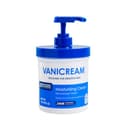
Vanicream Moisturizing Skin Cream

Vanicream Moisturizing Skin Cream

The minimalist's choice — free of fragrance, dyes, lanolin, parabens and formaldehyde releasers, in a hygienic pump tub. When the goal is 'nothing that could react', this is the shortlist.

Best overall, and best moisturizer
$13.56 · View on Amazon

$14.496% off

Price as of November 18, 2026. #ad How we’re funded

2
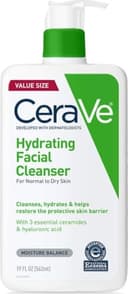
CeraVe Hydrating Facial Cleanser

CeraVe Hydrating Facial Cleanser

A non-foaming, lotion-style cleanser for dry and sensitive skin — it cleans without surfactant stripping and leaves ceramides behind. The counterpart to the foaming version for the other end of the spectrum.

Best cleanser
$16.97 · View on Amazon

Price as of November 18, 2026. #ad How we’re funded

3
Blue Lizard Sensitive Mineral Sunscreen SPF 50

Blue Lizard Sensitive Mineral Sunscreen SPF 50

A no-frills 100% mineral SPF 50 for genuinely reactive skin, in a big face-and-body tube. Fragrance-free, paraben-free and free of the chemical filters that sting sensitive eyes — the honest trade is a heavier feel and some whitening.

Best sunscreen
$13.46 · View on Amazon

$15.9916% off

Price as of November 18, 2026. #ad How we’re funded

4
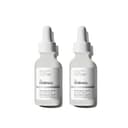
The Ordinary Niacinamide 10% + Zinc 1%

The Ordinary Niacinamide 10% + Zinc 1%

The default niacinamide serum for a reason — a stated 10% with zinc, for a few dollars a bottle (Amazon ships it as a two-pack). Worth knowing that 10% is above the 4-5% most studies use, so sensitive skin may prefer less.

Budget pick, and best active serum
$12.00 · View on Amazon

Price as of November 18, 2026. #ad How we’re funded

5
CeraVe Skin Renewing Retinol Serum

CeraVe Skin Renewing Retinol Serum

Encapsulated retinol with the buffering built into the formula — ceramides, niacinamide and hyaluronic acid in the same bottle — so the flaking that makes people quit retinol is designed out rather than left for you to layer against. Fragrance-free, and cheap enough to actually finish.

Best retinol
$18.34 · View on Amazon

$24.9927% off

Price as of November 18, 2026. #ad How we’re funded

6
La Roche-Posay Toleriane Dermallergo Eye Cream

La Roche-Posay Toleriane Dermallergo Eye Cream

The pick when the skin around your eyes reacts to everything. A fragrance-free, deliberately short formula for sensitive and allergy-prone skin — niacinamide and neurosensine to soothe, shea and glycerin to comfort. It won't 'treat' lines or circles; it keeps a reactive eye area calm and hydrated, which is exactly its job.

Best eye cream
$29.97 · View on Amazon

Price as of November 18, 2026. #ad How we’re funded

The picks in full

#1Best overall, and best moisturizer

Vanicream Moisturizing Skin Cream

The minimalist's choice — free of fragrance, dyes, lanolin, parabens and formaldehyde releasers, in a hygienic pump tub. When the goal is 'nothing that could react', this is the shortlist.

Strengths

  • Free of the most common contact irritants and allergens
  • Pump-tub is more hygienic than a jar
  • Great value in the large size

Trade-offs

  • Very plain — no ceramides or niacinamide extras
  • Occlusive finish some find heavy
Key activeBarrier emollients (minimal formula)
Stated concentrationNot published
FormatRich cream
Fragrance-freeYes
Best forSensitive, Allergy-prone, Dry

Formulation note. Formulated without fragrance, dyes, lanolin, parabens and formaldehyde releasers — chosen for what it leaves out rather than actives it adds. The dermatologist's elimination-routine default.

Ingredients and claims read from the product listing, on July 17, 2026. “Not published” means the brand does not state that figure.

#2Best cleanser

CeraVe Hydrating Facial Cleanser

A non-foaming, lotion-style cleanser for dry and sensitive skin — it cleans without surfactant stripping and leaves ceramides behind. The counterpart to the foaming version for the other end of the spectrum.

Strengths

  • Non-foaming, doesn't strip
  • Leaves ceramides + hyaluronic acid on skin
  • Fragrance-free, gentle enough for twice daily

Trade-offs

  • Can feel like it doesn't fully remove heavy makeup in one pass
  • Too gentle for very oily skin that wants a deep clean
Key activeNon-stripping surfactants + ceramides
Stated concentrationNot published
FormatLotion (non-foaming)
Fragrance-freeYes
Best forDry, Sensitive, Normal

Formulation note. A low-foaming, cream cleanser with 3 ceramides + hyaluronic acid + niacinamide. Cleans by dissolving rather than stripping, which is what dry skin needs.

Ingredients and claims read from the product listing, on July 17, 2026. “Not published” means the brand does not state that figure.

#3Best sunscreen

Blue Lizard Sensitive Mineral Sunscreen SPF 50

A no-frills 100% mineral SPF 50 for genuinely reactive skin, in a big face-and-body tube. Fragrance-free, paraben-free and free of the chemical filters that sting sensitive eyes — the honest trade is a heavier feel and some whitening.

Strengths

  • Stated 10% zinc oxide + 8% titanium dioxide — 100% mineral and fragrance-free
  • Large 5 fl oz tube encourages the generous amount SPF actually needs
  • No oxybenzone or octinoxate, with aloe and vitamin E in the base

Trade-offs

  • Leaves a white cast and feels heavier than a chemical sunscreen
  • Thick texture needs working in, especially on deeper skin tones
Key activeZinc oxide + titanium dioxide (SPF 50)
Stated concentrationSPF 50
FormatMineral lotion
Fragrance-freeYes
Best forSensitive, Reactive, Face and body

Formulation note. 10% zinc oxide + 8% titanium dioxide, 100% mineral, fragrance-free and paraben-free, water resistant up to 40 minutes. Chosen for what it leaves out — no chemical filters, no fragrance — which is why it suits the most reactive skin; the cast is the honest cost.

Ingredients and claims read from the product listing, on August 8, 2026. “Not published” means the brand does not state that figure.

#4Budget pick, and best active serum

The Ordinary Niacinamide 10% + Zinc 1%

The default niacinamide serum for a reason — a stated 10% with zinc, for a few dollars a bottle (Amazon ships it as a two-pack). Worth knowing that 10% is above the 4-5% most studies use, so sensitive skin may prefer less.

Strengths

  • Stated 10% niacinamide + 1% zinc for oil control
  • Among the cheapest actives in skincare
  • Fragrance-free, water-light texture

Trade-offs

  • 10% is higher than the researched 4-5% and can pill or sting
  • Zinc suspension can feel slightly draggy
Key activeNiacinamide
Stated concentration10%
FormatWater-light serum
Fragrance-freeYes
Best forOily, Combination, Blemish-prone

Formulation note. 10% niacinamide + 1% zinc PCA. Most published benefit for redness and barrier appears around 4-5%; 10% is not 'stronger is better' and can irritate — an honest caveat on a genuinely useful, cheap serum.

Ingredients and claims read from the product listing, on October 23, 2026. “Not published” means the brand does not state that figure.

#5Best retinol

CeraVe Skin Renewing Retinol Serum

Encapsulated retinol with the buffering built into the formula — ceramides, niacinamide and hyaluronic acid in the same bottle — so the flaking that makes people quit retinol is designed out rather than left for you to layer against. Fragrance-free, and cheap enough to actually finish.

Strengths

  • Encapsulated, time-release retinol is gentler than a straight retinol
  • Ceramides NP, AP and EOP plus niacinamide and hyaluronic acid buffer the dryness
  • Fragrance-free and non-comedogenic, at a drugstore price

Trade-offs

  • Does NOT publish the retinol percentage — you cannot compare it on strength
  • Encapsulation trades speed for tolerance; not the pick if you want a high stated dose
Key activeRetinol (encapsulated)
Stated concentrationNot published
FormatLight cream-serum
Fragrance-freeYes
Best forSensitive, Dry, Normal

Formulation note. Encapsulated retinol with ceramides NP, AP and EOP, niacinamide and hyaluronic acid in CeraVe's MVE time-release base. The encapsulation and the buffering actives are both there to cut the irritation that ends most retinol attempts; the retinol percentage itself is not disclosed, which we flag rather than guess.

Ingredients and claims read from the product listing, on October 3, 2026. “Not published” means the brand does not state that figure.

#6Best eye cream

La Roche-Posay Toleriane Dermallergo Eye Cream

The pick when the skin around your eyes reacts to everything. A fragrance-free, deliberately short formula for sensitive and allergy-prone skin — niacinamide and neurosensine to soothe, shea and glycerin to comfort. It won't 'treat' lines or circles; it keeps a reactive eye area calm and hydrated, which is exactly its job.

Strengths

  • Fragrance-free, paraben-free and non-comedogenic — a low-risk formula
  • Niacinamide plus neurosensine to calm and support the barrier
  • Gentle enough around contact lenses and easily irritated eyes

Trade-offs

  • A comfort cream, not an anti-aging treatment — no retinol or exfoliant
  • The most expensive way to buy simple under-eye hydration here
  • Won't change dark circles or deeper lines
Key activeNiacinamide + neurosensine
Stated concentrationNot published
FormatSoothing cream
Fragrance-freeYes
Best forSensitive, Reactive, Allergy-prone

Formulation note. Fragrance-free, paraben-free and non-comedogenic. Niacinamide for barrier support, neurosensine (a soothing dipeptide), plus shea butter and glycerin. Built for tolerance rather than active correction — the trade-off is intentional.

Ingredients and claims read from the product listing, on August 5, 2026. “Not published” means the brand does not state that figure.

Fragrance-free, unscented, and what the label is allowed to say

These are not synonyms and the difference matters. Fragrance-free should mean no fragrance materials have been added. Unscentedmeans the product has no noticeable smell — which a manufacturer can achieve by adding a masking fragrance to cover the base odor of the formula. The FDA is explicit that a product can carry no detectable scent and still contain fragrance ingredients, and neither term is defined in regulation. The only reliable check is the ingredient list itself: look for fragrance, parfum, or aroma, and treat an essential-oil list as a fragrance list, because botanical aromatics cause contact allergy at least as readily as synthetic ones.

US cosmetic labeling also allows fragrance to be declared as a single word rather than broken out, which is why a formula containing dozens of individual aromatic materials can appear on the back of a bottle as one entry. You cannot tell which materials, and you cannot tell how much. Our fragrance-free vs unscented comparison takes that apart in full, and how to read an ingredient label covers the rest of the shortcuts.

Where brands quietly fail the claim

It happens more than you would expect, and we have run into it twice on this site. A well-regarded mattifying moisturizer markets itself as fragrance-free while the US ingredient list published by two separate retailers carries both parfum and alcohol denat. A popular hyaluronic acid water gel is recommended constantly for sensitive skin, while the signature version is fragranced and only a separate variant is not. Neither omission is a verdict on the product. Both are the reason we check the INCI rather than the front panel, and the reason a dozen otherwise-good products are not on this page.

Who actually needs this

Skin that reacts and you do not know to what

The standard dermatology approach is elimination: strip the routine back to the shortest, most inert products available, let the skin settle for a few weeks, then reintroduce one thing at a time. That is exactly what the Vanicream products are built for — they are chosen for their omissions rather than their actives, which is why they have no ceramides or niacinamide to speak of and why that is not a criticism. How to calm irritated skin sets out the reset properly.

Eczema-prone and rosacea-prone skin

Both conditions involve a barrier that lets irritants through more readily, and fragrance avoidance is standard guidance for both. Our eczema-prone picks and rosacea picksgo further into what else to avoid — in rosacea’s case, alcohol denat., menthol and witch hazel are worth checking for at the same time.

Anyone mid-way through a retinoid or acne routine

This is the group that most often does not realise it qualifies. Skin under benzoyl peroxide, adapalene or a retinol is already irritated by design, and the tolerance it has for anything else is temporarily lower. Switching the supporting products to fragrance-free for the first few months is a cheap way to make the active itself easier to stay on.

The eye area

Eyelid skin is the thinnest on the body and the most common site for cosmetic contact dermatitis, so fragrance is a worse idea there than anywhere else. It is also the area where people most often apply a fragranced face cream without thinking about it.

Building the routine

Morning: CeraVe Hydrating Facial Cleanser or a plain water rinse, then the niacinamide serum if you use it, then Vanicream Moisturizing Skin Cream, then Blue Lizard Sensitive Mineral SPF 50. That is four fragrance-free products and a complete morning.

Evening:the same cleanser, then CeraVe Skin Renewing Retinol Serum on the nights you use it — two nights a week to start — then the moisturizer over the top. The retinol pick here is encapsulated and carries ceramides and niacinamide in the same bottle, which is deliberate: if you are removing fragrance because your skin is reactive, a buffered retinol is the right one to start on. Our beginner retinol guide has the ramp.

What to add last, if at all:the eye cream. It is the most expensive item here per millilitre and the least necessary, and it earns its place only if the skin around your eyes specifically reacts — which is exactly what it is formulated for. If your eyes are fine, your face moisturizer is enough; see eye creams under $25 for the cheaper end of that decision.

A note on the sunscreen: mineral filters are not inherently gentler than chemical ones, but zinc and titanium do not sting the way some chemical filters can on reactive skin, and the Blue Lizard states both its percentages. The honest trade is cast and a heavier feel. If that rules it out for you, the fragrance-free chemical option in our under-$25 SPF picks is the alternative.

What fragrance-free does not fix

Plenty of reactions are not fragrance reactions. Preservatives, chemical sunscreen filters, propylene glycol, lanolin, essential oils listed under their botanical names, and the actives themselves — acids, retinoids, benzoyl peroxide, high-percentage niacinamide — all cause trouble for some people. Removing fragrance narrows the field; it does not identify the culprit. If a reaction persists on a fully fragrance-free routine, the next step is patch testing rather than another product. Our patch testing guidecovers the at-home version, and persistent or spreading reactions are a dermatologist’s question rather than a shopping one.
Frequently asked questions

Is fragrance-free skincare actually better?

For skin that reacts, yes — fragrance is the most common cause of cosmetic contact allergy and contributes nothing to how a product performs. For skin that tolerates it, there is no benefit to removing it beyond reducing a risk you were not experiencing. The reason to default to fragrance-free is that it costs nothing: the unscented version of a formula is usually the same price.

What is the difference between fragrance-free and unscented?

Fragrance-free should mean no fragrance materials were added. Unscented only means the product has no noticeable smell, which a manufacturer can achieve by adding a masking fragrance to cover the formula's base odor. Neither term is defined in US regulation, so the only reliable check is scanning the ingredient list for fragrance, parfum, aroma or a list of essential oils.

Are essential oils better than synthetic fragrance?

No, and often worse. Botanical aromatics such as limonene, linalool, citral and geraniol are well-documented contact allergens, and a product perfumed with essential oils is still a perfumed product. If you are avoiding fragrance, treat an essential-oil list the same way you would treat the word parfum.

How can I tell if a product really is fragrance-free?

Read the full ingredient list rather than the front of the pack, and look for fragrance, parfum, aroma, and any named essential oil or aromatic extract. US labeling lets a manufacturer declare an entire fragrance blend as one word, so you cannot tell which materials or how much — the presence of the word is the signal. We have found at least two well-known products whose fragrance-free marketing is contradicted by their published INCI.

Do I need a fragrance-free sunscreen too?

If you are removing fragrance for a reason, yes — sunscreen is the product you leave on your face all day and reapply, so it is the worst one to make an exception for. Mineral sunscreens tend to be fragrance-free more often than chemical ones, but plenty of fragrance-free chemical filters exist; check the Drug Facts panel's inactive list.

Can I use actives on a fragrance-free routine?

Yes. Fragrance-free is about what you remove, not about avoiding actives. Niacinamide, retinol, azelaic acid, salicylic acid and vitamin C all exist in fragrance-free formulations, and two of the picks on this page are actives. If your skin is reactive, introduce one at a time and buffer with moisturizer rather than avoiding them outright.

My skin still reacts on a fragrance-free routine. Now what?

Fragrance is the most common culprit but far from the only one. Preservatives, chemical sunscreen filters, propylene glycol, lanolin and the actives themselves all cause reactions. Strip back to the shortest formulas you can find for a few weeks, reintroduce one product at a time, and if it persists, patch testing with a dermatologist identifies the specific allergen in a way trial and error cannot.

Sources

  • U.S. FDA — Fragrances in Cosmetics — FDA: "Even some products labeled 'unscented' may contain fragrance ingredients. This is because the manufacturer may add just enough fragrance to mask the unpleasant smell of other ingredients, without giving the product a noticeable scent"; fragrance formulas are "the kinds of cosmetic components that are most likely to be 'trade secrets'" and need not be disclosed component by component (accessed October 11, 2026)
  • U.S. FDA — Cosmetics Labeling Guide — FDA: fragrance and flavor compounds "may be declared in descending order of predominance as 'fragrance' and 'flavor'"; a masking agent "may be declared by their individual name(s) or as 'fragrance'", and one "present in a product at an insignificant level may be considered an incidental ingredient" — so it need not be declared at all (accessed October 11, 2026)
  • American Academy of Dermatology — How to reduce eczema flares with moisturizer — AAD: applying "a gentle, fragrance-free moisturizer" "immediately after a bath" and "as often as your dermatologist recommends" is among the best treatments for dry, itchy eczema-prone skin (accessed October 17, 2026)
  • American Academy of Dermatology — 7 rosacea skin care tips — AAD on gentle cleansing, daily moisturizer, mineral SPF 30+, ingredients to avoid, and patch testing (accessed July 20, 2026)

Keep reading