How to buy an eye cream without being taken
1. Look at the size before the price
The table above is the whole argument. Two picks here come in 30 ml and 40 ml rather than the standard 15, and that doubles or triples what you get for the money before any question of formula arises. A 15 ml jar used twice daily on both eyes lasts a few months; a 30 ml bottle lasts twice as long for less. On a shelf where the formulas are broadly similar, size is the lever that actually moves the value, and it is the one the packaging is designed to distract you from.
2. Ask what the active is, and whether it has evidence
Three actives on this page have something behind them, and they do different jobs. Retinol is the one with the strongest evidence for softening fine lines, and it works over months rather than weeks. Caffeineis a vasoconstrictor and can briefly reduce the look of puffiness — a real effect, a temporary one, and not a treatment for anything. Peptides have a genuine but more modest evidence base and are better tolerated than retinol, which matters a lot on skin this thin. Bakuchiol, in the Haruharu, is the only product here that publishes an exact concentration — a stated 0.5%, the figure used in the published head-to-head against retinol — which is worth something on a shelf where nobody states anything.
What none of them does is remove pigment or an under-eye hollow. Our dark-circle page and how to get rid of dark circles set out what each cause actually responds to, including the ones that need a clinician rather than a jar.
3. Fragrance-free, on this skin especially
Eyelid and under-eye skin is the thinnest on the body and the most common site for cosmetic contact dermatitis, so fragrance is a worse idea here than anywhere else. Every pick on this page is fragrance-free by its published ingredient list. One, the RoC, uses parabens as preservatives — a perfectly standard, well-studied preservative system that some shoppers nonetheless prefer to avoid, so we flag it rather than leave you to find it.
4. Consider not buying one at all
It deserves saying on a page like this: for a lot of people, the moisturizer they already own does the under-eye job perfectly well, applied gently and kept off the lash line. The case for a dedicated eye product is strongest when you want an active delivered at a lower dose than your face tolerates — a retinol eye cream over a face retinol, for instance — or when the texture of your face cream causes milia in that area. If you are buying an eye cream because the category exists, buy the cheapest honest one and spend the difference on sunscreen, which does more for the eye area than any of these.
What sits above $25, and whether it is worth it
One eye product in our registry sits above this cap: a fragrance-free cream built for allergy-prone and reactive skin, with niacinamide and a soothing agent, at around $30. If your eyelids react to things, that is a defensible upgrade and the full eye-cream rankingcovers it. Beyond our registry, the prestige eye shelf climbs to $100 or more for 15 ml, and what that buys is texture, packaging and a longer ingredient list — not a different mechanism. There is no active available at $120 that is not available at $20.
Which of the five is yours
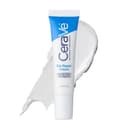
Dry, crepey under-eyes: CeraVe Eye Repair Cream. Ceramides, niacinamide and hyaluronic acid in a light fragrance-free cream at the lowest price here. It hydrates honestly and does not claim anything else.
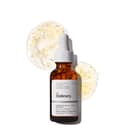
Morning puffiness and tired-looking eyes: The Ordinary Caffeine Solution 5% + EGCG. A stated 5% caffeine in a water-light serum, 30 ml, and the cheapest thing on the page. The effect is real and temporary; dry under-eyes will want a moisturizer over it.
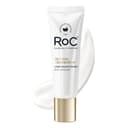
Fine lines and crow’s feet, with patience: RoC Retinol Correxion Under Eye Cream. Retinol is the right active for this and the strength is not published, so start twice a week and build. Expect months, not weeks — retinol around the eyes covers how to introduce it without flaking.
Sensitive skin that wants a gentler route: Naturium Multi-Peptide Eye Cream, for peptides with squalane and hyaluronic acid, or the Haruharu bakuchiol cream if you want a stated concentration of a retinol alternative. Both are maintenance rather than correction, and both are honest about it.