What niacinamide actually does
Niacinamide is a form of vitamin B3, and it is one of the better-evidenced ingredients in cosmetic skincare. The published literature supports a few specific things: it helps the skin produce the lipids a barrier is built from, which is why it pairs so naturally with ceramides; it appears to moderate sebum production, which is why it turns up in every oily-skin formula; and it reduces the appearance of redness and of enlarged pores. It is also notably well tolerated— it does not photosensitise, it does not need a particular pH, and it plays with almost everything else you might use. Our niacinamide explainer goes through the mechanisms properly.
What it is not is a fast or dramatic active. Changes are gradual and modest, measured over months, and if you are looking for the thing that visibly resurfaces skin, that is a retinoid or an acid rather than this. Niacinamide is a supporting ingredient that happens to have unusually good evidence for being one.
Moisturizer or serum: the honest comparison
The case for the moisturizer
One step instead of two, which is the single strongest predictor of whether someone sticks with a routine. A moisturizer also keeps niacinamide on the skin in an occlusive base rather than under one, and every pick here pairs it with ceramides or hyaluronic acid, which is the combination the barrier research actually points at. If you want one product and you want it to do several things, the moisturizer route is entirely defensible.
The case for the serum
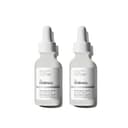
Disclosure and price. A niacinamide serum will typically state its concentration — 10%, 12%, 10% with 1% zinc — and that number lets you make a decision. It matters here more than usual, because more is not better with niacinamide: most of the published benefit appears around 4–5%, and the 10% and 12% products sold on the strength of their number can sting or pill on sensitive skin. Knowing where you sit on that scale is worth something, and you cannot know it from a moisturizer that says “with niacinamide” on the front.
The serum is also usually cheaper. The budget pick above costs less than every moisturizer on this page and leaves you free to choose a moisturizer on texture alone — which, for combination or genuinely dry skin, is often the better outcome. Our niacinamide serum roundup ranks that shelf on stated percentage, and niacinamide percentages explains why the biggest number is not the one to chase.
Doing both
Fine, and common, but there is no additive benefit worth paying for. If you use a 10% serum and then a niacinamide moisturizer, the moisturizer is contributing an unknown and probably small amount on top of a known one. Use whichever single route suits you and spend the difference on sunscreen.
How we ranked the four
1. What else is in the base
Niacinamide alone does not hydrate. Every pick here pairs it with something that does, and the quality of that pairing is most of the ranking. Three of the four name their ceramides individually — ceramides NP, AP and EOP in the CeraVe formulas and in the Paula’s Choice, ceramide-3 in the La Roche-Posay — which is a real disclosure and a free one. Hyaluronic acid or sodium hyaluronate appears in all four.
2. Texture, matched to why you want niacinamide
Most people reaching for niacinamide are doing it because their skin is oily, their pores look large or they break out. That makes texture a first-order criterion rather than a preference: a rich cream is the wrong vehicle for this active’s usual customer. All four picks are light lotions or gel-creams, and only one of them mattifies. If your skin is dry and you want niacinamide anyway, take the serum route and use a cream you like — dry-skin moisturizer picks has those.
3. Fragrance and clog risk
All four are fragrance-free and oil-free by their published ingredient lists, which is unsurprising given who buys them and welcome nonetheless. Three carry a non-comedogenic claim, which is a useful hint rather than a verified test — what non-comedogenic actually means explains how much weight to put on it.
Which one is yours
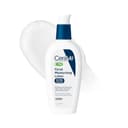
CeraVe PM Facial Moisturizing Lotion is the default and the one we recommend most often across this site. Niacinamide, three named ceramides and hyaluronic acid in a near-weightless lotion, at a drugstore price, and fine in the morning under SPF despite the name.
CeraVe Oil Control Moisturizing Gel-Cream is the same idea with silica-based oil absorbers and a matte finish. Take it if shine by lunchtime is the actual complaint; skip it if you get dry patches, because the mattifying works everywhere you put it. It leads our oily-skin moisturizer picks for the same reasons.
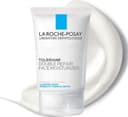
La Roche-Posay Toleriane Double Repair is the sensitive-skin and daytime answer: ceramide-3 and niacinamide in a light cream that sits under makeup and sunscreen without pilling. It is the most expensive per millilitre of the four because it comes in a face-sized tube rather than a value one.
Paula’s Choice CLEAR Oil-Free Moisturizeris the upgrade for red, inflamed breakouts: the same niacinamide-and-ceramide core with a layer of soothing antioxidants — licorice root, blueberry, pumpkin — in a water-light base. The honest con is price, which is prestige-tier for 60 ml next to drugstore rivals doing most of the same job. Buy it when redness is the problem you are solving. Our acne-prone moisturizer picks put it in context.
And if none of those textures suits you, the answer is the serum: a stated percentage, a lower price, and your choice of moisturizer over the top. That is not a cop-out, it is usually the better routine.