How to spend under $50 on peptides without wasting it
1. Buy the named peptides, not the word
“Peptides” on a front label is close to meaningless. The useful information is on the back: which peptides, in what company, and at what position in the ingredient list. Signal peptides — palmitoyl tripeptides, palmitoyl pentapeptide-4 — are the ones proposed to nudge fibroblasts toward collagen production. Carrier peptides, copper tripeptide-1 above all, deliver a trace mineral. Neurotransmitter-affecting peptides such as acetyl hexapeptide-8 (argireline) are proposed to soften expression lines. A systematic review of topical peptide therapies covers all three families and is cautiously positive on firmness and barrier measures — while noting repeatedly that the trials are small, short and often run by the ingredient suppliers themselves. We are not going to overstate that, and neither should a product page.
2. Notice that almost nobody publishes a percentage
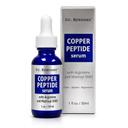
Of the seven picks here, one states a concentration: the Dr. Brenner serum at a stated 1% GHK-Cu. Every other brand names its peptides and stops there, which our registry records as not published rather than estimating. An empty spec cell on this site is a finding, not a gap in our research. That matters more in peptides than in most categories, because peptides are expensive raw materials and a formula can contain a named peptide at a level that does nothing. A published figure is the only thing that rules that out.
3. Buy by the millilitre
The table above makes the gap plain. The bottles on this page run from 15 ml to 50 ml, and the shelf price does not track the volume: the dearest serum here holds 20 ml, and the cheapest per millilitre is several times cheaper to use than it. Because a serum step is a few drops twice a day, a 30 ml bottle lasts about two months — so the cost-per-millilitre column is the one that tells you what a year of this habit costs.
4. Put it in the right place in your routine
Peptides go on after cleansing, before your moisturizer, on damp skin. They are water-soluble and they do not need a low pH, so they layer with essentially everything — which is their main practical advantage over the actives they are often compared with. One caution worth stating: copper peptides and direct acids are conventionally kept apart in the same routine, because a low pH can affect the peptide complex. Alternate them morning and evening rather than worrying about it. Our layering guide has the full order and the ingredient conflict chart has the pairs to keep apart.
What you give up by capping at $50
Essentially nothing, and it is worth being specific. Above this line sit prestige peptide serums with proprietary complexes, clinical-looking packaging and supplier-funded studies behind them. What they do not generally offer is a published concentration, which means you are paying more for strictly less information than the thirty-dollar bottle on this page gives you. The one thing real money can buy in this category is a formula that pairs peptides with a well-dosed second active — and the Paula’s Choice pick at the top of this band is that product without leaving the band.
The genuine gap at this price is evidence, not money. No peptide serum at any price has the trial record a retinoid has. If you can tolerate a retinoid, a retinoid is still the better buy for lines and photoaging, and peptides are the complement rather than the substitute — retinol vs peptides sets the two mechanisms against each other, and best retinol alternatives covers the case where a retinoid is genuinely off the table.
Which of the seven is yours
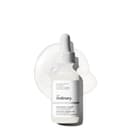
A first peptide step, layered under everything:The Ordinary Multi-Peptide + HA Serum. Seven named signal peptides with hyaluronic acid, fragrance-free, 30 ml. The most sensible default on the page.
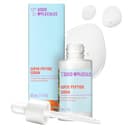
The cheapest route in:Good Molecules Super Peptide Serum — argireline-led, 30 ml, and the lowest cost per millilitre here. It is not fragrance-free, which is its one drawback and the reason it is the budget pick rather than the top one.
You want copper peptides and a real number: Dr. Brenner Copper Peptide Serum with 1% GHK-Cu. The only product on this page that publishes a concentration, which is why it holds the disclosure award despite not being the cheapest. Our copper peptide serum picks go deeper on that sub-category.
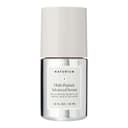
One bottle covering several peptide families:Naturium Multi-Peptide Advanced Serum — copper and signal peptides with ferulic acid, fragrance-free, 30 ml, at the middle of the band.
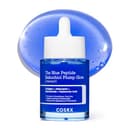
Peptides plus a retinol alternative:COSRX The Blue Peptide Bakuchiol Plump Glow Serum, which puts copper tripeptide-1, four signal peptides and bakuchiol in one 50 ml bottle — the largest volume on the page.
The eye area:Naturium Multi-Peptide Eye Cream, peptides with squalane in 15 ml. Small, so the cost per millilitre is high; that is normal for an eye product and you use very little. Our eye cream vs eye serum comparison covers whether you need a dedicated one at all.
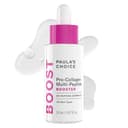
You want the best-formulated thing in the band: Paula’s Choice Pro-Collagen Multi-Peptide Booster, which names palmitoyl tetrapeptide-72 amide among its peptides and is designed to be mixed into another product or layered alone. It is the top of this band and the smallest of the face serums at 20 ml, so check the cost-per-millilitre column before you decide it is worth it to you. If you would rather see the shelf ranked on formulation with no price cap, that is best peptide serums.