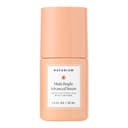
What you are actually trying to replace
Four separate things sit inside a single prestige bottle, and a “dupe” list that pretends otherwise is lying to you.
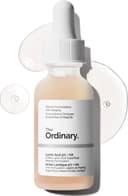
1. The acid.Lactic acid is an alpha hydroxy acid. It is a larger molecule than glycolic, so it diffuses into the skin more slowly and irritates less, and it is humectant — it holds water while it exfoliates. That combination is why lactic is the AHA of choice for dry, dull or mature skin where glycolic can be too brisk. Our lactic acid versus glycolic acid comparison covers the trade in detail. Every pick on this page is a lactic acid product; three of them state their percentage.
2. The strength, if you can find it.Four of the five bottles here print a number: 10%, 5%, 5%, and a 2% lactic riding behind a 6% mandelic. The fifth, the Naturium, does not — which is why it sits last despite being a perfectly reasonable serum. We hold our own picks to the same standard we hold the original to.
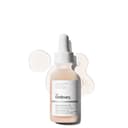
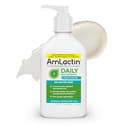
3. The pH.An AHA only exfoliates while enough of it is in its free acid form, and pH decides how much. The Ordinary’s 5% is unusually forthcoming here: it publishes a range of 3.60 to 3.80, and the brand notes that is approximately lactic acid’s own pKa — the pH at which roughly half the acid sits in its free, active form. That is a genuinely useful disclosure and almost nobody else in this category makes it. Neither the 10%’s stated figure nor the Paula’s Choice nor the AmLactin publishes an exact pH, and we say so on each card rather than estimating one.
4. The botanicals and the experience.The licorice, prickly pear, arnica and aloe in the original are not decoration — licorice root in particular is a common ingredient in brightening formulas. None of the picks below contains that combination. If that blend is what you liked, no bottle on this page is a replacement for it, and we would rather say that than sell you a match that does not exist.
How we picked, in order
- Is the percentage published?A stated 10% beats an unstated “high potency” because it is the only figure you can hold a brand to or compare across bottles.
- Is a pH published? Rare in this category, and worth real weight when it appears, because pH is what turns a percentage into an effect.
- Cost per milliliter.The spread on this page is enormous — a 30 ml dropper against a 234 ml lotion — and cost per use is the comparison that matters, not shelf price.
- Tolerance fit. A 10% is not the right first AHA for everyone. Two of the five picks exist specifically for skin that a 10% would flush.
- Honest fragrance and claim status. Where a brand makes no fragrance-free claim, we report that rather than inferring one from an ingredient list.
A note on the fragrance question
Worth knowing before you shop, because it cuts both ways. On the original, retailer listings disagree: one marks it fragrance-free, another declares under 1% synthetic fragrance, and lemongrass appears among the named key ingredients. We do not know which listing is current, so our registry records that field as not published rather than picking a side. Among the alternatives, The Ordinary’s two bottles and the Paula’s Choice state fragrance-free; AmLactin and Naturium make no such claim. If fragrance is the thing you are avoiding, that is the shortlist, and our fragrance-free versus unscented page explains why the two words are not the same promise.
What no alternative gives you
Three things, named so you can decide whether they are worth the difference in price.
The botanical blend, first. Licorice, prickly pear, arnica and aloe in one bottle is a specific formula and nothing here reproduces it. Second, the prestige packaging and the small 0.5 oz size, which is a genuinely cheap way to try a formula before committing — the budget bottles here do not offer a trial size because they barely cost more than one. Third, whatever the original’s actual concentration is. It may be higher than 10%. It may be lower. Nobody outside the company knows, and a page that tells you it is “about 5%” is guessing.
Staying put is a legitimate option. If the bottle on your shelf is giving you the skin you want, finishing it is cheaper than any swap on this page.
How to switch without a flush
Moving from an unstated strength to a stated 10% is a step into the unknown in both directions, so treat it as a new active. Two nights a week for the first two weeks, on clean dry skin, before your moisturizer. If you have been using the original nightly, do not assume a 10% will behave the same way — our how to introduce new actives guide has the schedule, and signs of over-exfoliation tells you when to stop.
Two rules that are not optional with any AHA. Sunscreen every morning, because the FDA’s own alpha hydroxy acid guidance is specifically about increased sun sensitivity. And do not stack an AHA with retinol on the same night while you are settling in — AHA versus retinol covers which one to put where.