Barrier & Balm

Best Chemical Sunscreens

Five organic-filter sunscreens ranked on the filters named in their own Drug Facts panels, cosmetic finish and cost per millilitre — including the one that is really a hybrid.

By Stephen V.Last updated How we pick

The short answer

Top pick

For face and body at a high SPF with the most cosmetically invisible finish here — the trade is that it is fragranced.

Budget pick

The cheapest pick on the page and the one built specifically to leave no cast on deeper skin tones.

Prices live from the retailer as of November 25, 2026. Filter names and percentages come from each product's own labelling — we invent no specs and we have tested none of these.

Buy La Roche-Posay Anthelios Melt-in Milk SPF 60 if you want one high-SPF bottle for face and body that disappears on the skin: it is the most cosmetically invisible sunscreen on this page and the one most likely to survive being applied at the proper dose. The budget pick is Black Girl Sunscreen SPF 30, the cheapest here and the one formulated specifically to leave no white or grey cast on deeper skin tones. If you want fragrance-free, take Neutrogena Invisible Daily Defense SPF 60 instead of the Anthelios — that is the one real trade-off on the page.

A word on the name. “Chemical sunscreen” is what everybody searches and what this page is about, but the accurate term is organic filter: carbon-based molecules such as avobenzone, octisalate, octocrylene and homosalate that absorb UV energy and release it as heat. Zinc oxide and titanium dioxide are chemicals too — they are just inorganic ones, and they work mostly by the same absorption mechanism rather than by the mirror-reflection story the marketing implies. Neither family is “natural” and neither is inherently safer.

What organic filters are genuinely better at is being worn. They go on clear, they do not leave a cast on any skin tone, they do not pill under makeup, and they come in high SPF without feeling like a mask — all of which is why people apply enough of them and reapply at lunchtime. That matters more than the filter debate: the published labelling rules assume a dose of 2 mg per square centimetre, roughly a quarter-teaspoon for a face, and real people apply a fraction of that. The best sunscreen is the one you put on properly, twice. If you would rather use zinc or titanium, our mineral sunscreen picks cover that side and mineral vs chemical sunscreen lays out the actual differences.

How this is funded: we earn a commission if you buy through our links, at no extra cost to you. It never changes which product we recommend, and we’ll tell you when we’d skip one. Full disclosure.

Quick picks

Ranked on formulation, stated concentration and buyer fit. Select a row to jump to the full write-up. We have not tested these products — here is exactly what we do instead.

#ProductBest forPrice
1
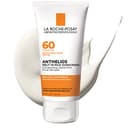
La Roche-Posay Anthelios Melt-in Milk SPF 60

La Roche-Posay Anthelios Melt-in Milk SPF 60

A high-SPF chemical sunscreen for face and body that sinks in without a cast — the pick when you want strong protection you'll happily apply generously over larger areas.

Best overall
$28.48 · View on Amazon

$37.9925% off

Price as of November 25, 2026. #ad How we’re funded

2
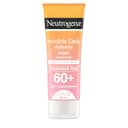
Neutrogena Invisible Daily Defense SPF 60

Neutrogena Invisible Daily Defense SPF 60

The budget high-SPF pick: fragrance-free broad-spectrum SPF 60 with antioxidants at a drugstore price. Nothing fancy, and that's the appeal for a product you should use by the half-teaspoon.

Best fragrance-free
$13.72 · View on Amazon

$14.998% off

Price as of November 25, 2026. #ad How we’re funded

3
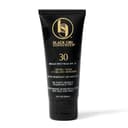
Black Girl Sunscreen Broad Spectrum SPF 30

Black Girl Sunscreen Broad Spectrum SPF 30

Built specifically to disappear on deeper skin tones, which most mineral sunscreens can't do. A moisturizing chemical SPF 30 with no cast — the answer to the single most common sunscreen complaint.

Budget pick, best for deeper skin tones
$9.99 · View on Amazon

Price as of November 25, 2026. #ad How we’re funded

4
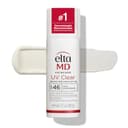
EltaMD UV Clear Broad-Spectrum SPF 46

EltaMD UV Clear Broad-Spectrum SPF 46

The facial sunscreen dermatologists reach for most, and it earns it: zinc-oxide-based SPF 46 with niacinamide, oil-free and fragrance-free, cosmetically elegant enough to actually wear daily.

Best hybrid for acne-prone skin
$36.00 · View on Amazon

$46.0022% off

Price as of November 25, 2026. #ad How we’re funded

5
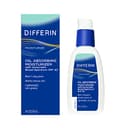
Differin Oil Absorbing Moisturizer SPF 30

Differin Oil Absorbing Moisturizer SPF 30

The daytime moisturizer from the makers of Differin Gel (over-the-counter adapalene) — an oil-free SPF 30 lotion designed to sit over adapalene without stinging, with silica and starch to absorb oil and a low-dose filter blend for people who find sunscreens irritating. It replaces two steps for acne-prone skin that keeps skipping SPF.

Best two-in-one with a moisturizer
$10.69 · View on Amazon

$11.9711% off

Price as of November 25, 2026. #ad How we’re funded

The picks in full

#1Best overall

La Roche-Posay Anthelios Melt-in Milk SPF 60

A high-SPF chemical sunscreen for face and body that sinks in without a cast — the pick when you want strong protection you'll happily apply generously over larger areas.

Strengths

  • Broad-spectrum SPF 60, no white cast
  • Fast-absorbing milk texture
  • Good value for a face-and-body size

Trade-offs

  • Chemical filters can sting sensitive eyes
  • Contains fragrance
Key activeChemical UV filters (SPF 60)
Stated concentrationSPF 60
FormatMilk lotion
Fragrance-freeNo
Best forNormal, Combination, Body use

Formulation note. Broad-spectrum chemical filters at SPF 60. Cosmetically excellent and cast-free; contains fragrance and is chemical-filter based, so not our first pick for reactive skin.

Ingredients and claims read from the product listing, on July 17, 2026. “Not published” means the brand does not state that figure.

#2Best fragrance-free

Neutrogena Invisible Daily Defense SPF 60

The budget high-SPF pick: fragrance-free broad-spectrum SPF 60 with antioxidants at a drugstore price. Nothing fancy, and that's the appeal for a product you should use by the half-teaspoon.

Strengths

  • Fragrance-free broad-spectrum SPF 60
  • Antioxidant complex included
  • Cheap enough to apply generously and reapply

Trade-offs

  • Slightly heavier finish than prestige options
  • Can pill under some makeup
Key activeChemical UV filters (SPF 60)
Stated concentrationSPF 60
FormatLotion
Fragrance-freeYes
Best forNormal, Combination

Formulation note. Fragrance-free broad-spectrum SPF 60 + antioxidants. Being cheap is a feature: the biggest sunscreen mistake is under-applying, and price is why people ration it.

Ingredients and claims read from the product listing, on July 17, 2026. “Not published” means the brand does not state that figure.

#3Budget pick, best for deeper skin tones

Black Girl Sunscreen Broad Spectrum SPF 30

Built specifically to disappear on deeper skin tones, which most mineral sunscreens can't do. A moisturizing chemical SPF 30 with no cast — the answer to the single most common sunscreen complaint.

Strengths

  • Formulated to leave no white cast on melanin-rich skin
  • Moisturizing, with jojoba and avocado oils
  • Inexpensive

Trade-offs

  • SPF 30, not 50 — reapply diligently
  • Emollient finish is a touch dewy for very oily skin
Key activeChemical UV filters (SPF 30)
Stated concentrationSPF 30
FormatMoisturizing lotion
Fragrance-freeNo
Best forMedium-to-deep tones, Normal, Dry

Formulation note. Broad-spectrum chemical SPF 30 designed to rub in clear on deeper skin tones. It solves the cast problem mineral filters create — the practical reason it exists.

Ingredients and claims read from the product listing, on July 17, 2026. “Not published” means the brand does not state that figure.

#4Best hybrid for acne-prone skin

EltaMD UV Clear Broad-Spectrum SPF 46

The facial sunscreen dermatologists reach for most, and it earns it: zinc-oxide-based SPF 46 with niacinamide, oil-free and fragrance-free, cosmetically elegant enough to actually wear daily.

Strengths

  • Zinc oxide + niacinamide — calming and non-irritating
  • Oil-free, fragrance-free, non-comedogenic
  • Light finish that layers under makeup

Trade-offs

  • Premium price per ounce
  • Very slight cast on the deepest skin tones (the tinted version fixes this)
Key activeZinc oxide + niacinamide (SPF 46)
Stated concentrationSPF 46
FormatLightweight lotion
Fragrance-freeYes
Best forSensitive, Acne-prone, Rosacea-prone

Formulation note. Broad-spectrum SPF 46 with zinc oxide + 5% niacinamide. The niacinamide is a genuine plus for redness-prone skin — the reason it's a repeat recommendation, not just a decent SPF.

Ingredients and claims read from the product listing, on September 29, 2026. “Not published” means the brand does not state that figure.

#5Best two-in-one with a moisturizer

Differin Oil Absorbing Moisturizer SPF 30

The daytime moisturizer from the makers of Differin Gel (over-the-counter adapalene) — an oil-free SPF 30 lotion designed to sit over adapalene without stinging, with silica and starch to absorb oil and a low-dose filter blend for people who find sunscreens irritating. It replaces two steps for acne-prone skin that keeps skipping SPF.

Strengths

  • Broad-spectrum SPF 30 from avobenzone 3%, octisalate 5% and octocrylene 7% — the actives are on the Drug Facts label
  • Oil-free, fragrance-free, non-comedogenic; silica and aluminum starch absorb shine through the day
  • Ceramide NP, glycerin, panthenol and allantoin soothe the dryness acne treatments cause

Trade-offs

  • Chemical filters only — if your skin reacts to avobenzone or octocrylene, choose a mineral SPF
  • SPF 30 is the floor, not the ceiling; a full face needs a quarter-teaspoon, which is more than most people use of a moisturizer
  • Matte, slightly powdery finish can look flat on drier cheeks
Key activeSPF 30 (avobenzone, octisalate, octocrylene) + ceramide NP
Stated concentrationAvobenzone 3%, octisalate 5%, octocrylene 7%
FormatOil-free matte lotion
Fragrance-freeYes
Best forOily, Acne-prone, Combination

Formulation note. Drug Facts actives: avobenzone 3%, octisalate 5%, octocrylene 7%. Inactives include glycerin, dimethicone, silica and aluminum starch octenylsuccinate (the oil absorbers), ceramide NP, panthenol, allantoin, glycyrrhetinic acid, zinc gluconate and tocopheryl acetate. No fragrance, no plant oils. Galderma describes the sunscreen as an 'oleosome' delivery with a low filter concentration for minimal irritation; we report that as the brand's claim.

Ingredients and claims read from the product listing, on September 21, 2026. “Not published” means the brand does not state that figure.

How to choose a chemical sunscreen

1. Read the Drug Facts panel, not the front of the bottle

Sunscreen is regulated as an over-the-counter drug in the US, which means every bottle carries a Drug Facts panel listing each active filter and its exact percentage. That is a level of disclosure no other skincare category gives you, and it is free. Use it. The panel tells you whether there is avobenzone in there — the main UVA filter available in US sunscreens — and at what strength, and it tells you which of the UVB filters are carrying the SPF number. Our specs below are read off those panels and the brand’s own published labelling, never inferred.

2. Decide if you need fragrance-free

This is the one genuine compromise on this page. The best-finishing sunscreen here, the Anthelios Melt-in Milk, is fragranced. Fragrance is the most common cosmetic allergen, and on a product you reapply to your face in the sun that is a real consideration for reactive skin. Three of the five picks here are fragrance-free by their published lists, and one of them — the Neutrogena — is close to the Anthelios on finish. If your skin has never objected to fragrance, buy the one you will actually wear.

3. Know what “hybrid” means before you buy one

Plenty of sunscreens marketed as mineral contain organic filters as well, and one of the picks here is a good example: EltaMD UV Clear’s own FDA labelling lists zinc oxide andoctinoxate as active ingredients. That is not a gotcha — it is why UV Clear wears as lightly as it does, and it is also why it is on a page about chemical sunscreens at all. If you are avoiding organic filters for a specific reason, a product sold on its zinc content is not automatically free of them. Check the panel.

4. Buy enough of it to use properly

A quarter-teaspoon for the face, twice a day, is about 2.5 ml a day, which is roughly a 150 ml bottle a month if you also cover your neck and hands. At that rate the size of the bottle is not a detail. A small, expensive tube encourages the one failure that cannot be fixed by choosing a better filter: using too little. Our how much sunscreen to apply guide has the two-finger rule, and reapplying over makeup deals with the part everybody skips.

The filter questions people actually ask

Are organic filters absorbed into the body? Some are, in measurable amounts, and the US FDA has said so and asked manufacturers for additional safety data on several of them. The FDA has also been explicit that detecting a filter in blood does not by itself mean it is unsafe, and has not withdrawn any of them from the market or advised people to stop using sunscreen. Our reading, stated as a reading rather than a fact: the evidence that UV exposure causes skin cancer and photoaging is overwhelming, and the evidence of harm from these filters is not established. Use sunscreen. If the unknowns bother you, use zinc.

Do they expire?Yes, and unlike most cosmetics they carry a date for a reason — avobenzone in particular degrades, which is why modern formulas pair it with stabilisers such as octocrylene. Finish the bottle inside the season.

Do they sting the eyes? More often than mineral ones, yes, which is the honest reason some people end up with zinc on their face and an organic filter on their body. That is a perfectly sensible arrangement rather than an inconsistency.

Which of the five is yours

One bottle for face and body, highest protection: La Roche-Posay Anthelios Melt-in Milk SPF 60. The finish is the whole point: it vanishes, so you apply enough. Fragranced, which is its one real flaw.

Fragrance-free, daily, under makeup: Neutrogena Invisible Daily Defense SPF 60. Close to the Anthelios on finish, without the fragrance, and cheaper.

Deeper skin tones, or you hate the cast:Black Girl Sunscreen SPF 30 — built for exactly that complaint, and the cheapest pick here. SPF 30 rather than 50, which is a real step down if you burn easily; SPF 30 vs SPF 50 explains how much difference that actually makes.

Acne-prone or rosacea-prone skin: EltaMD UV Clear SPF 46, a zinc-and-octinoxate hybrid with niacinamide, fragrance-free. The most expensive pick on this page by some distance, and the one dermatology offices hand out most often. See sunscreen for acne-prone skin for the whole shelf ranked on that question.

You keep skipping sunscreen entirely:Differin Oil Absorbing Moisturizer SPF 30, which is a moisturizer with avobenzone, octisalate and octocrylene on a Drug Facts panel. Two steps in one at a drugstore price — as long as you apply it at sunscreen quantities rather than moisturizer quantities. If you want the cheap end of the whole category rather than the organic-filter half of it, our best sunscreen under $25 page ranks on price, and best sunscreen for face is the top-level pick list.
Frequently asked questions

What is a chemical sunscreen?

Colloquially, a sunscreen whose active filters are carbon-based molecules — avobenzone, octisalate, octocrylene, homosalate, octinoxate — that absorb UV energy and dissipate it as heat. The accurate term is 'organic filter'. Mineral sunscreens use zinc oxide or titanium dioxide instead, which are also chemicals, and which also work largely by absorption rather than by reflecting light like a mirror.

Is chemical sunscreen safe?

The regulatory position is that these filters remain marketed and approved, and the US FDA has asked manufacturers for additional safety data on several of them after studies showed measurable systemic absorption. The FDA has been explicit that absorption alone does not establish harm and has not advised anyone to stop using sunscreen. The evidence that UV exposure causes skin cancer and photoaging is far stronger than any evidence of filter harm. If the open questions bother you, use a mineral filter instead of skipping sunscreen.

Is chemical or mineral sunscreen better for acne-prone skin?

Neither category wins outright; the formula does. Mineral filters sit on the surface and are often recommended for inflamed or rosacea-prone skin because they are less likely to sting, but they can look heavy and feel occlusive. Organic filters give a lighter finish that many acne-prone people tolerate better in practice. The hybrid pick on this page — zinc plus octinoxate with niacinamide — is the one most often recommended in dermatology offices for this exact case.

Does chemical sunscreen need to be applied 20 minutes before going outside?

It is the conventional advice and it does no harm to follow it, the idea being that the film needs time to settle evenly. The more important numbers are dose and reapplication: roughly a quarter-teaspoon for the face, reapplied every two hours in real sun exposure. A perfectly timed underdose protects you less than a late, generous application.

Can I layer chemical sunscreen over moisturizer?

Yes, and that is the normal order — moisturizer first, sunscreen last, before makeup. Let the moisturizer absorb for a minute or two so the sunscreen does not pill. What you should not do is mix sunscreen into your moisturizer in your palm: you dilute the film and you no longer know what SPF you are wearing.

Which filter is the UVA one?

In US sunscreens, avobenzone does most of the UVA work among the organic filters, which is why 'broad spectrum' on an organic-filter bottle usually means avobenzone is in the panel. Because avobenzone degrades in light, modern formulas pair it with stabilising filters such as octocrylene. Zinc oxide also covers UVA, which is part of why hybrid formulas exist.

How often do these prices change?

Daily. Every price on this page is read live from a retailer feed when you load it and stamped with the date it was read. If the feed stops, the numbers disappear and the buttons fall back to 'Check price on Amazon' rather than showing you something stale.

Sources

Keep reading